Picon Punch

a winding path into the brush: the story of Nevada’s State Drink.

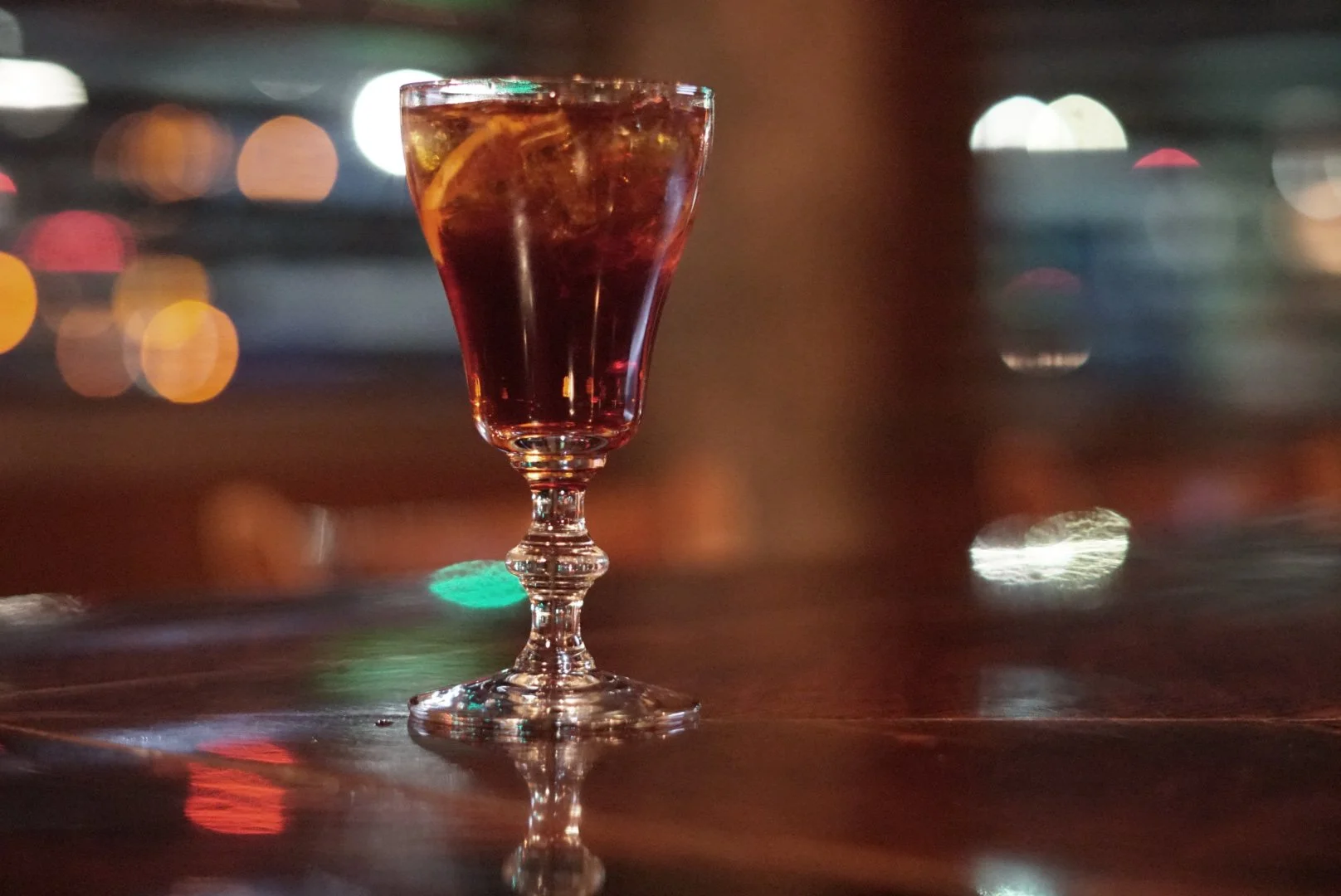
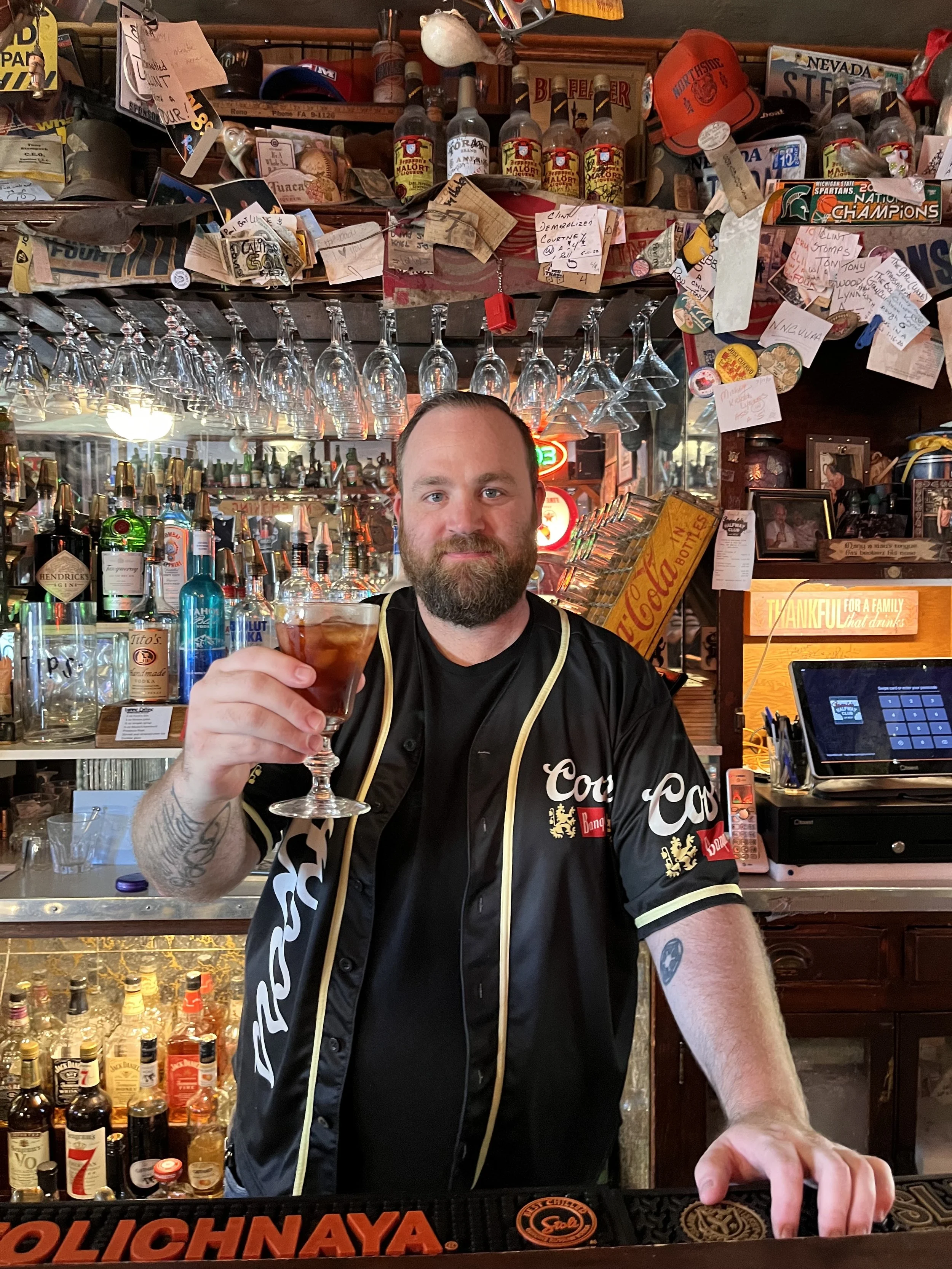
Photo by Luka Starmer 2017 Louie’s Basque Corner • Reno, Nevada

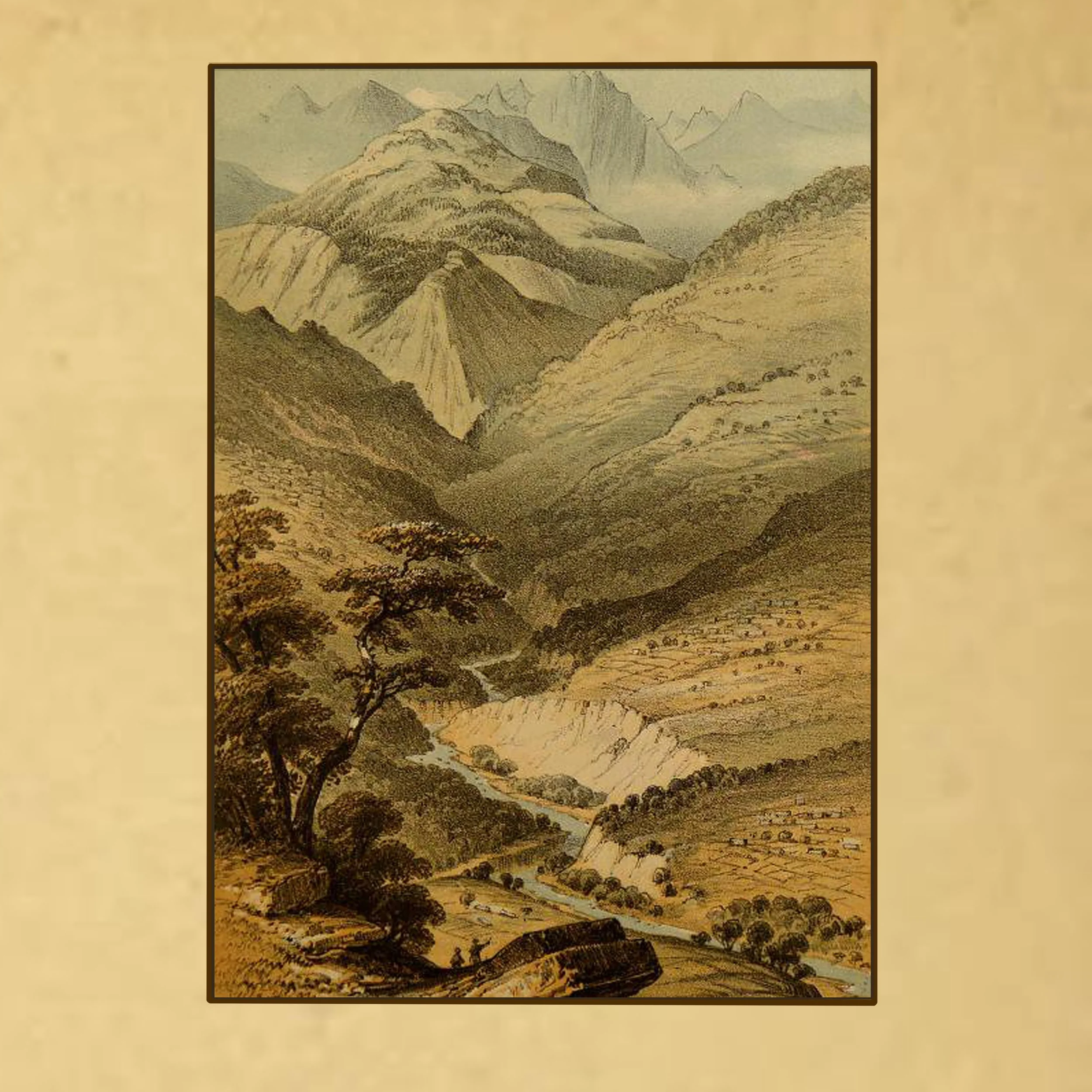
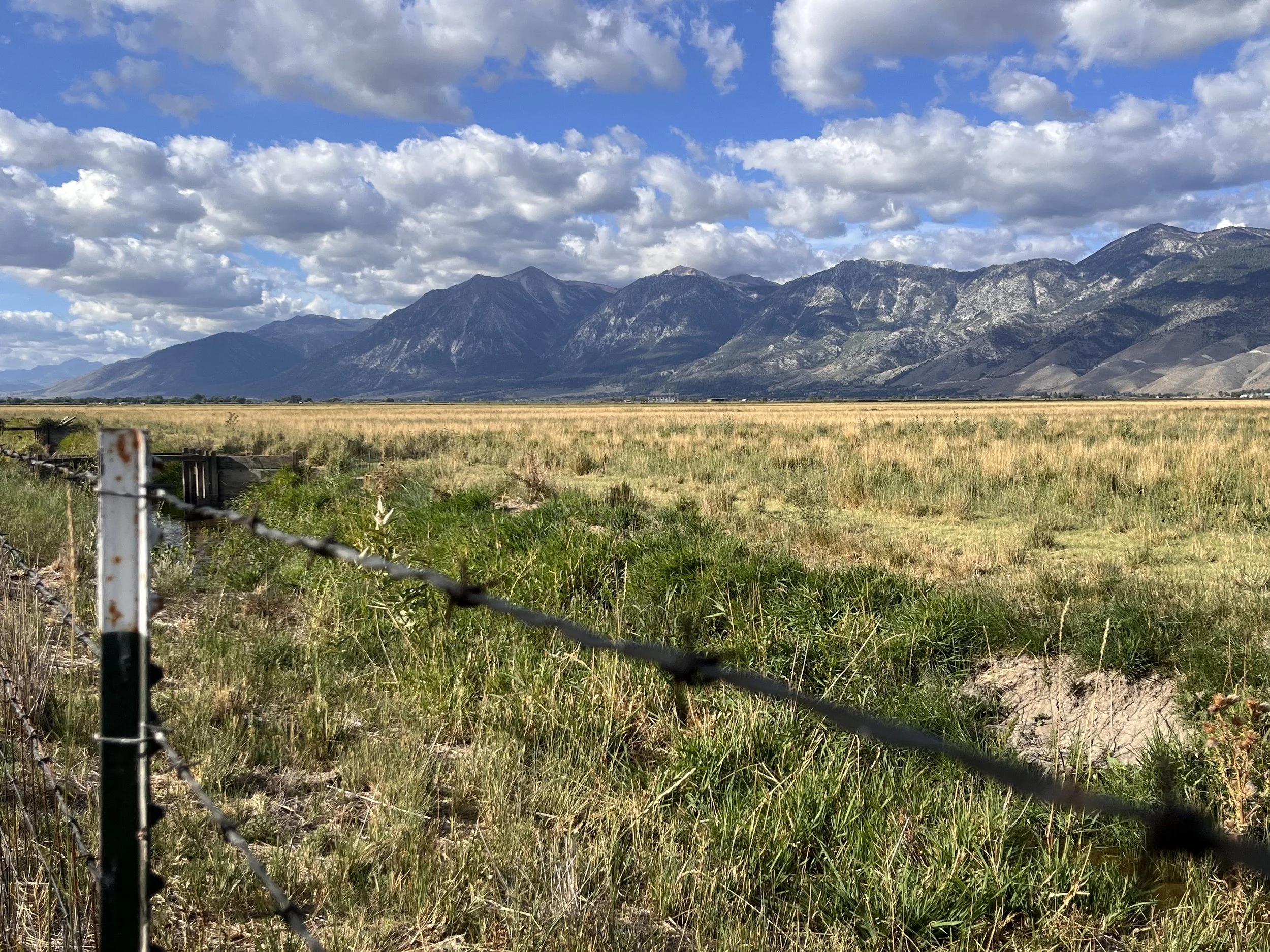
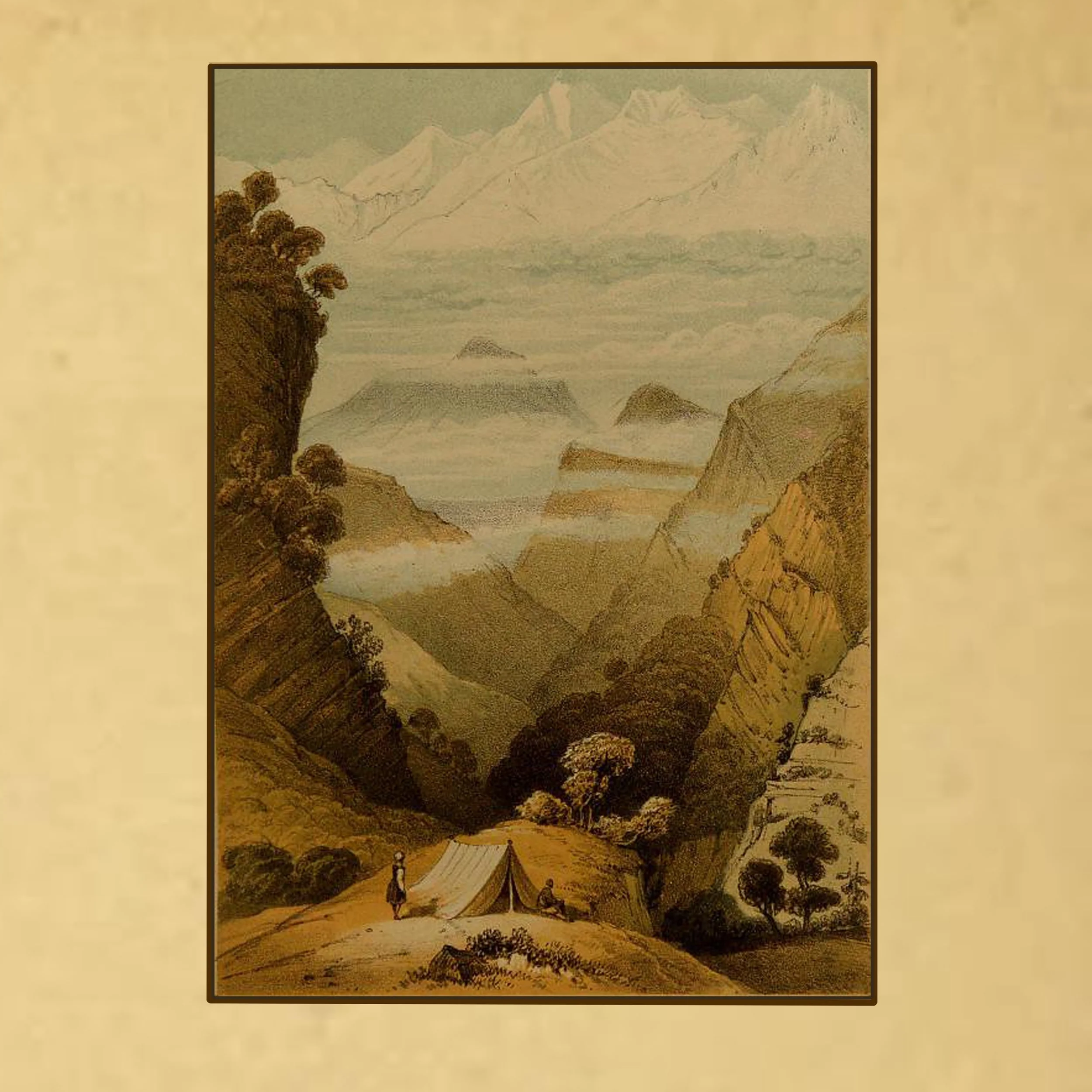
When storms blow in from the coast, the tall, jagged Sierra Nevada act as a sharp fence, ripping open the bellies of the clouds and extracting the water from inside. Much of that rain lands on the western slopes, and joins creeks and rivers to run back through California and into the Pacific. But this side, the eastern side, is in the rain shadow.

The mountains above Gardnerville, Nevada are big, and the high desert flows from the East to butt up against them.

Sage, Rabbit, Bitterbrush.

Some of the rain that falls on the mountains, and especially the snow that drapes the range all winter, some of that lands on the Eastern side of the ridge, over the divide, and instead of flowing back to the sea—it flows inland. This is the Great Basin and all water flows in, not out.

Here, wet places are rare and coveted and often appear as a vein of green quaking leaves in the crease of the hills where a creek has formed. These creeks eventually run into the sagebrush and dissipate in a desert sink or a terminal lake but first they feed the aspen groves and the meadows and the grass.

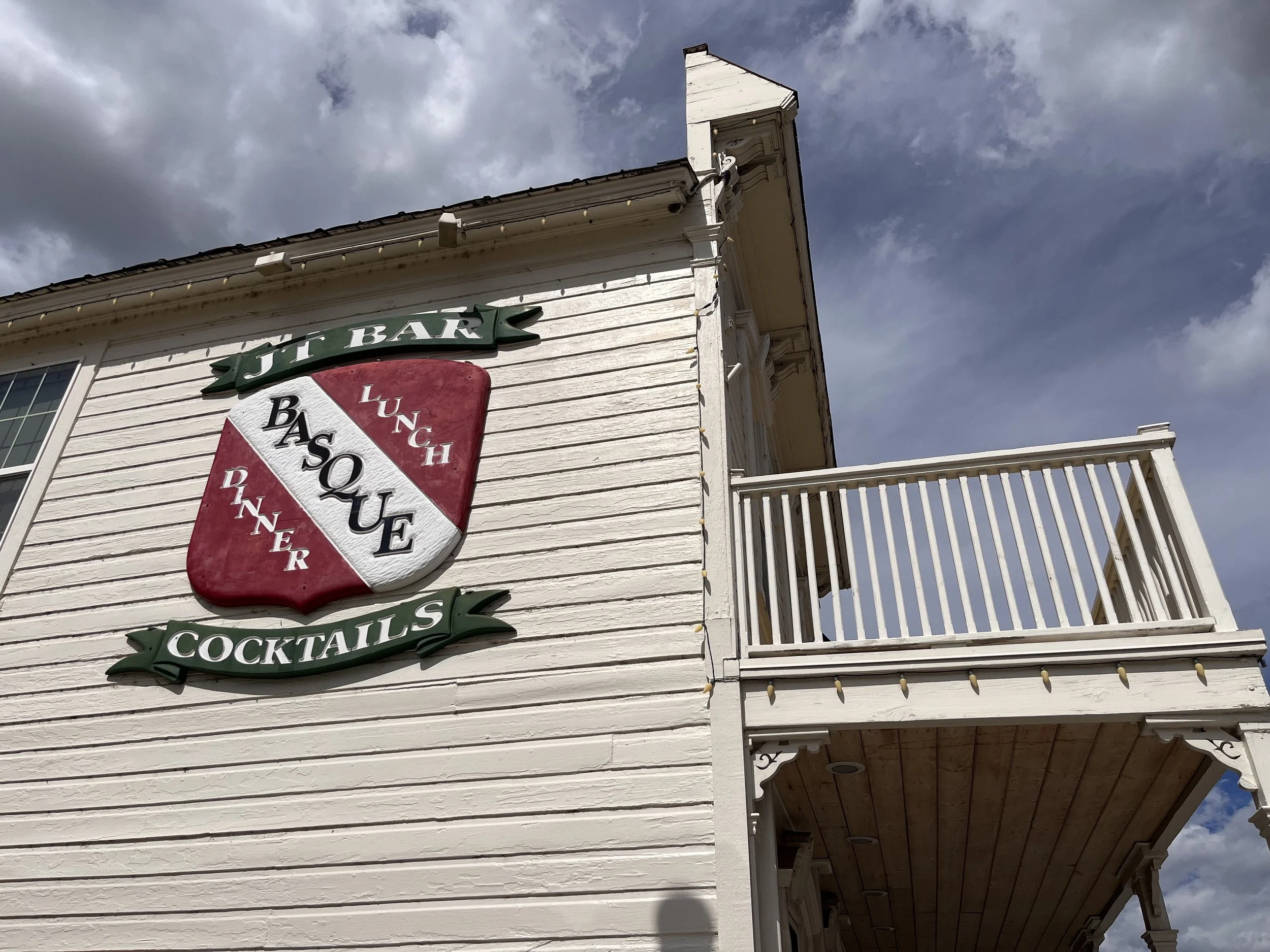
From the main street of Gardnerville, I can see those green creases of aspen on the Sierra, and then… I duck into the JT.

The Picon is a cocktail that you can only define by describing what’s around it.

••

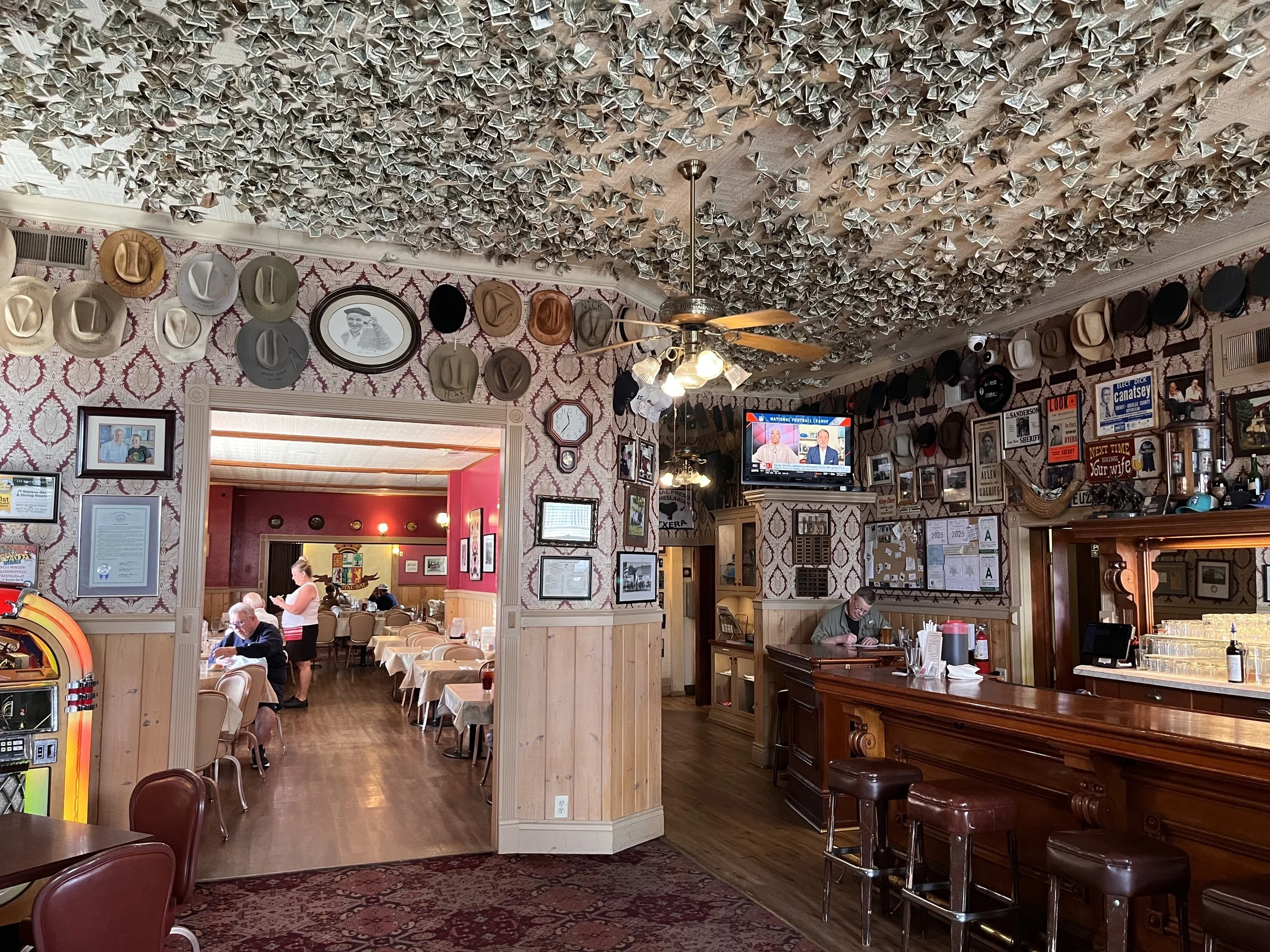
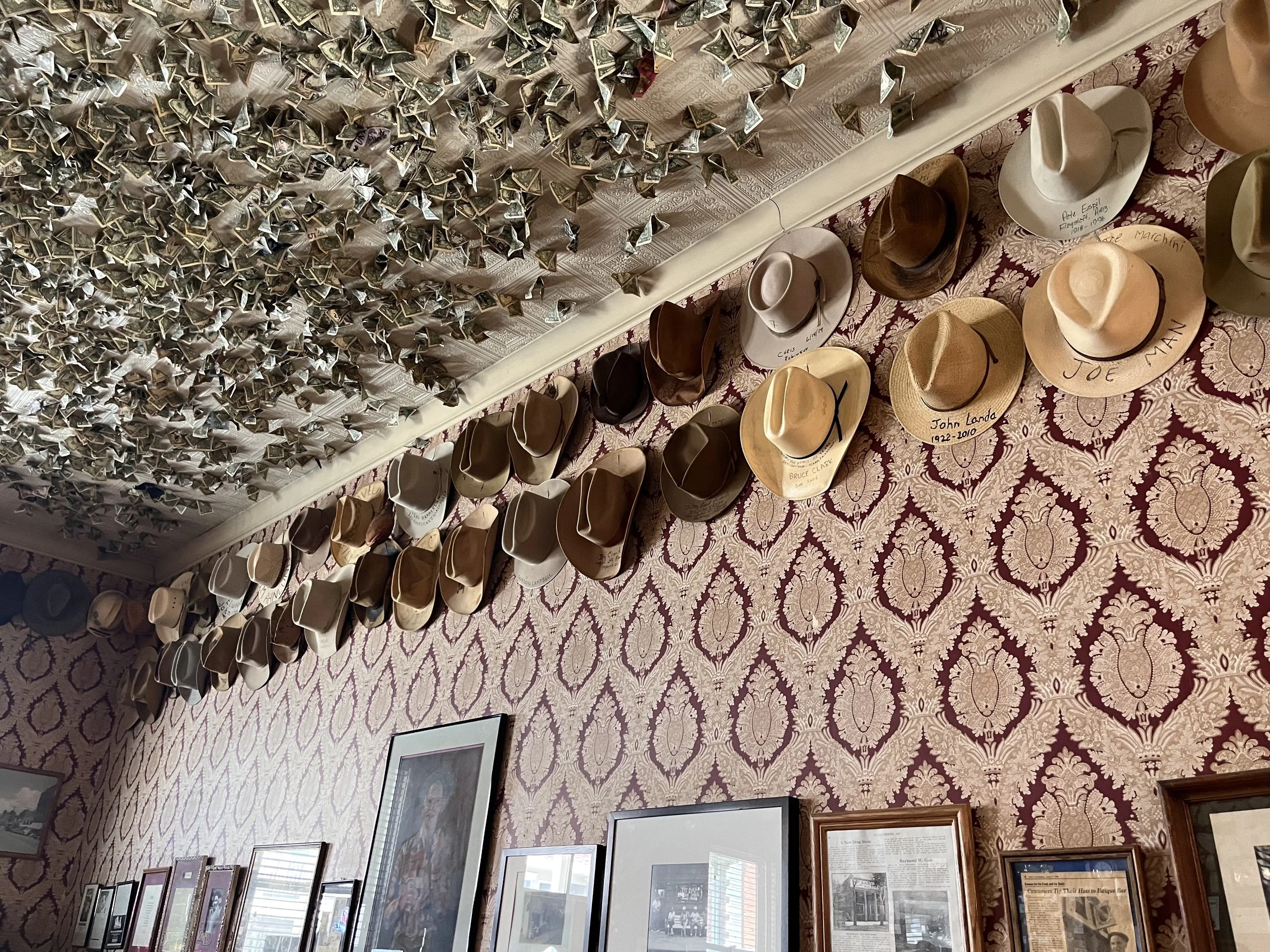
Inside the JT Basque Bar and Dining Room in Gardnerville, Nevada , cowboy hats, berets, and baseball caps hang over the wallpaper; dollar bills obscure the ceiling.

Marie Louise Lekumberry: The JT, as with other basque houses sprinkled across the American west, all started out as boarding houses. We were places where newly arrived immigrants could come make contact with an innkeeper who spoke their language. A place that had food that they were familiar with. A place where they could make connections to get jobs. A kind of home away from home for immigrant basques who were mostly coming over to herd sheep.

Marie Louise Lekumberry co-owns the place with her brother JB. Their dad bought it in 1960. At the time the JT was just one of many Basque hotels scattered across the West. There are fewer now, but still a handful. A lot of Basques, from the mountainous region between France and Spain settled here at the foot of tall mountains in Nevada.

Ettienne Lekumberry:: It's this very ancient people with this very ancient language and these very ancient, well-maintained traditions and customs set against the backdrop of the Sierra Nevada. Set against the backdrop of the sea of sagebrush.

Etienne Lekumberry, Marie’s nephew, has been tending bar here since he was 21, and he’s taken on a bigger role lately in running it.

Ettienne Lekumberry: And, you know, as we all know, being Nevadans, the landscape we inhabit makes as much of an effect on us as we do upon it, you know?

The bar and restaurant is a rare place that feels like it’s carved out a sort of refuge from current trends in aesthetics, and profit-first (or profit-only) business practices. It has one TV, and it’s fairly small and old and it’s up in a spot where you kind of have to crane your neck to see it. People check the score of whatever big game is happening, but it’s not blasting commercials in your face, and no one’s sitting there watching on autopilot.

There’s also carpet in the bar, which taken with the old hats on the wall act as an incredible acoustic damper; so everyone’s talking to everyone else and it’s lively but you can hear everything clearly. There’s no fake-wood printed vinyl, it’s not trying to be anything, it just is, and you walk in and see your high school history teacher and a guy you used to work construction for and you pull a stool up to the bar and you order a Picon Punch.

From Picon Drinkers of the American West

Marie Louise Lekumberry: In today's parlance, I would say… it's very spirit forward. (laughing) Back in the day we would say, “Careful, it packs a punch!”

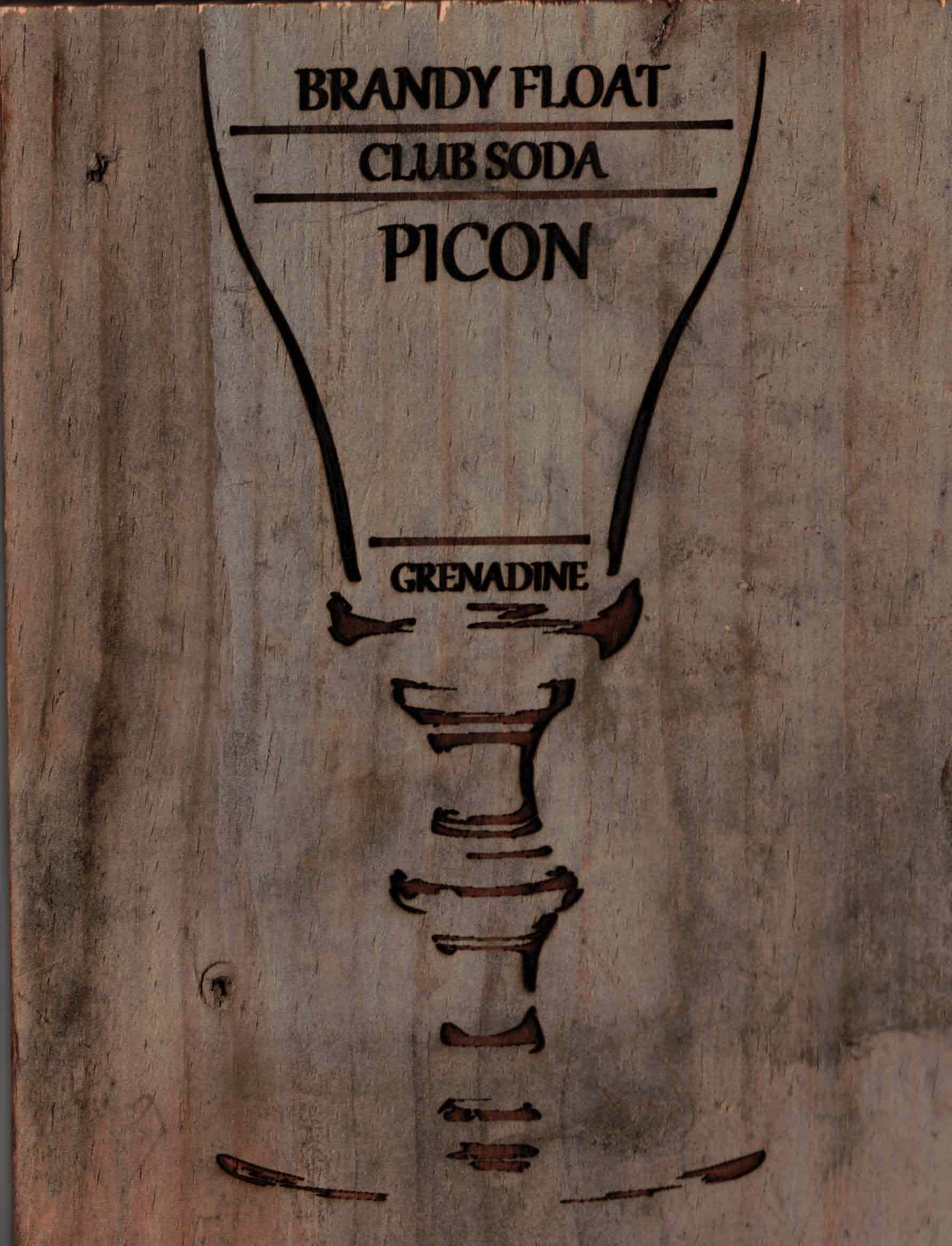
Etienne Lekumberry: It's called a Picon, P-I-C-O-N. And it has nothing to do with A-P-E-C-A-N, the nut, right? It's a dash of Grenadine, a shot of a Amer Picon, which is an orange rind liqueur, a splash of club soda with a float of brandy and a lemon twist.

Most of the cocktail is one ingredient: Amer Picon. That’s where the name comes from and also where all the drama is. It’s a French liqueur named for it’s inventor Gaétan Picon who concocted it in Algeria in 1837 from Orange Rind, Gentian Root and Chinchona bark among other secret ingredients. Amer is the french word for bitter, similar to its Italian counterpart amaro. In the late 19th century into the early 20th it was a popular aperitif in France.

Marie Louise Lekumberry: I imagine that, you know, a lot of the Basques coming from the French side of the Basque country, um, in the Basque hotels, that that was, uh, a liqeur that was imported because they were there.[00:09:41] And some, somebody came up with the cocktail

The earliest mention I could find was from Visalia, California in 1895. Nobody knows exactly where it was invented.

Marie Louise Lekumberry: Probably in some Basque house probably in California.

From there, it spread inland.

The earliest mention I could find of the Picon Punch cocktail - Visalia, Calif. May 17 1895 (pg. 4)

Marie Louise Lekumberry: And because there's this network of Basque hotels sprinkled across the west where there were sheep herdng, um, the cocktail spread to all of the other Basque houses.

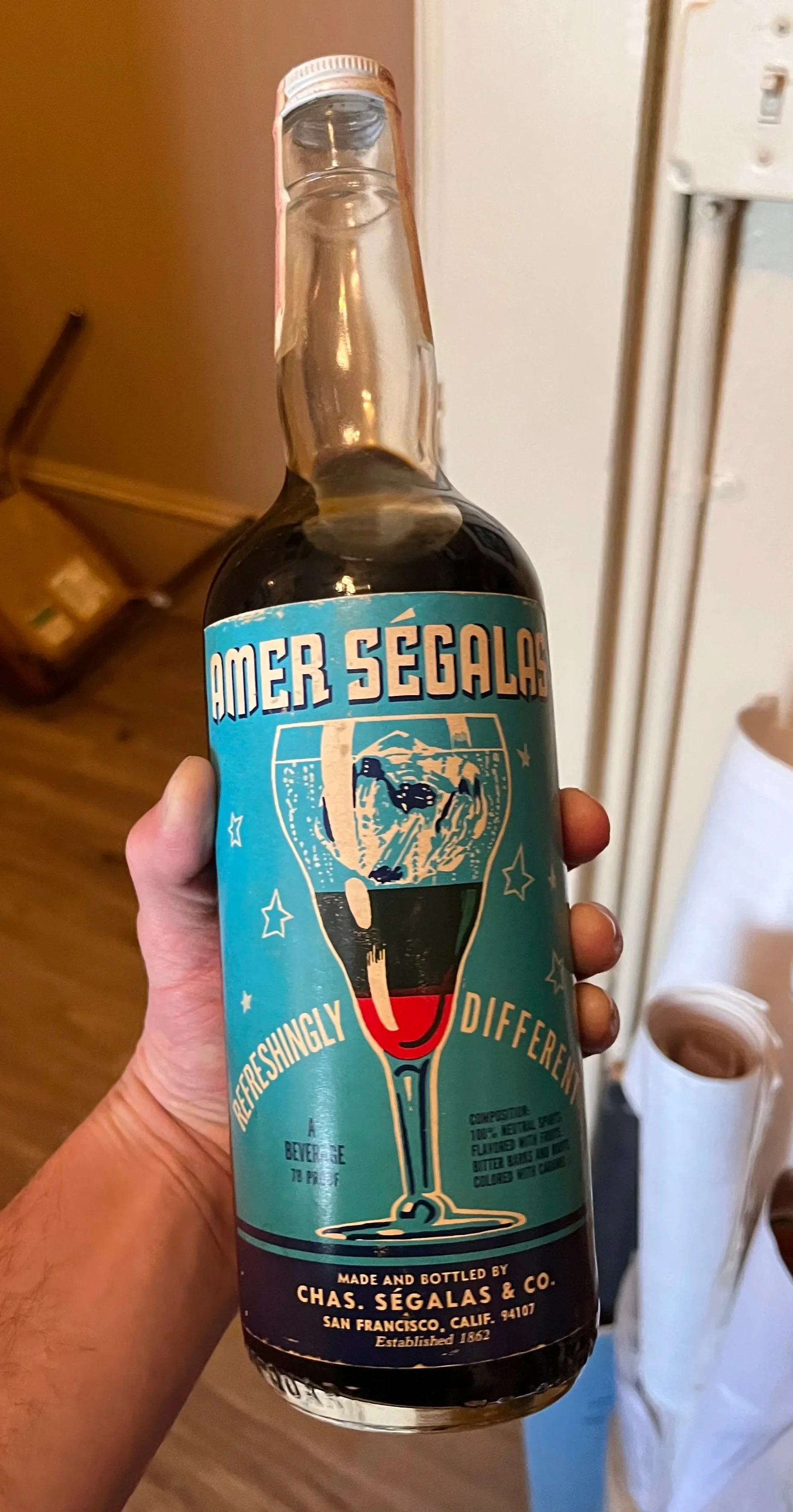
For a long time, the Picon Punch was made by default with Amer Picon. But there were a few other options starting in the mid 20th century, including Amer Segalas and Torani Amer both made in California. The latter was made by the company Torani which you might recognize from their coffee syrup flavoring.

Marie Louise Lekumberry: Our bar, like a lot of Basque bars — in the well we served Torani Amer. If you wanted the call drink, if you wanted a “call” Picon, we had the imported Amer Picon back behind the shelf, and you could order that and pay a little more for that. Here in Gardnerville, most everybody was satisfied with the, what we call the domestic Amer, and we proudly served it.

At the bar, I’ve always heard that the original Amer Picon was banned in the 70s due to a psychoactive ingredient, and story goes that’s how Torani became the Amer of choice. You’ll see this repeated all over the internet, and confidently stated in the AI overviews. But I dug deep into this claim, and it’s much more complicated, and in my reading, unlikely.

I spoke with the US Department of Health and Human Services who said quote “Amer Picon is effectively banned in the U.S. because it contains Calamus root, which is prohibited by the FDA” however I believe they just googled it too. They could not provide documentation that Calumus was ever in Amer Picon, that the recipe changed, nor could I independently verify that.

Calumus was banned in 1968, for being apparently carcinogenic, not pyschoactive… but I could find no evidence of interruption in Amer Picon sales in the US in the 60s or 70s. If there was Calamus in the recipe, they would have removed it without anybody noticing, as they continued distributing in the US into the early 2000s. That deflates the claim that Torani took over when the original was banned. It seemed to be a slower and less clear-cut process.

That said, there was a different change to the aperitif in the 1980s: Amer Picon simply began making weaker liqueur. The original recipe, and Torani’s recipe, was a full 39% ABV. In the early 80’s Amer Picon lowered their recipe to 32%, and then again by 1984 down to just 21%; closer to a vermouth. Torani meanwhile stayed the same ABV, and probably tasted closer to the original than the lower proof versions of the name brand. All of this, PLUS Torani was already available in many of the Basque Houses across the west anyway. So that’s my theory.


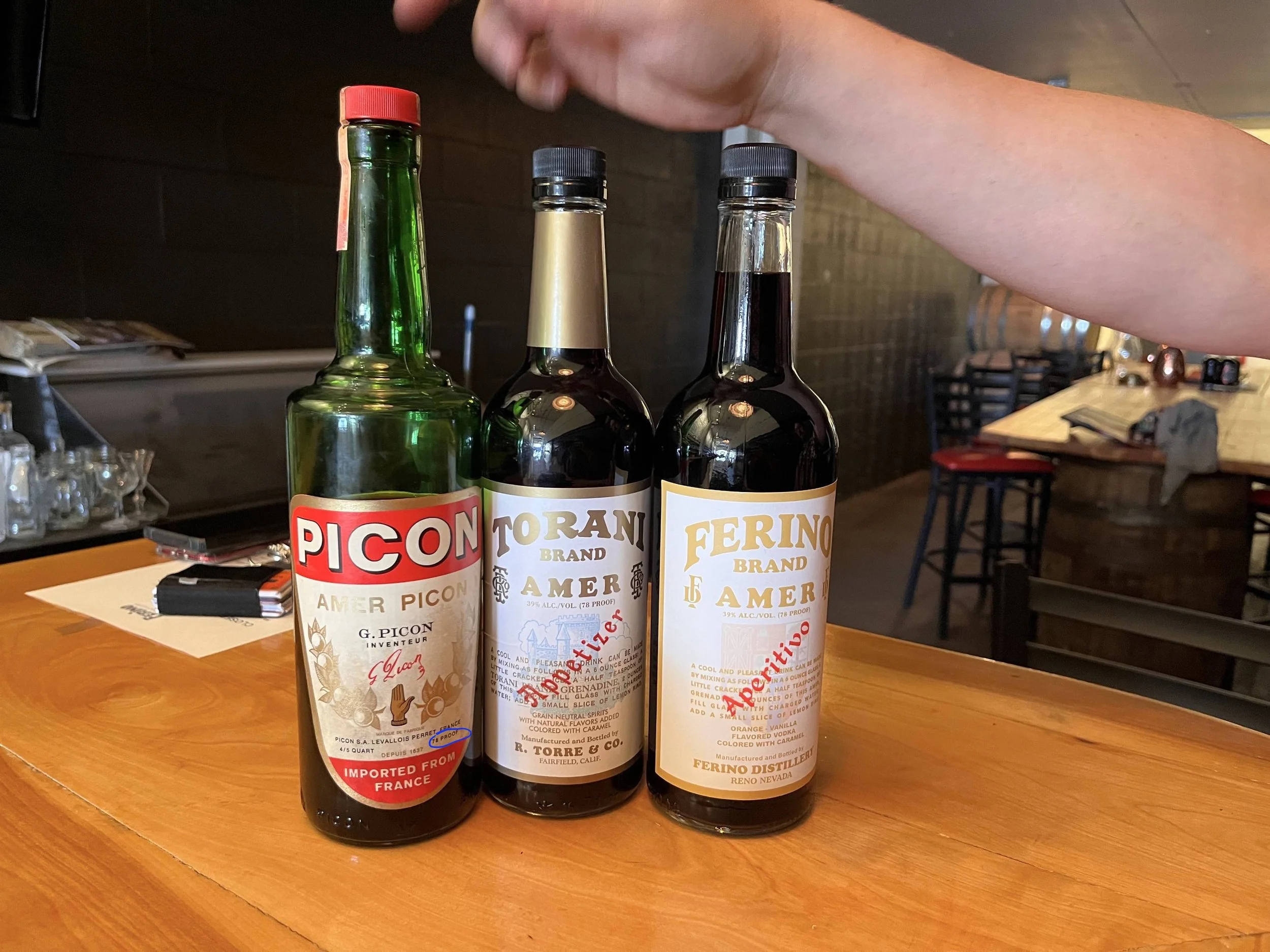
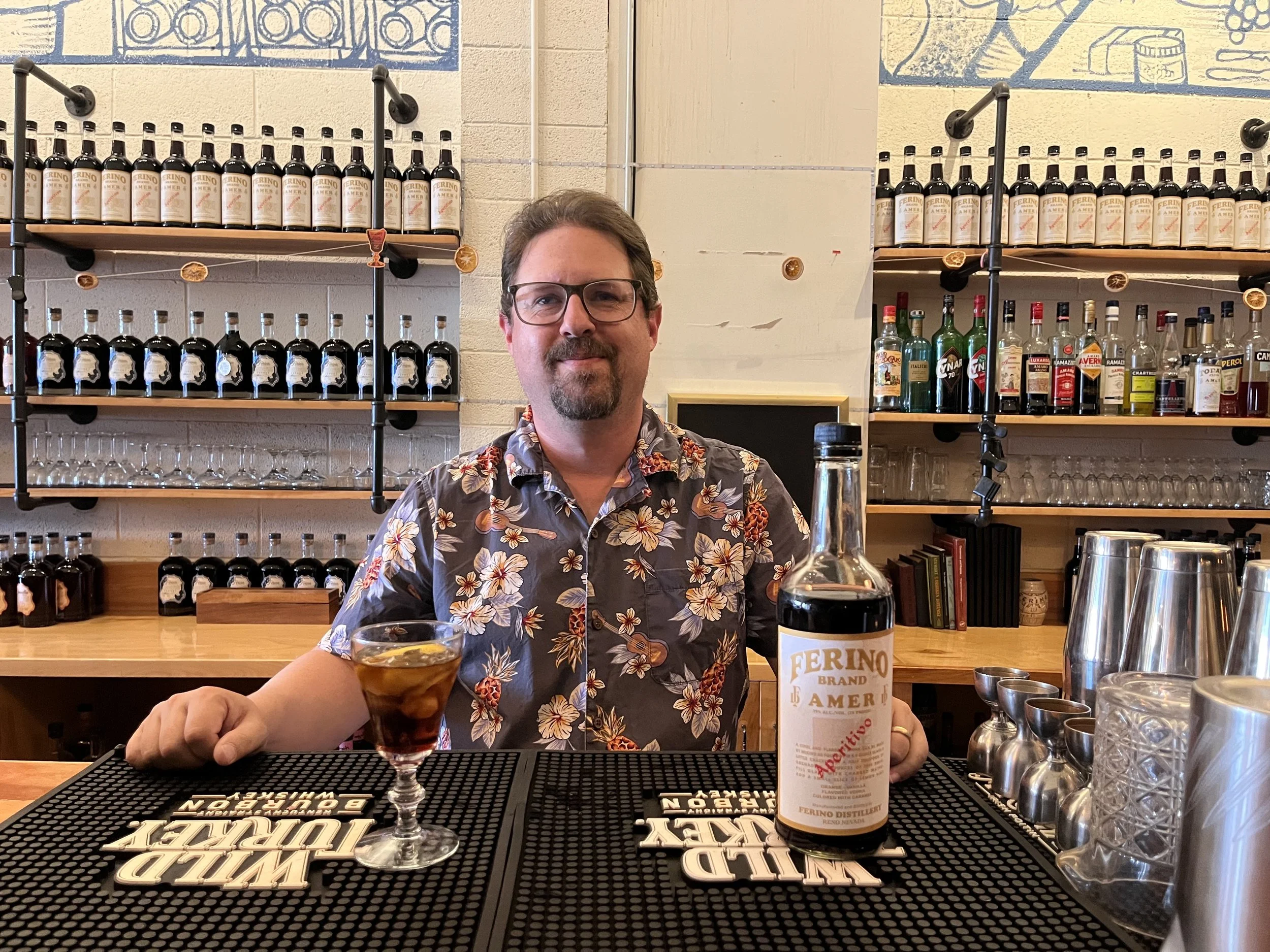
Original Amer Picon, then Torani Amer and the new Ferino Amer.

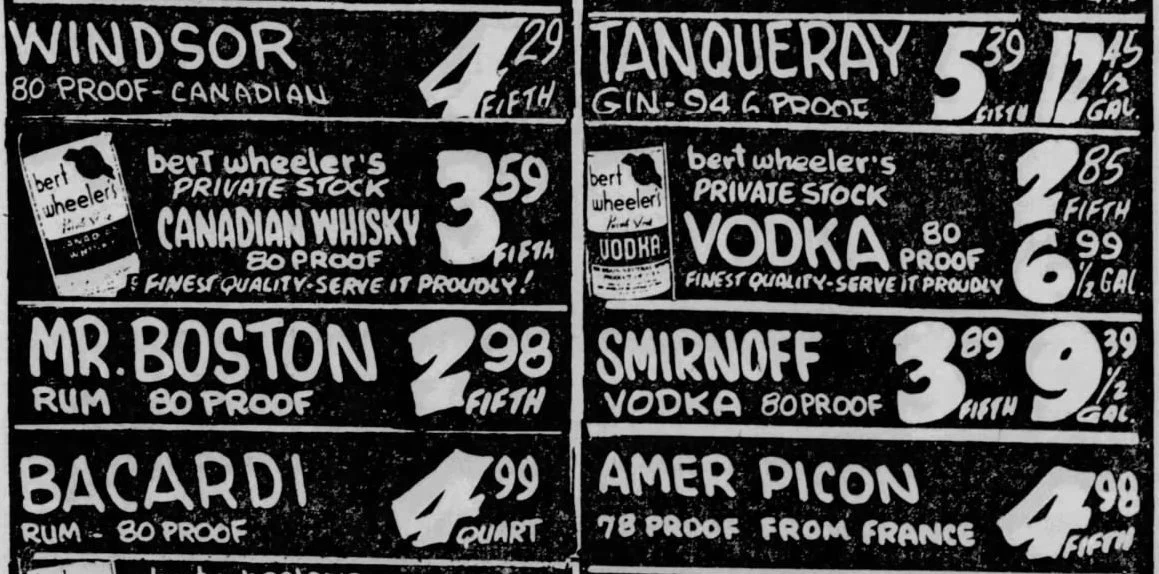
A newspaper ad for Amer Picon at its origina 78l Proof (39% ABV). It changed between 1981 and 1984 to 42 proof (21%)

A photo of Amer Ségalas, manufactured in San Francisco. A competitor to Torani Amer but it stopped productions I believe in the 1970s.

Torani Amer made by the coffee syrup company in San Francisco, eventually became the sole acceptable main ingredient in Basque houses across the west. And so it would be for many years to come.

Until the summer of 2024.

Chris Barkley: One day we just didn't get Torani

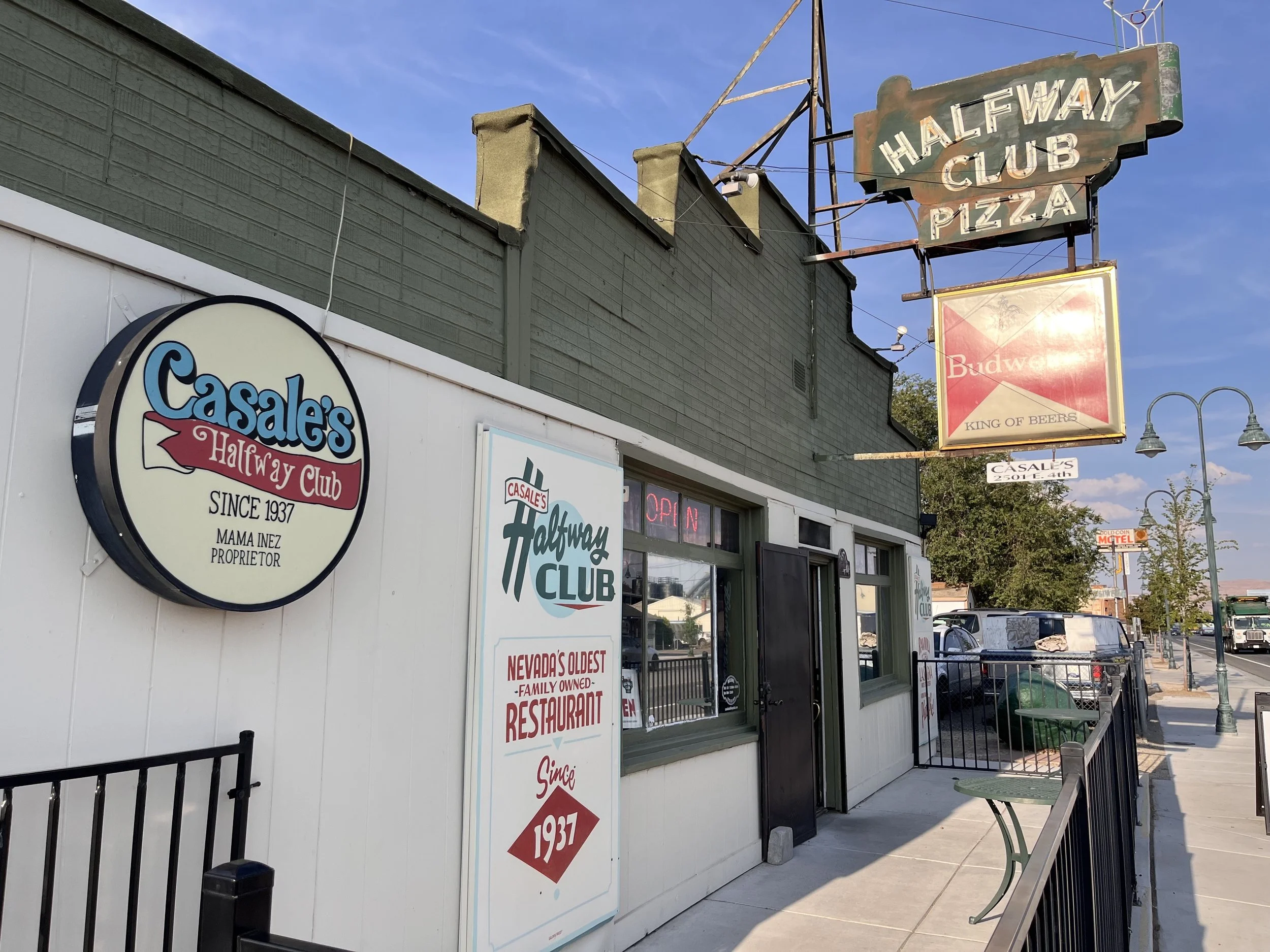
Chris Barkley tends bar at Casale’s Halfway Club in Reno. It’s an old school Italian joint with checkered table cloths and red leather booths and signatures all over the walls.

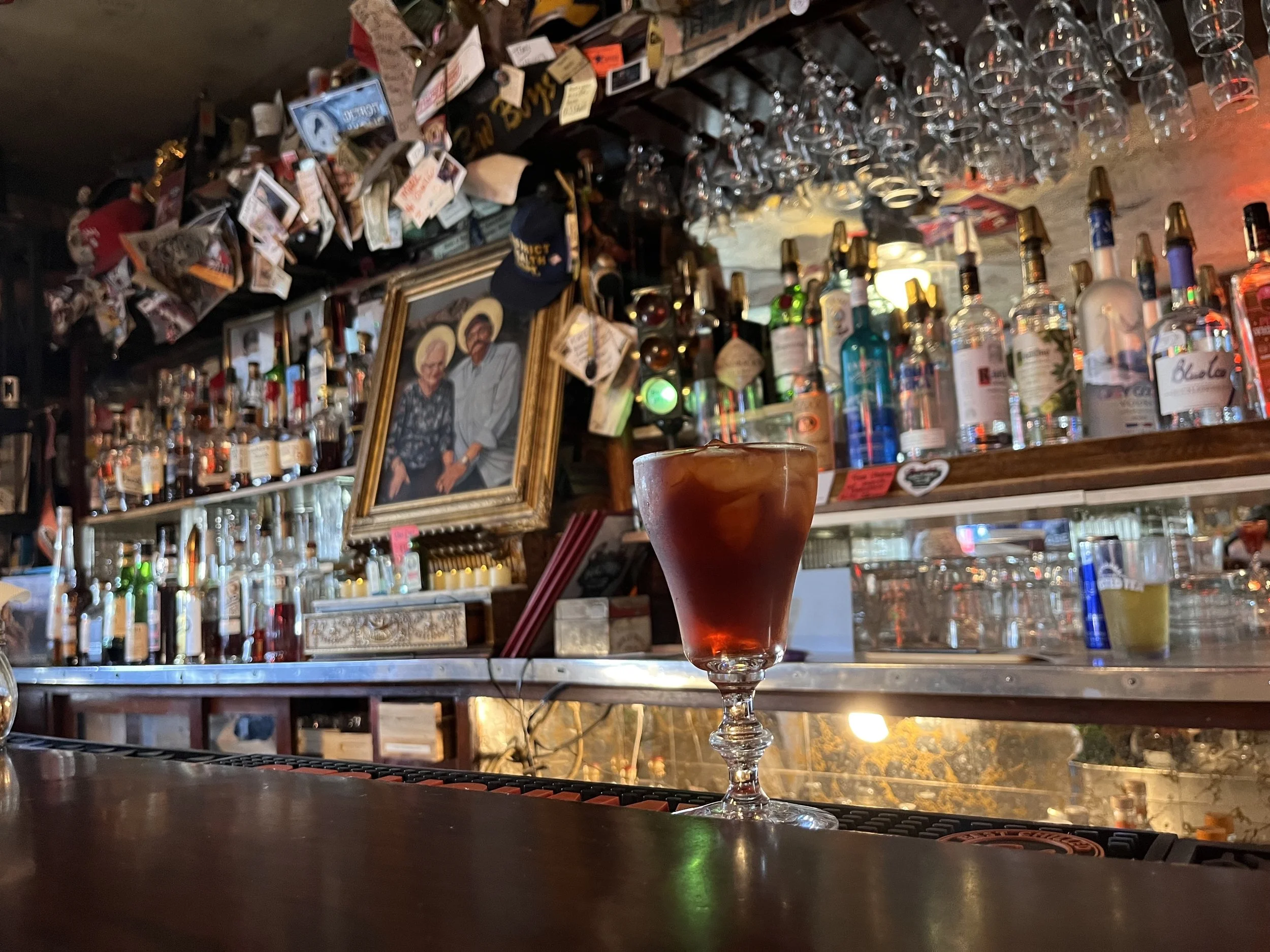
Chris Barkley: You see a brown cocktail sitting in front of you on a wood bar and it just kind of works. You know, aesthetically, I would say it does work.

The restaurant is an old 2 bedroom house; the front windows look across the old Lincoln Highway to the railroad tracks, and it’s been family run since the 1930s. A portrait of the late Inez Casale and her son Tony is displayed behind the bar on top of an old cash register, outlined by concentric rings of artifacts from memorable nights: The written scores of dice games from decades ago, photos, license plates, empty bottles of Torani and Malort, fading photos of baseball players, and and here too there is just one small TV tucked into the corner.

Though not a Basque house, Casale’s is a place people specifically go for a Picon. It was the first place that I ran into the shortage.

Chris Barkley: Nobody really knew for a couple weeks what was going on until I eventually heard through a rumor mill that there was something in the ingredient with the Torani Amaro (sic) that they couldn't ship over state lines from California. So it was difficult to find anywhere here in town unless you found a place that had a stockpile of it and you could maybe go barter and buy some off of them or something like that…It was really find anything, damn near impossible. And when you try to find the substitute for it, it just wasn't working.

Fil Corbitt: what were you feeling as a bartender who serves a lot of these things?

Chris Barkley: I mean, it's obviously a big disappointment for me at least. 'cause I, I like to make sure my customers get the drink they want. And especially when we are known for our Picons here — when you tell 'em our signature cocktail I can't make for you because I don't have the ingredients for it, it's obviously a very difficult discussion to have with people coming in. During that time it was just a lot of anger by a lot of people.

The Picon Punch has a poetic resonance with Northern Nevada. It’s quite brown, often maligned and almost always explained as an “acquired taste”…but once you learn to find the subtlety, it is really quite lovely. It is an unmeasured drink, the recipe is passed down orally, so it tastes different wherever you order it, and depending on who’s there. The main variant is Elko Style without club soda. But it’s the small changes between places that really flavors the thing.

The cocktail is a symbol of something intangible here. It doesn’t work well in a shiny new bar with vinyl floors and LED lights and big TVs, but it doesn’t work in every old bar either. It’s all about context, and also I think, it doesn’t work with other Amers. During the drought, people began to sub in others but they were all too sweet, and pleasant, and to my palette didn’t reflect the landscape at all. Lush french oil painting instead of scratches on your legs from running through the brush.

Those Amers made a drink a tourist would like on the first sip: which I don’t say as an affront to travelers, but as a crucial part of the process of this place: the unfolding path into the sage.

After a couple months of the shortage, Torani was able to regain certification and they started shipping again. But rumors swept across the Great Basin that the whole ordeal shook Torani’s dedication to the Amer. Now a coffee syrup company, it was the last alcoholic beverage they produced. And if they sold it, or just shut down production, who knows what would happen.

Fil Corbitt: The story I've heard goes that Torani wanted to get rid of the recipe. And that they sent basically like secret scouts to go to a bunch of distilleries and kind of feel 'em out and see where it might be most at home. And that eventually somebody came here and chose here. Is that the actual story is that tall tale?

Joe Canella: That sounds, that's, that's pretty accurate…. Torani did their homework and then eventually just very innocently reached out on our website. Like on the “contact us” form.

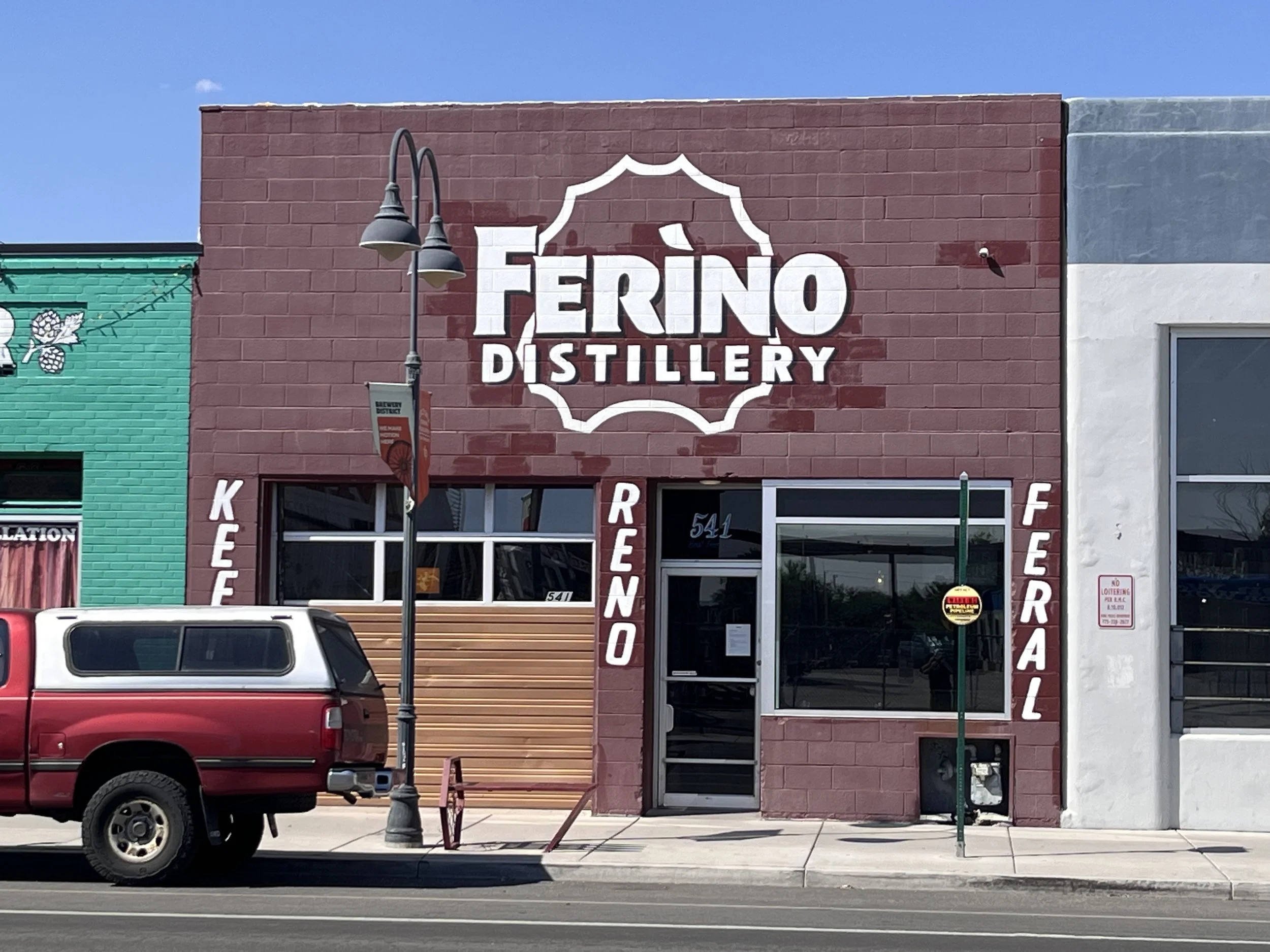
Joe Canella owns Ferino Distellery in Reno, Nevada, just down the street from Casale’s Halfway Club. It’s a small distillery that specializes in Amaros and Fernets.

Joe Canella: when I got that email, strangely, I just had this really funny feeling deep down that it was going to be something big. I almost got like, really emotional. I mean, I, I got an email through my web form and I kind of got a little emotional.

The rumor mill was right: Torani did want to ditch the Amer. The email was from the company’s international head of operations.

Joe Canella: We started chatting. We signed an NDA and they told me that they were looking for someone to take it on, and the had us in mind, but we wanted to, you know, spend some time feeling it out. In a couple of months we drew up some paperwork and they signed over the recipe.

It’s hard to imagine, at this point in our country’s history, a big company giving away a valuable piece of property of any sort. But they did, free of charge.

The folks I spoke to at the time were cautious with their optimism, but worried that a new distiller might change it or might not get the spirit of the thing.

Fil Corbitt: I got a call from J.B. (Lekumberry) saying, you know, hey, so Torani just got rid of this thing, and it's a guy in Reno and we're having him down to the JT. And the way he described it really quickly over the phone sounded kind of like a meeting of the families. Like it was like all these Basque restaurant owners. What was that dinner like? Do you remember that?

Joe Canella: Yeah. It was wonderful. I mean, it was definitely a little bit of like… we have an now have this important component of this thing—this very important Nevada thing, and obviously Nevada Basque thing.— And here we are… like you said, a seat at the table, so to speak. In my mind I was like, this is very important. We're here mostly to kind of get to know each other. So I, I wasn't trying to talk like too much shop in that first meeting. We literally was just like, “Hey, hi.” You know, I know what's going on and you know what the Torani Amer means, and I understand how important it is. So we all kind of understood the importance of this thing for each other and for the state.

The recipe changed hands and became Ferino Amer. In a strange stroke of cosmic luck or coincidence or something, there was other big news in the world of the Picon. A new push had begun in the state congress to make it the official drink of Nevada.

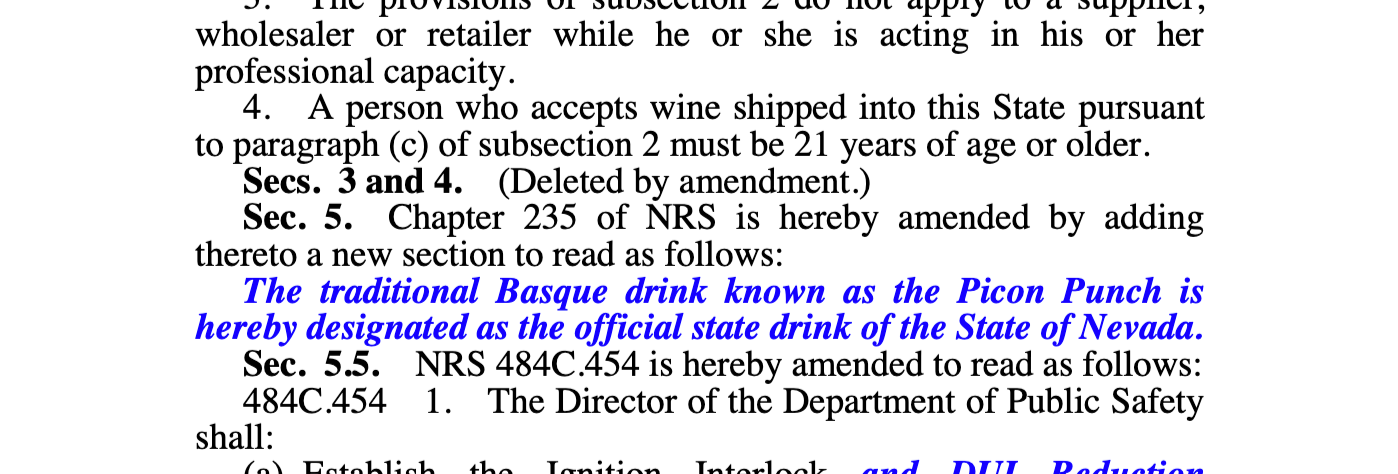
Similar efforts had failed, several times. There’s a hilarious transcript from 2013 where a state lawmaker asks why on earth they would want to honor a drink that tastes like aviation fuel. But this time, it seemed to have legs. That was mainly because in a legislative juke, it got tacked on to a different bill which would allow bars to sell cocktails to-go, the way they did during Covid. In June 2025, at the very end of the session, it passed.

The Picon Punch is now the official state drink of Nevada.

• • •

After the shortage many places stocked up on Torani, just in case. But almost a year after the switch, that stock has run out and Ferino Amer has now replaced Torani almost every place I’ve been to. It tastes just slightly different—a little brighter—which makes sense changing facilities and landcape, but to my palette it easily passes. And most importantly, it has the right spirit to it.

Marie Louise Lekumberry: It's about paying attention to what's happening around you. You become acclimated. And people coming to Nevada for the first time, they look out and they say there's nothing here. And it doesn't take them very long to feel what that ocean of Sagebrush just did to you. And I would say that's very similar with the Picon punch. You start to get into it and suddenly…you’re there.

The Picon is a drink you can only define by describing what’s around it.

Back at the JT, the summer storm hanging over the Sierra stays where it is, raining into the mountain but not a drop over here in the sagebrush. The evening is warm, the air clear and people begin to stream in for early dinner and 9 out 10 have a Picon in hand.

Etienne Lekumberry: it's almost religious or, at the very least spiritual…. the Picon punch deserves nothing but the utmost respect. You can go too, too far with them, you know? And generally there's a saying, one's not enough and three's too many. Right? It's like…you don't overdo it on the wine at church. You know? You're allowed your sacrament…and it is in no small way a sacrament of the Basque restaurant and boarding house. And it demands and it requires respect.… and two really is the magic number, right? We're giving you one more, one more than the church gives ya!

The Wind is produced by me, Fil Corbitt. This independent podcast is made with listener support, if you’d like to help make this show possible head to https://patreon.com/thewind and set up a monthly donation. You can also sign up for free to get updates.

The reporting for this episode was originally for NPR’s All Things Considered.

Thanks to Marie Louise, Etienne, J.B. and Anna Lekumberry along with Ryan Lamb and the whole staff at the JT for keepin it real. Thanks to Chris Barkley at Casale’s Halfway Club and Joe Canella at Ferino Distillery.

There is a new documentary called PiconLand by friend of the show Mark Maynard and Richard Bednarski. Mark helped out with some of the research and I highly recommend the film which talks to folks all over the region. Thanks to Gage Smith (Picon Drinkers of the American West) and Mike Higdon (The origin of the Picon Punch, Reno Gazette Journal) who spoke with me for the 2017 version, Ravenna Koenig, Sydney Martinez (with more Picon information in her book Finding Nevada Wild), Luka Starmer, Sierra Jickling, Mark Nesbitt and everybody who’s ever picked up a round.

Thank you for being here,

Cheers!

Fool's Gold! • The Story of the Sazerac Lying Club

Extra Extra!! From the banks of the Reese River, a newspaper that propped up a honest-to-goodness LIARS CLUB, no lie, and a story from the city who built itself on such falsehoods. The secret history of bitcoin? The Toiyabe Mole Man in the mines of ERN, NEVADA? The TRUE story of TOTAL LIARS and the history they invented for themselves, and for us.

A story about lies, hoaxes, squibs and narrative foundations poured directly on top of rock-hard truth in some places, yet in others, onto the shaky ground of an earth pocked with tunnels and holes.

| • | • |


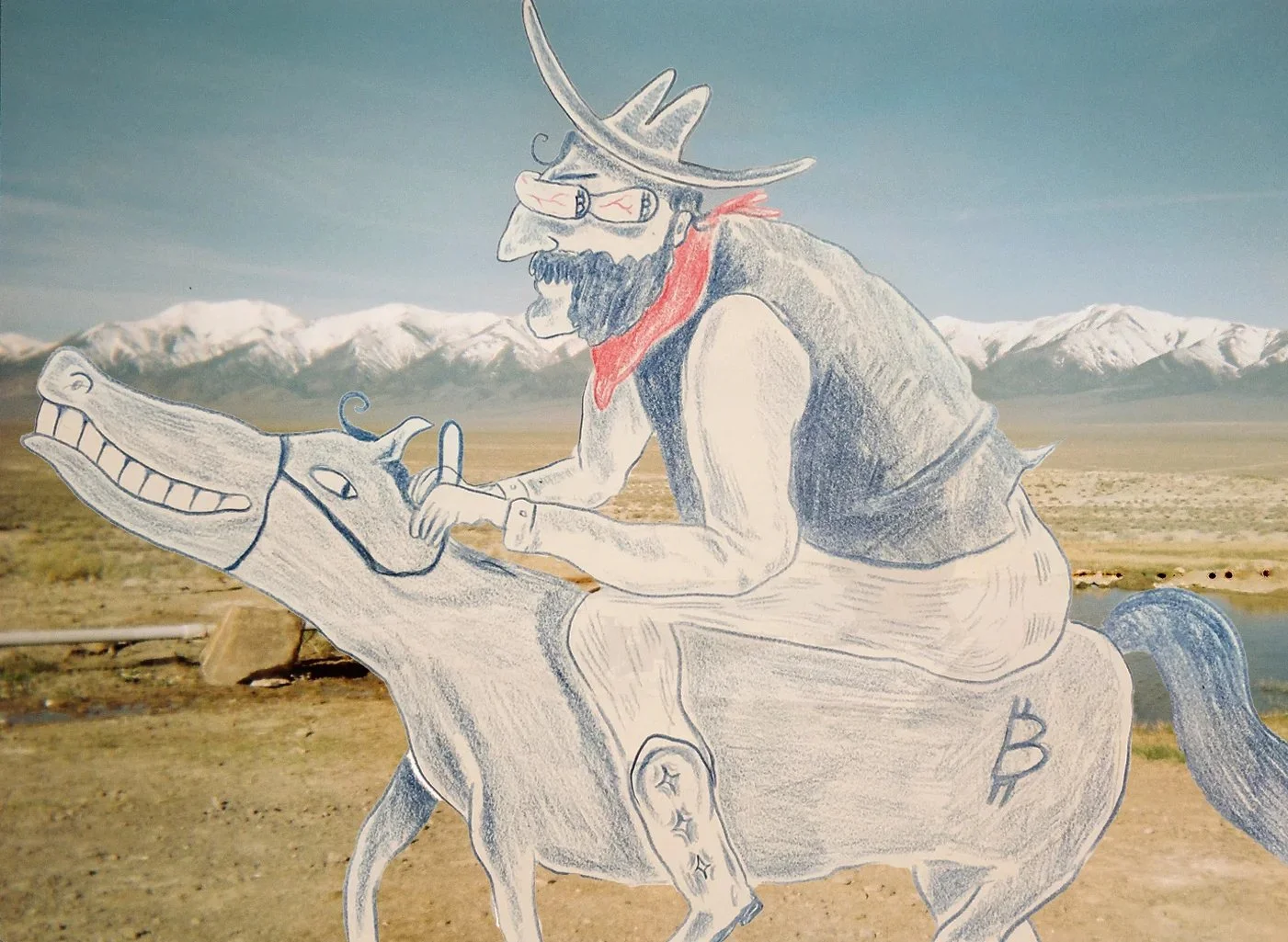
The word “Bitcoin” comes from an old mining phrase.

Silver was discovered in Nevada around the 1850s, and out-of-work miners in the spent claims of California rushed back the way they came, building cities in the high desert mountains. These towns would boom in just weeks, thanks in part due to coordinated promotion. A salesman would be hired by landowners or mine owners to travel around the west and convince people that his town was the next big thing.

Frequently these promoters would never see their marks again, and so… they’d lie through their teeth. The more people they convinced to move to their city, the more money they made, and the easier it was to convince other people to do the same. The phrase those promoters would use to attract people, was the phrase “Bit Coin.”

As in, “Ladies and Gentlemen, we officially *Bit Coin* in Silver City. You oughtta get there as quick as possible if you wanna bite some coin yourself!”


One day in 1862 a promoter showed up in Virginia City, claiming coin had been bitten in Central Nevada. It was an isolated stretch of desert mountains, and on the edge of the apparent vein was a newly-founded city called ((ERN)). At the time Virginia City was booming. And though the flush times were good for some, a lot of the workers got there late and couldn’t even afford a place to live, sleeping in tents and lean-tos and dusty bedrolls on the periphery of town. Some heard about ERN from the promoters on C Street or read about it in the Territorial Enterprise and thought ‘that might just be a way to get in on the ground floor’. These hopeful souls pulled up literal stakes, and rode horses and mules to a place that would become the geographic center of Nevada. and when they got there, they killed and ate the horses they rode in on.

Though they had not seen the promised veins of silver, feet thick, easy pickings, they had faith in this new place, and value—above all—was in faith.

What they didn’t know, is that nobody in ERN had really bitten coin. Not much anyway. There was a little silver here and there, but the promoters successfully blew it out of proportion to bring people to the town and to sell land and building materials and absinthe and shaving cream and jeans and newspapers. And so the city of ERN flourished. Like many boom and bust mining towns, the population grew quick. A newly built board building in the dirt-road down town soon became home to a newly founded newspaper to serve the curious readers settling on the sagebrush steppes; this was The Reese River Reveille.

The Reese River Reveille, named for a nearby waterway, would soon become world famous for a column dutifully penned by editor-in-chief Fred H Hart, and that column was called the Sazerac Lying Club.


At the time, there was frankly no expectation for objective, information-based reporting, and that kind of practice—the factchecking and clear attribution and careful parsing of words and obliteration of doubt from behind a bushy mustache that they teach in Journalism school—that would not take root until the mid 20th century. Back then, there were often multiple papers in a single small town, and readers would choose the one whose editorial bent or sense of humor aligned most with their own, so they could read mostly real news through the lens of a trusted eye.

The Territorial Enterprise in Virginia City for instance, where Samuel Clemens became Mark Twain, was a paper where tall tales and exaggeration were part of the DNA. Its readers knew as much, except for when they didn’t, and the exaggerated missives of a possibly lubricated journalist landed as claims of hard bitten truth. Twain was even apparently run out of town over an ill-recieved squib.

The papers were frequently staffed by a bohemian crew of literary misfits who had tried their own hand at mining, but fell back on their pens when it became clear that the only people making money in the mines were those who already had a lot of both. Now the The Reese River Reveille in ERN, Nevada existed squarely in this context, and was known to push the boundaries of metallic reality. The paper spent its first couple of years as a town promoter itself, reporting generously on the rapid growth of the new mining operations, and drumming up hype.

Neighboring papers would routinely call each others claims into question and the Reveille was often the can on a post.

"A Gentleman just in from the Reese River informs us that the ledges there which are called a foot thick are generally from one to two inches… What a lying age we live in.” -The Gold Hill News

Another paper from Reno wrote,

“To bite coin is a phrase fitting of Gold, not silver, for Gold is soft enough to bend under teeth. Silver, however, is harder and a bite of a silver coin does not reveal its truth.” -The Reno Theoretical Crescent

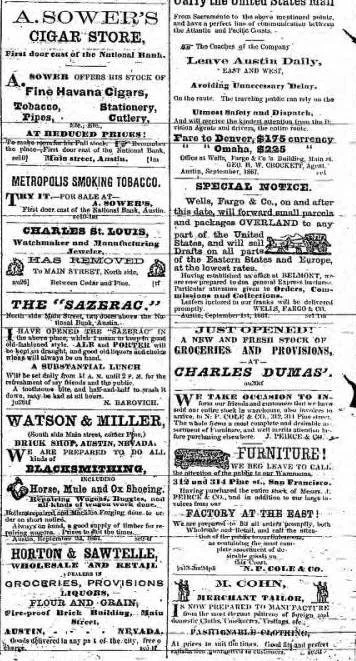
Despite, or perhaps because of its loose and fast approach, a lot of Nevada, even outside ERN subscribed to the Reveille. And with that readership, ads sold fast. Advertisements took up more than two thirds of the pages at one point. Event listings for dances, personals taken out by prostitutes, one man even advertised his own life - claiming that he so desperately needed the money, that whoever paid the highest price would be allowed to shoot and kill him.


What started as a lie in the newspaper, slowly became reality. The Sazerac Lying Club began to organize.

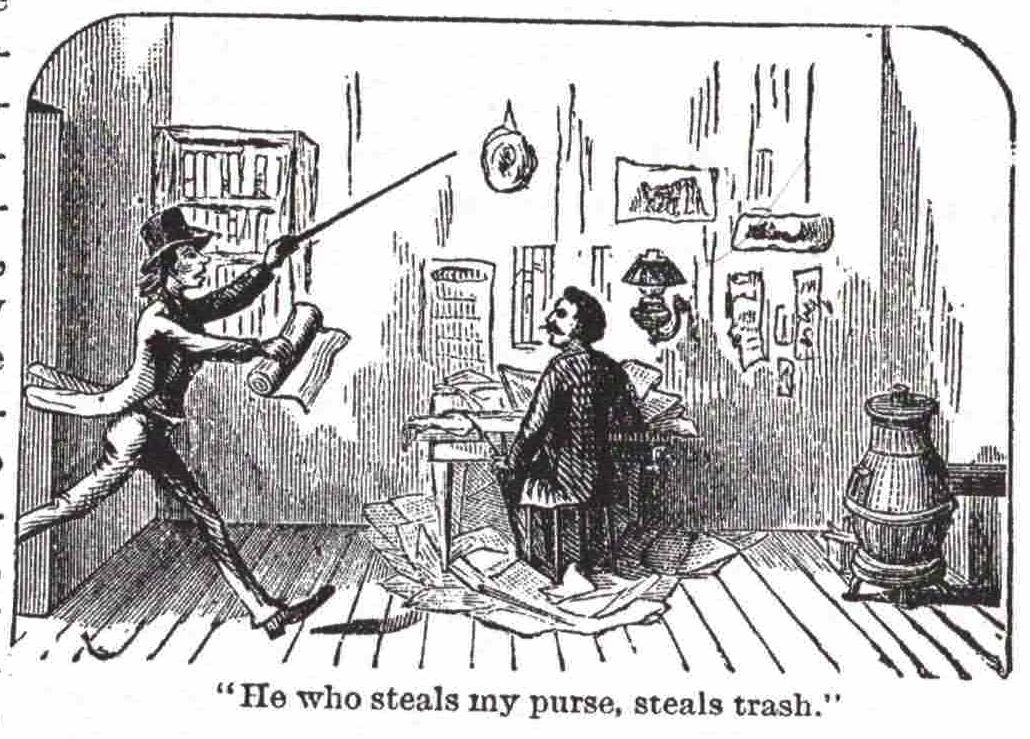
Even though they were initially upset with Fred Hart for making the whole thing up, the club adopted the name, the man Hart called George Washington Fibley became the actual presidentThe club would meet up in the evening, and Fred Hart claimed he’d pan through the stream of tall tales to deliver the nuggets of story-telling gold to readers of the Reveille.

Illustration by M Jiang, 2018

One popular story is this one: A Liar named Uncle John was riding up the highway south of town and saw a low, dark cloud blocking the road. At first, he thought it was a freak storm which is not uncommon in the high desert, but he got closer and realized it was not a storm but it was birds. Thousands of birds. He tried to ride through, but when the horses on his wagon hit the wall of birds, it felt as if they had run into a brick wall. The wall stretched across the entire valley, so he turned back and headed up to visit a friend who he knew had blasting dynamite for mining. They figured if they could tunnel through the earth, they could tunnel through the birds. But after a long ride back to the road, telling his friend about the incredible sight he was about to see, there wasn’t a single bird in the valley. This, he explained, was why he was late to the meeting.

That story was reprinted, as they often were, a few weeks later this time in a German paper, BUT the translation strayed. In the German version, the man returned with his friend and they blasted a hole with the dynamite and tunneled through the bird cloud, which had been changed to geese and in this version, presumably, Uncle John was on time to the meeting. And that is how the story is remembered.


The column paints a colorful picture of the Club’s behind-the-scenes deliberation. In fact, it spends quite a bit of time talking about motions and applications for membership, social slights and head butting. Hart’s Club will argue and spit, pulling tight against the lies of their fellow members, calling bullshit, evaluating the merits not just on truth but on the way the thing unfolds. It’s interesting seeing the peer-review in real time, deciding what flies and what sinks, a de-mo-cratic process.

At one point a liar points to a picture of President George Washington on the wall and asks if the club knows the story about the cherry tree. The reply is tepid, so he recounts the founding tale: the boy’s receipt of an ax, his excitement to put it into use and the felling of his father’s favorite tree. When the dad returns, he heads straight to the slave’s quarters where he slathers blame on anyone near. But none of the men enslaved by the Washington family take responsibility, so the father searches for his kid who is now manically hacking away at an old board in the barn. Future president George Washington is caught dead-to-rights, and admits his mistake and falling to his knees, asks for forgiveness. His dad is so moved by this simple truth that he bursts into tears and accepts the apology in a beautiful moment of national pride.

“Wal as for me,” one liar says in response, “I think it’s the dog-gonedest biggest lie as was ever told in this here club and I’d like to hear the sentiments of the gentlemen here present on the subjeck.”

The group puts the story to a vote, an in unanimous decision, they deem it a downright LIE.

Thus did the club,” Hart wrote, “in one fell blow, demolish a great truth of American History.


As ERN reached it’s peak in the 1870s, the miners and townspeople could intuit that something was off. They could feel that the metal beneath the mountains was lighter than promised, not nearly enough to maintain the gravitational force it takes to anchor a city to the desert floor.

But before the bust, there was still money to be made. The men still sent promoters to parts unknown. Hell, if they could sell their homes and buildings and mining claims (salted or not) to newcomers and men of speculation, they might not get left holding the bag.

In this national market economy, speculators need not be prospectors either. Combing through far-flung newspaper reports and word from trusted scouts, investors from afar—San Francisco, New York—would buy shares into the mines and companies of frontier businessmen living shabbier lives than they, out on the edge of the economic fringes. Useful, to the men in suits.

Though some bought stake in specific mines, gambling on the assayer’s initial findings, other investors followed the credo that those who get rich are those who sell goods to the hopeful. Townspeople would offer shares in their construction companies, their saloons, their dynamite importation business. Some of these were bonafide, some just smoke in the shape of a man.

One savvy business owner knew that the suits on Wall Street were no fools, and that a smart man would know that heavy ore must be transported from the hinterlands to a real city where smart men could process it and tuck it safely into a trustworthy bank, or similar institution. And so he founded the Reese River Shipping Company which purported to lend transport of raw ore from ERN Nevada by Freight Ship up the Reese River all the way to San Francisco. The men in New York saw opportunity here; if the silver was as abundant as the Reveille seemed to believe, the men would be rich.

The details not included in the telegraph were as follows:

The Reese River is in the Great Basin and so never makes it anywhere near San Francisco, instead petering out in a local desert sink.

Also

The Reese River is about a foot deep and in most places you can step across it without getting your boots wet.

With these details lost to omission, the shipping company sold many shares.


Over the course of regular congregation, the Sazerac Lying Club adopted rules and bylaws. The most notable laid out in the columns of the Reveille was that professional liars like politicians would not be admitted, and that lies would not be malicious or self serving; they would only allow lies which amuse or elevate without harm.

Many of the stories are indeed victimless, and usually about mining, fishing, hard travel. But some were not at all harmless. Dozens include a protagonist who tricks, steal from or outright kills the non-white both in town and in the mythic places that the liars hailed from. The Paiute, Shoshone and Washo, joined by Black and Chinese folks were the target of outright smear campaigns, and sometimes their mere presence the entire punchline. One chapter in Hart’s book, which later compiled his Lying Club columns, is simply titled “Indians and Chinese” and it goes as one may imagine.

The stories unfold against a desert backdrop bigger than the average reader can envision. They also unfold against a violent process of killing, drilling and extracting everything possible from an unfamiliar landscape.

The Chinese Exclusion act, Slavery, bounties on the body parts of the indigenous, women’s subjugation, Manifest Destiny; all from a story people told themselves. The story of who we are, about why we weren’t getting rich, about where we, as a country, came from.

Lies were used to inflate the value of the town.

Lies were used to stratify every person in it.


Today ghost towns exist across the western deserts because natural resources are scarce. When the Silver or Gold dried up, it was no longer sustainable to transport food, water and lumber to town. So the residents would leave. What I’d like to say is that there was a lie so fantastic that it killed the town of ERN, leaving a ghostly husk in the desert wind.

Something like:

It’s around midnight and Uncle John leans in over the wood stove.

Did you know this place is doomed?” he says, eyes darting to every tired face in the room. Wind whipping at the slats of the barroom.

How would you know?” a liar mutters.

Well”, John Says, “I was down in the mine and I heard a rustling at the end of the shaft. Knowing I should be the only one in there, I set my lantern down and crouched up against the wall, thinking whoever it was would assume I ran.

But the rustling got louder and louder, It didn’t sound like a person. It sounded like claws in the dirt, scratch scracth and they were getting real close. So I jumped up toward the lantern and pointed my gun into the darkness.

Right then, a face stepped into the flickering light. It was a man, alright, but a man so gnarled, his skin was rougher than a bristlecone pine, and his limbs more crooked. His teeth were black as night, and his eyes were shut tight like they hadn’t been open in a decade.

John shifts in his seat, the others leaning deep in to his story.

And here’s what he says, he says, ‘your mountains ‘er runnin dry. Get on up to Bannock Montana where they bit coin last week,’ and finished the sentence with a resolute coughin’ fit. — And I think, he must be a blind promoter, maybe got turned around, came in here for shelter. But when he gets a breath he says

I know what you’re thinking and I’m not a town promoter!

I AM THE TOIYABE MOLE MAN and I can tell when a mine’s runnin dry from 12 miles away. And there ain’t no coin for 12 miles in any direction from where we’re standin’ right now.

“I shook his grimy hand and walked back into town and right here into my seat in the Sazerac.

So who of you wantsta go ta Bannock?” John finishes and the crowd erupts. Everyone in the bar believes every word which spreads like fire through the night, and they grab what they can and the town is deserted by daybreak.


But it wasn’t a lie that undid the town.It was the cold, hard truth.

The city could start up on hype and lies, but could only last so long. Eventually the mining operations that were promised to be bigger than the Comstock, weren’t. and the shipping companies that promised to transport silver never floated a single coin.

Today, ERN is practically a ghost town. The buildings still stand, the stone church, the heads of the mines, slatted walls meeting the high desert floor. A few bars here and there still function. The paper is long gone, just a patch of sagebrush in the breeze near the motel and gas station and the shut down hardware store with screeds taped to the windows.

The only thing that seems to be growing, new, is a large warehouse on the edge of town.

On the main street when asked a man in a flat-brim hat said it was a secret data center, just popped up, no one knows what’s in it.

An old timer ducking into the bar snapped his suspenders and rocked up on his toes saying “Bit Coin, my boy. It’s the Block Chain.”

And the lights stay on all night…


A few years into the Sazerac Lying Club, Fred H. Hart was offered a book deal. In the column he said the liars put it to a vote, and agreed to hand over the rights to their stories. However, they stipulated that all future lies and meetings would be private. The Reese River Reveille would stop printing their columns. And like that, the club publicly disappeared.

It is unknown whether the Sazerac Lying club dried up that night, flush with the royalties of a New York book deal. Or if they simply went underground for a while and then dried up along with the town, or if there are still some old miners in that bar today, sittin around, tellin’ lies.


« | • | »

Music by

2 Original songs by Emily Pratt. Emily makes music as Howls Road, support her work here:

And friend of the show Yclept Insan

The Circumambulation of a Sacred Mountain

Walking a circle around Slide: a mountain named for its own downward motion.

I think most mountains are sacred. Some more than others. Major and minor gods, the parts of earth heaved into the realm of the sky. Round these parts, there are 2 major gods: Mt. Rose and Peavine Peak. Walter von Tilburg Clark once wrote of them as a binary choice — Rose, the tall, beautiful figure rising from the verdant pine forests of the Sierra: graceful, a bit full of herself. Peavine the overlooked other: an imposing desert peak, a few steps into the rain shadow, more sage brush and open vistas.

But the peak these days that I summit with frequency is Slide Mountain. It’s a peak apparently so unremarkable to “bag” that I’ve never seen somebody else walk up it before.

Today, it stands 9,702 feet, which is impressive in many places, but shorter than it’s neighbors. The tall confident hottie Mt. Rose is just next door at 10,785 feet, rising from a capital W Wilderness that bears her name. And the other thing is that a foot bound summit of Slide is not much to brag about. There’s a maintenance road that goes right to the top, and though there’s a gate—so you do still have to walk—it’s just a couple miles, on what doubles as a ski run in the winter. Hell, if you pay $109 dollars (or $775 for the season), you could ride the chairlifts from the ski resort parking lots right up to the top.

Slide Mountain is also where the radio comes from. The maintenance road up its back spits you out at the feet of several towers, broadcasting AM, FM, TV, and all types of other waves presumably powered by electricity that they keep in these little windowless houses on the peak. The radio towers are minor gods in their own right, and so, I climb to the top a couple times a year to pay tribute. Slide is a mountain named for its own downward motion. On it’s southeast face, there is no southeast face. Or, it’s now part of the mountain’s shoulder and feet and water shed and the valley below. Because for a very long time, it’s been shedding massive land slides.

To walk a circle around a mountain, to circumambulate, is an ancient ritual practice, in both the east and west and I’d venture to speculate other directions as well. Folks of many religious persuasions have ways of doing it, sometimes around or between temples, sometimes encircling specific mountains, like the Kora of Mt Kailash in Tibet.

In the 1960s, poets Gary Snyder, Philip Whalen and Allen Ginsberg began annual circumambulations of Mt. Tamalpais in the SF bay area. Snyder learned the practice from Zen Bhuddists in Japan, and the three explained their walk as “opening of the mountain.”

Though there is at least one Tibetan group that calls for a counter-clockwise direction, most clearly denote the clockwise movement an important directional distinction, to avoid throwing order into chaos.

So as the sky illuminates to the East I head clockwise, down the mountain.

EAST

3.8 Miles • 6,169 elev • Down, down, descent.

When the fire sparked I was far away

It started at the bottom of the hill, a place you’ve heard before in the background of this show. A day’s walk from my house, and my desk. But the wind was characteristically blowing downhill, from west to east. No cause for serious alarm.

When I checked in the morning though, it had moved against the wind, up Slide mountain. The red line on the government map crept toward my spot, all my stuff. I checked over and over again as the fire continued it’s slow march, ticking off groves and forests I knew from walking trips into the valley, now presumably ashen.

I was gone, so I had my computer, a weeks worth of clothes, boots, everything I needed for immediate living, but everything else was now in the path of flame. The neighborhood was evacuated, meat rotted in the powered-down chest freezers, and we’d get occasional bursts of smokey updates from a couple of neighbors who refused the evacuation orders.

On the third day, Several houses had already burned in the valley, and the line was a half a mile from my front door, where it would surely run right over, up through throat forest. Thick dead wood and the late summer mules ears were dry as paper. That’s when the wind picked up.

Every night I would lay down to sleep and I’d see something else in the house that I’d lose if it burnt. At first it was just stuff. Speakers, mics, furniture, tools. I’d think of how to get a new social security card. But then, it was my grandpa’s jacket. My partner’s letters. Journals, signed books, projects, and the Wind archives. All the interviews I’ve ever done, and the third hard drive I’ve been meaning to load them on and store at another location, sitting empty in a drawer. And then of course the desk, the pathways, and meadows, the willows around the fountain of youth, the arborglyphs i knew by name, all of it.

On an evening announcement, the fire behavior analyst said we could see a many mile run that next day. They released a map that showed the woods surrounding our neighborhood going up before breakfast, before it shot something like 7 miles far to the north. Just a possibility — but still. The weather service issued the most severe of fire warnings — extreme winds and bone dry humidity. And the fire crews worked through the night, cutting lines by machine and hand, creating a gap to try and hold the fire in its boundaries.

That day I flew home. I got to the airport early so I could grab a window seat on the west side, and I could see where they were holding it, and the airplane was thrown around by the violent winds. I waited in the valley and fell asleep, distracting myself with Television not beamed from the top of Slide — those towers were all down. But I had seen this show before — fire lines overrun, huge flares of ember rise and sail into dry woods far downwind.

And then in the morning, I read the news.

The fire lines held through the night.

And the next morning, the same.

And then the wind died down

and that was that.

• •

It was as if I split off into the one alternate universe where the fire somehow stopped. Where not just my stuff, but my interviews, the aspen groves and the 80 year old carvings, the view from my living room, all lived. Blackened woods stood just a half mile from my house, bizarrely outlining my typical walking boundaries, but the places I knew best were untouched.. Today, I traverse, for the first time here, the land of the burnt. And then I exit into the sparred pines and continue.

SOUTH

5.5 Miles • 7,265 elev. • Who owns the land that’s landed on another’s land?

In the book Roughing It, Mark Twain once wrote of this spot on the mountain. In the story, a rancher named Dick Hyde rides furiously to reach the east coast attorney who’s just arrived to town. Hyde tells him that there’s been a landslide, and that his neighbor’s ranch, which is normally above his on the side of the mountain, has in fact slid downhill — and his house, barn, fences, everything — have landed squarely on top of his own. The owner of that plot, Tom Morgan, has decided he likes this spot better, and has posited that it’s his house, his fences, his dirt, so the land belongs to him, despite being located on top of Hyde’s property.

The east coast attorney, having just arrived in town, calms Hyde down saying this will be a cut and dry case, no reason to worry. So days later they go to trial with Nevada governor Roop overseeing the proceedings. The testimony is heated, they hear from dozens of witnesses, and finally the case rests. Roop begins his deliberation.

“Gentleman,” he says, “I feel the great responsibility that rests upon me this day. This is no ordinary case. On the contrary, it is plain that it is the most solemn and awful that ever man was called upon to decide. Gentlemen I have listened attentively to the evidence and have perceived that the weight of it, the overwhelming weight of it, is in favor of the plaintiff Hyde. I have listened also to the remarks of council, with high interest—and especially will I commend the masterly and irrefutable logic of the distinguished gentleman who represents the plaintiff.

But gentlemen, let us beware how we allow mere human testimony, human ingenuity in argument and human ideas of equity to influence us at a moment so solemn as this. Gentlemen, it ill becomes us, worms as we are, to meddle with the decrees of Heaven.

It is plain to me that Heaven in inscrutable wisdom, has seen fit to move this defendant’s ranch for a purpose. We are but creatures, and we must submit. If Heaven has chosen to favor the defendant Morgan in this marked and wonderful manner, and if Heaven dissatisfied with the position of the Morgan ranch upon the mountainside, has chosen to remove it to a position more eligible and more advantageous for its owner, it ill becomes us insects as we are, to question the legality of the act or inquire into the reasons that prompted it…

I warn you that this thing which has happened is a thing with which the sacrilegious hands and brains and tongues of men must not meddle. Gentlemen it is the verdict of this court that the plaintiff, Richard Hyde, has been deprived of his ranch by the visitation of God! And from this decision there is no appeal.”

Sometime later, after the attorney indignantly stormed from the court room, Governor Roop approached him with a realization. Hyde, he said, still owned the title to the ground below the Morgan ranch, so he had full right dig it out from under there and—

about two months later, the attorney’s realization that he had been the target of a grand joke bore itself, Twain wrote, through the solid adamant of his understanding.

Mark Twain was drawn to Nevada by the mining boom in Virginia city, next range over. That boom is what brought huge waves of European Americans to this part of the world, and as David Besley details in the book Crow’s Range, turned this landscape into something almost unrecognizable from it’s previous state. This place in particular, the whole mountain, was entirely deforested, the logs sent by flume across the valley to build the wooden, underground structures that held up the mines.

The Wasiw lived here for millennia and had a very different way of living with this land. They call this mountain Daw Matlashing Dala’ak.

The new ways of interacting with the world that were supplanted here by settlers were just as unrecognizable as the range without its old growth forests… Like a deforestation of an entire worldview.

WEST

8.3 Miles • 8,906 elev. • “Occupation”

Eventually the mining boom did end, but the other industry wrapped around this place was tourism. Lake Tahoe right down the hill, was carting in tourists since the late 1800s, then narrowly failed to become a National Park alongside Yosemite.. By the 1930s, downhill skiing became the new industry of note.

This rugged terrain that had been logged and picked over, was reborn as a constellation of ski resorts. There was a dirt road that ran up Slide but it was summer-time only, and so in the 1950’s they carved out a highway to get to the ski resorts from both directions. When they built it they called it the road to the sky, and it became a hotspot for celebrities, being halfway between Reno and Lake Tahoe. Slide Mountain, Mt. rose, Sky Tavern.

Down the road there were a few restaurants, bars and inns a casino all gone now, mostly in ruins with no trespassing signs hanging at tilt from temporary chainlink fencing. One was called the Christmas Tree, and they made steaks over Mountain Mahogany fires and they got in trouble for cheating in cards, then again for using weighted dice. Later, the owner kept a couple of lions in a cage out back.

In 1951 Frank Sinatra and Ava Gardner, who were having an affair, got into a fight after dinner at the Christmas Tree when Gardner got drunk and told him that she slept with a bullfighter in Spain. Being blitzed himself, Sinatra called her a whore and Gardner got in her car and drove all the way home to Los Angeles only to find out that Sinatra attempted suicide that night by swallowing a bottle of pills.

A lot of the stories about this place have a sort of cloud over ‘em. My friend Mark Maynard compared it to how Sedona Arizona is apparently some sort of nexus of positive universal energy, but inverted. Lots of deaths and fights, and failed ventures, lives and big ideas shucked off to the valley below.

•••

I know the tax assessors number for that house where the guy invited me in, and all the lots around it. I keep looking at the map, plus the maps of neighboring streets, wondering if one day I’ll get to buy a one of em. The future isn’t clear on that.

The big ski resort just bought another building nearby. They’ve been expanding, still the current industry in favor on the mountain. They bulldoze huge tracts of trees, use massive whirring engines to make snow in the winter, then flatten it all out and charge people to slide around on it. Seems like a profitable venture, as they’ve proposed building a ski bridge over the highway and eating up an aspen grove. I then look at valleys on the tax site further from the pavement, far from the coming lights and lifts and I write down the addresses of the people who own them.

On an episode of this program long ago I remember writing something like, “I don’t care to own it, I just want to live there.”

NORTH

13 Miles • 7,547 elev. • Yellow leaves // in the wind

It seems like most everything anyone builds on this mountain eventually slides. The old resorts in ruins, the rigged casino steakhouse, the tree-top winter-time house of prostitution. The golf course and luxury resort and gated community that thankfully got shot down in the 70s.

I think that’s the thing I keep returning to. It all slides off. Like the land itself is at odds with owning it.

Robert MacFarlane wrote about walking terrain as a way to map out ideas, and this whole thing, where to live, owning land, the current occupation and economic uses of the place, what it means to be here it’s all a path of thought I have in a big circle.

And then I touch my toe to the place on the pavement where I started, and I closed the loop on my circumambulation.

The Circumambulation of Slide Mountain, Nevada

• • •

Credits

Thank you to Michael P. Branch who read the Mark Twain passage (Highly recommend his book How to Cuss in Western) Mark Maynard, Eleanor Qull, and all of the folks who’ve helped support the show this year, there are too many to list.

MUSIC:

Two tracks from Haana Lee’s new album called Textures.

Emily Pratt, who makes music as Howls Road

Friend of the show Yclept Insan

and a few tracks from the Public Domain through Free Music Archive.

Further reading: The Way Around by Nicholas TrioloThe Old Ways by Robert MacfarlaneThe Living Mountain by Nan Sheperd

Thank you for being here, and keep listening.

Keywords: circumambulation, slide mountain, slide mountain nevada, slide mountain nevada trail, circumambulation nevada, circumambulation sierra nevada, Mt rose, peavine peak, the christmas tree nevada, tahoe, mark twain, walking in circles, robert macfarlane, circumnavigation hike, wasiw land, Mt rose ski resort, the wind, Fil corbitt

Year 6 • Prologue

I’ve been thinking about the radio towers.

The ear to the radio, the radio to the towers, the towers to the microphone, the mic to the sound. Somewhere on the edge of the landscape that the algorithms can just barely reach, I keep a folder of sounds it could never understand. What does wind, or a wind harp, or an idea that can’t quite be explained; what does that sound like to an artificial ear? On Year 6 of The Wind, new sounds and archival work re-imagined.