Walking a circle around Slide: a mountain named for its own downward motion.
I think most mountains are sacred. Some more than others. Major and minor gods, the parts of earth heaved into the realm of the sky. Round these parts, there are 2 major gods: Mt. Rose and Peavine Peak. Walter von Tilburg Clark once wrote of them as a binary choice — Rose, the tall, beautiful figure rising from the verdant pine forests of the Sierra: graceful, a bit full of herself. Peavine the overlooked other: an imposing desert peak, a few steps into the rain shadow, more sage brush and open vistas.
But the peak these days that I summit with frequency is Slide Mountain. It’s a peak apparently so unremarkable to “bag” that I’ve never seen somebody else walk up it before.
Today, it stands 9,702 feet, which is impressive in many places, but shorter than it’s neighbors. The tall confident hottie Mt. Rose is just next door at 10,785 feet, rising from a capital W Wilderness that bears her name. And the other thing is that a foot bound summit of Slide is not much to brag about. There’s a maintenance road that goes right to the top, and though there’s a gate—so you do still have to walk—it’s just a couple miles, on what doubles as a ski run in the winter. Hell, if you pay $109 dollars (or $775 for the season), you could ride the chairlifts from the ski resort parking lots right up to the top.
Slide Mountain is also where the radio comes from. The maintenance road up its back spits you out at the feet of several towers, broadcasting AM, FM, TV, and all types of other waves presumably powered by electricity that they keep in these little windowless houses on the peak. The radio towers are minor gods in their own right, and so, I climb to the top a couple times a year to pay tribute. Slide is a mountain named for its own downward motion. On it’s southeast face, there is no southeast face. Or, it’s now part of the mountain’s shoulder and feet and water shed and the valley below. Because for a very long time, it’s been shedding massive land slides.
To walk a circle around a mountain, to circumambulate, is an ancient ritual practice, in both the east and west and I’d venture to speculate other directions as well. Folks of many religious persuasions have ways of doing it, sometimes around or between temples, sometimes encircling specific mountains, like the Kora of Mt Kailash in Tibet.
In the 1960s, poets Gary Snyder, Philip Whalen and Allen Ginsberg began annual circumambulations of Mt. Tamalpais in the SF bay area. Snyder learned the practice from Zen Bhuddists in Japan, and the three explained their walk as “opening of the mountain.”
Though there is at least one Tibetan group that calls for a counter-clockwise direction, most clearly denote the clockwise movement an important directional distinction, to avoid throwing order into chaos.
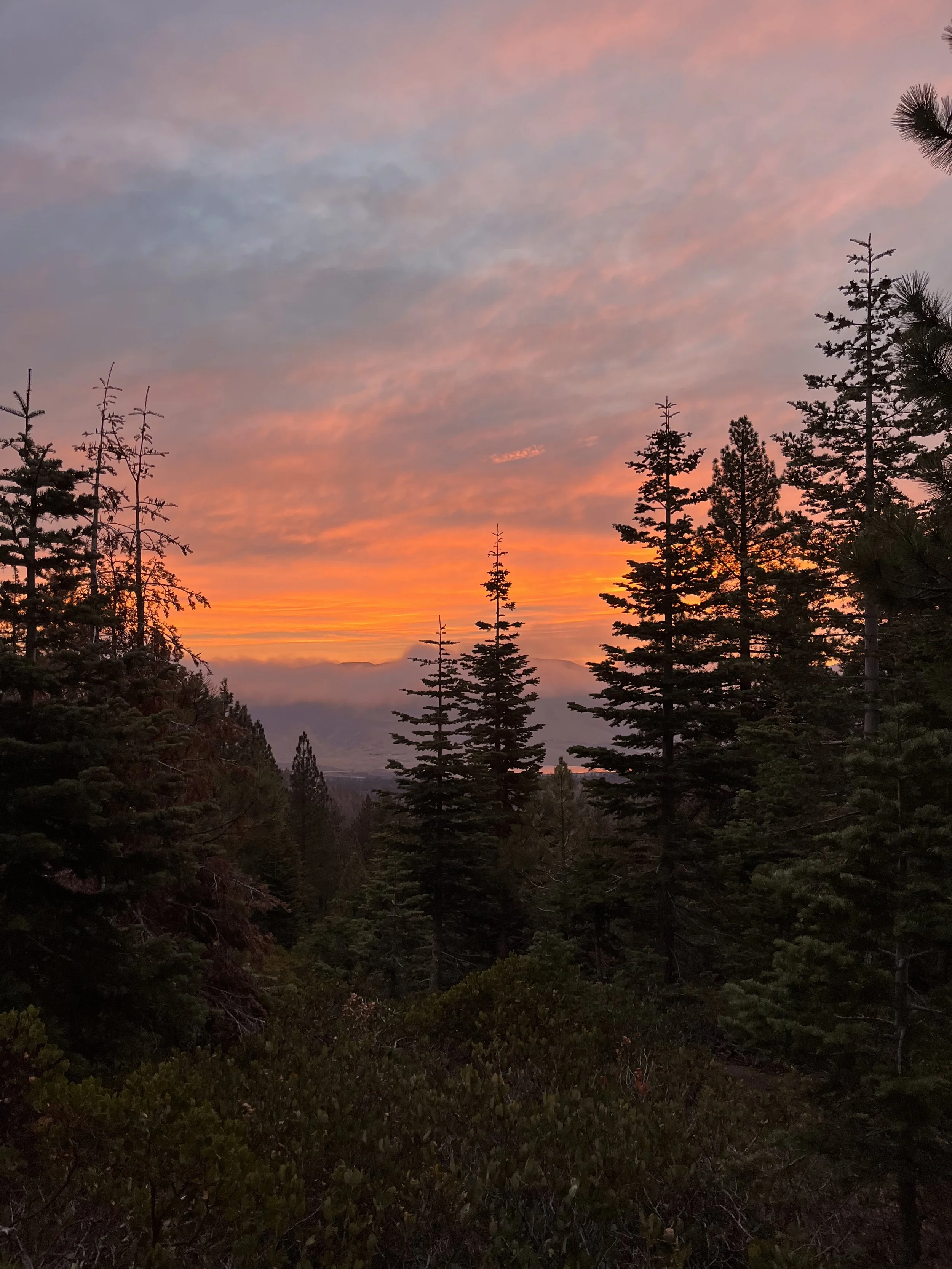
So as the sky illuminates to the East I head clockwise, down the mountain.
EAST
3.8 Miles • 6,169 elev • Down, down, descent.
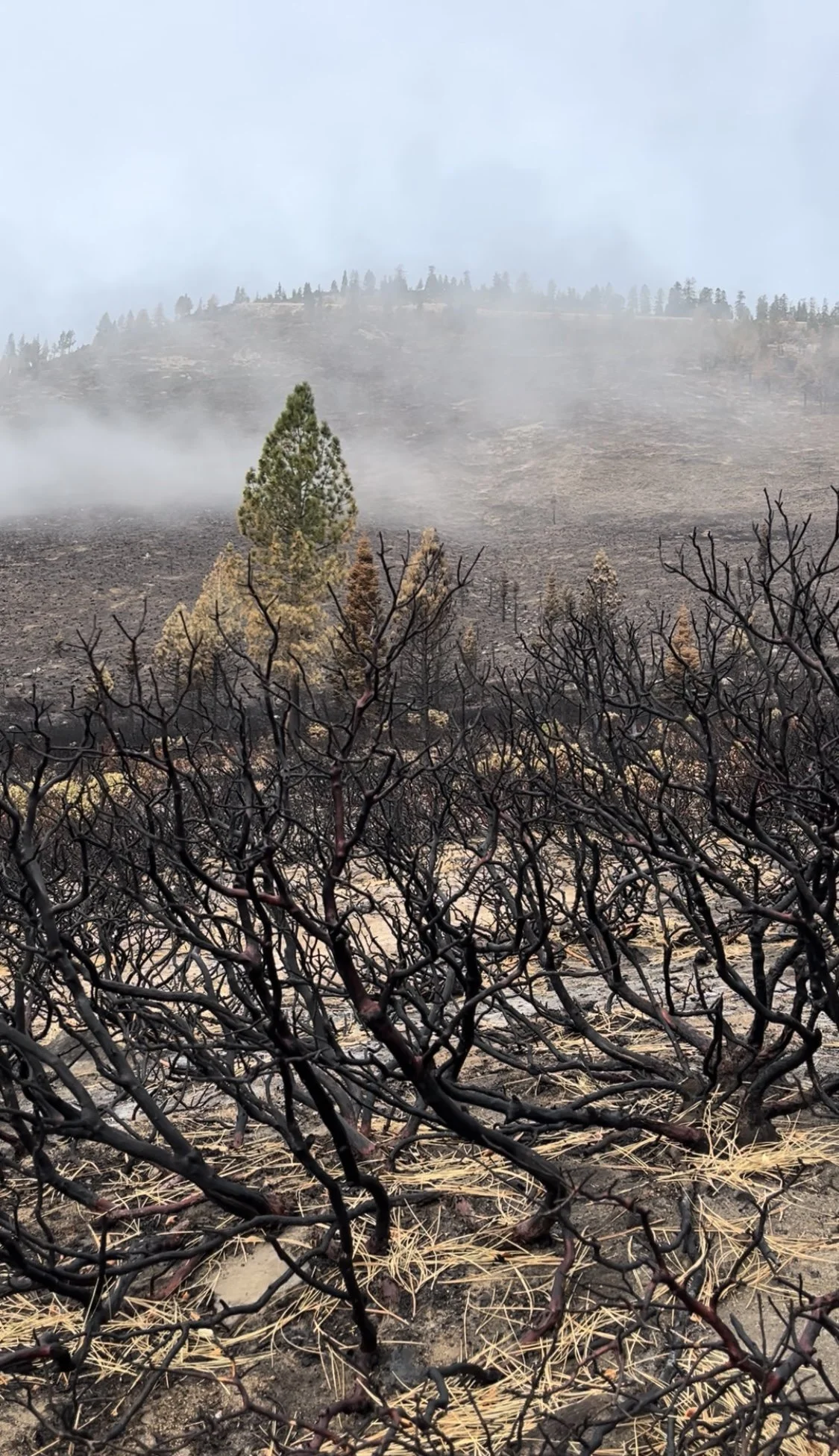
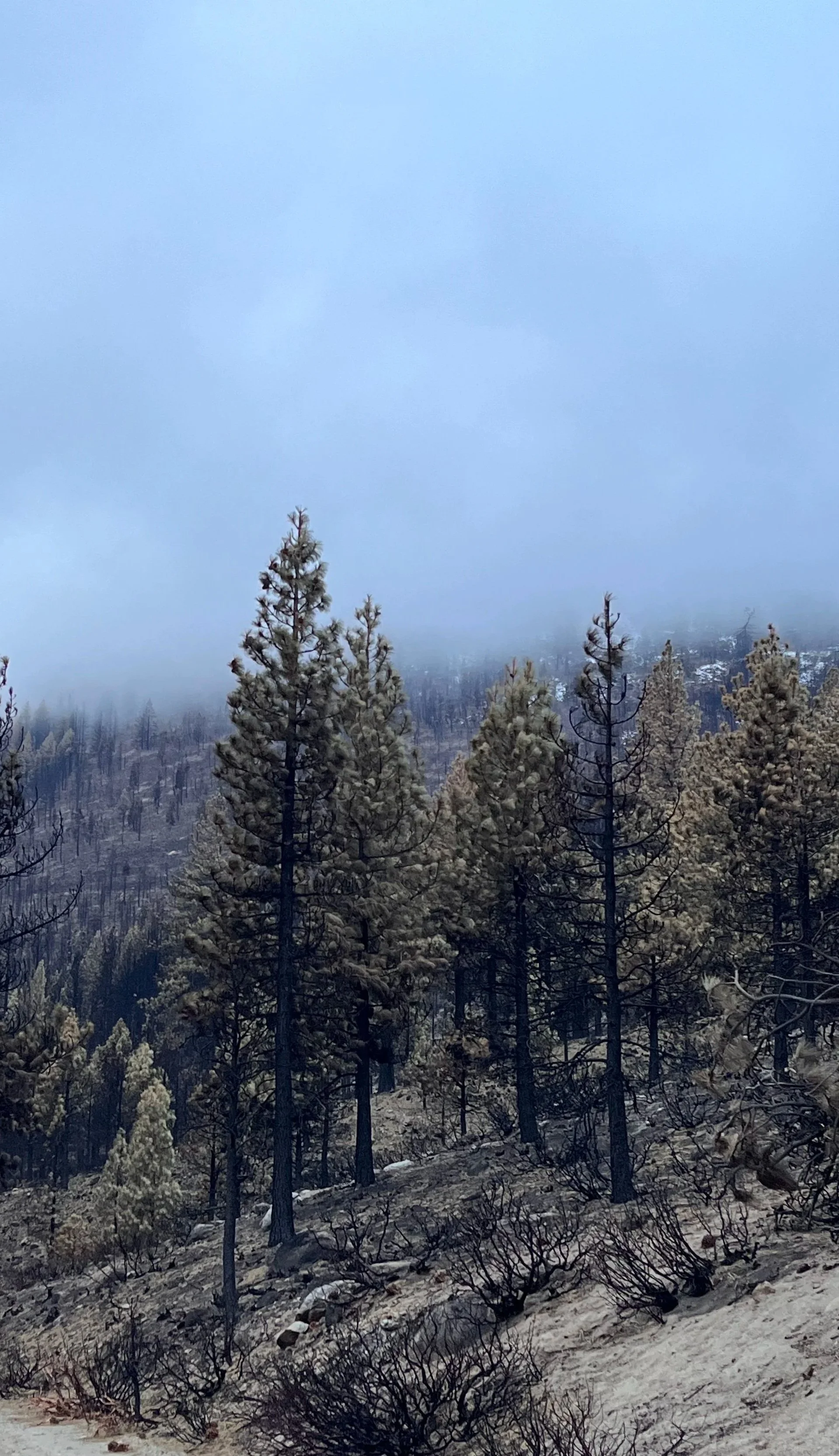
When the fire sparked I was far away
It started at the bottom of the hill, a place you’ve heard before in the background of this show. A day’s walk from my house, and my desk. But the wind was characteristically blowing downhill, from west to east. No cause for serious alarm.
When I checked in the morning though, it had moved against the wind, up Slide mountain. The red line on the government map crept toward my spot, all my stuff. I checked over and over again as the fire continued it’s slow march, ticking off groves and forests I knew from walking trips into the valley, now presumably ashen.
I was gone, so I had my computer, a weeks worth of clothes, boots, everything I needed for immediate living, but everything else was now in the path of flame. The neighborhood was evacuated, meat rotted in the powered-down chest freezers, and we’d get occasional bursts of smokey updates from a couple of neighbors who refused the evacuation orders.
On the third day, Several houses had already burned in the valley, and the line was a half a mile from my front door, where it would surely run right over, up through throat forest. Thick dead wood and the late summer mules ears were dry as paper. That’s when the wind picked up.
Every night I would lay down to sleep and I’d see something else in the house that I’d lose if it burnt. At first it was just stuff. Speakers, mics, furniture, tools. I’d think of how to get a new social security card. But then, it was my grandpa’s jacket. My partner’s letters. Journals, signed books, projects, and the Wind archives. All the interviews I’ve ever done, and the third hard drive I’ve been meaning to load them on and store at another location, sitting empty in a drawer. And then of course the desk, the pathways, and meadows, the willows around the fountain of youth, the arborglyphs i knew by name, all of it.
On an evening announcement, the fire behavior analyst said we could see a many mile run that next day. They released a map that showed the woods surrounding our neighborhood going up before breakfast, before it shot something like 7 miles far to the north. Just a possibility — but still. The weather service issued the most severe of fire warnings — extreme winds and bone dry humidity. And the fire crews worked through the night, cutting lines by machine and hand, creating a gap to try and hold the fire in its boundaries.
That day I flew home. I got to the airport early so I could grab a window seat on the west side, and I could see where they were holding it, and the airplane was thrown around by the violent winds. I waited in the valley and fell asleep, distracting myself with Television not beamed from the top of Slide — those towers were all down. But I had seen this show before — fire lines overrun, huge flares of ember rise and sail into dry woods far downwind.
And then in the morning, I read the news.
The fire lines held through the night.
And the next morning, the same.
And then the wind died down
and that was that.
• •
It was as if I split off into the one alternate universe where the fire somehow stopped. Where not just my stuff, but my interviews, the aspen groves and the 80 year old carvings, the view from my living room, all lived. Blackened woods stood just a half mile from my house, bizarrely outlining my typical walking boundaries, but the places I knew best were untouched.. Today, I traverse, for the first time here, the land of the burnt. And then I exit into the sparred pines and continue.
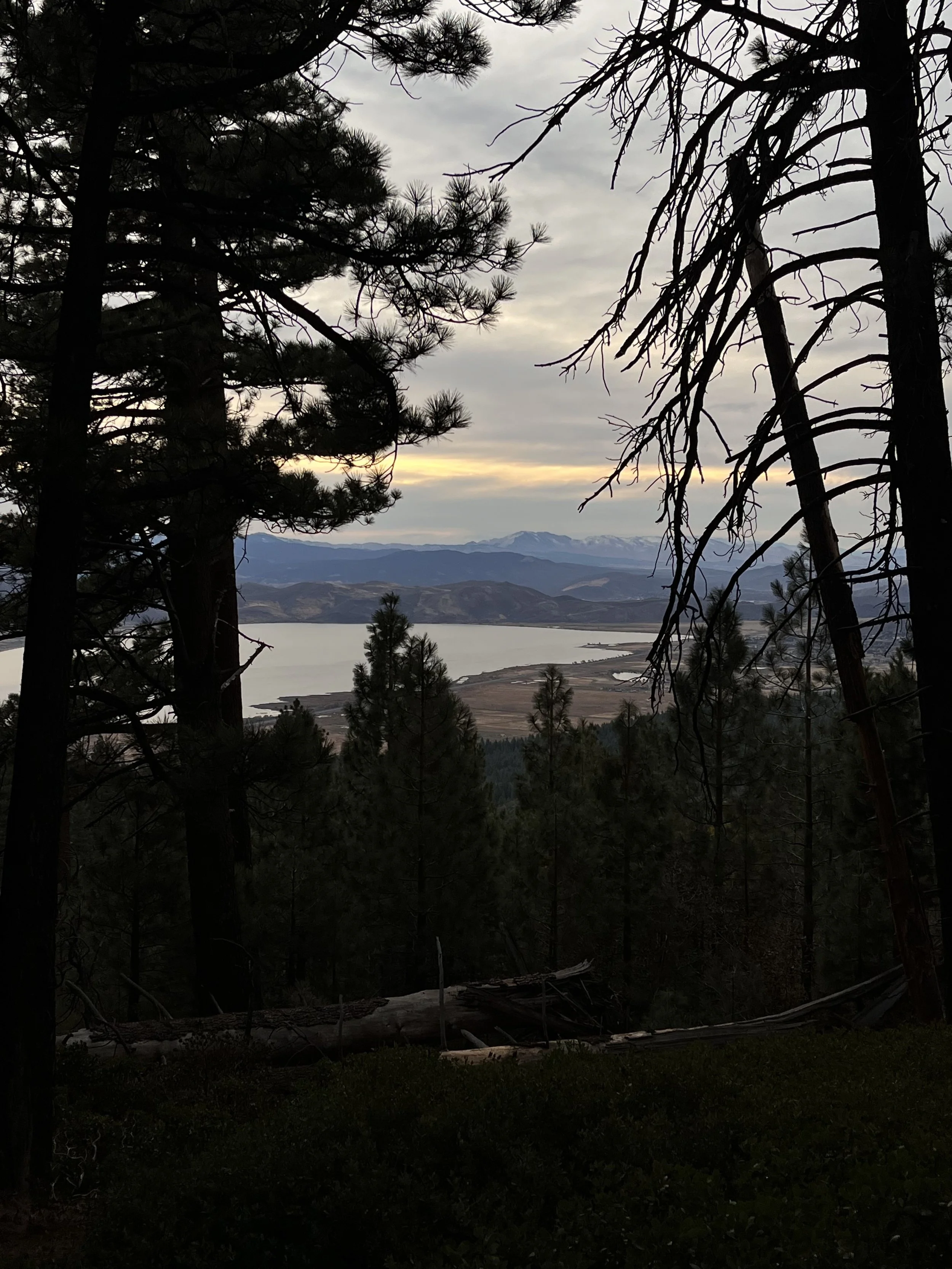
SOUTH
5.5 Miles • 7,265 elev. • Who owns the land that’s landed on another’s land?
In the book Roughing It, Mark Twain once wrote of this spot on the mountain. In the story, a rancher named Dick Hyde rides furiously to reach the east coast attorney who’s just arrived to town. Hyde tells him that there’s been a landslide, and that his neighbor’s ranch, which is normally above his on the side of the mountain, has in fact slid downhill — and his house, barn, fences, everything — have landed squarely on top of his own. The owner of that plot, Tom Morgan, has decided he likes this spot better, and has posited that it’s his house, his fences, his dirt, so the land belongs to him, despite being located on top of Hyde’s property.
The east coast attorney, having just arrived in town, calms Hyde down saying this will be a cut and dry case, no reason to worry. So days later they go to trial with Nevada governor Roop overseeing the proceedings. The testimony is heated, they hear from dozens of witnesses, and finally the case rests. Roop begins his deliberation.
“Gentleman,” he says, “I feel the great responsibility that rests upon me this day. This is no ordinary case. On the contrary, it is plain that it is the most solemn and awful that ever man was called upon to decide. Gentlemen I have listened attentively to the evidence and have perceived that the weight of it, the overwhelming weight of it, is in favor of the plaintiff Hyde. I have listened also to the remarks of council, with high interest—and especially will I commend the masterly and irrefutable logic of the distinguished gentleman who represents the plaintiff.
But gentlemen, let us beware how we allow mere human testimony, human ingenuity in argument and human ideas of equity to influence us at a moment so solemn as this. Gentlemen, it ill becomes us, worms as we are, to meddle with the decrees of Heaven.
It is plain to me that Heaven in inscrutable wisdom, has seen fit to move this defendant’s ranch for a purpose. We are but creatures, and we must submit. If Heaven has chosen to favor the defendant Morgan in this marked and wonderful manner, and if Heaven dissatisfied with the position of the Morgan ranch upon the mountainside, has chosen to remove it to a position more eligible and more advantageous for its owner, it ill becomes us insects as we are, to question the legality of the act or inquire into the reasons that prompted it…
I warn you that this thing which has happened is a thing with which the sacrilegious hands and brains and tongues of men must not meddle. Gentlemen it is the verdict of this court that the plaintiff, Richard Hyde, has been deprived of his ranch by the visitation of God! And from this decision there is no appeal.”
Sometime later, after the attorney indignantly stormed from the court room, Governor Roop approached him with a realization. Hyde, he said, still owned the title to the ground below the Morgan ranch, so he had full right dig it out from under there and—
about two months later, the attorney’s realization that he had been the target of a grand joke bore itself, Twain wrote, through the solid adamant of his understanding.
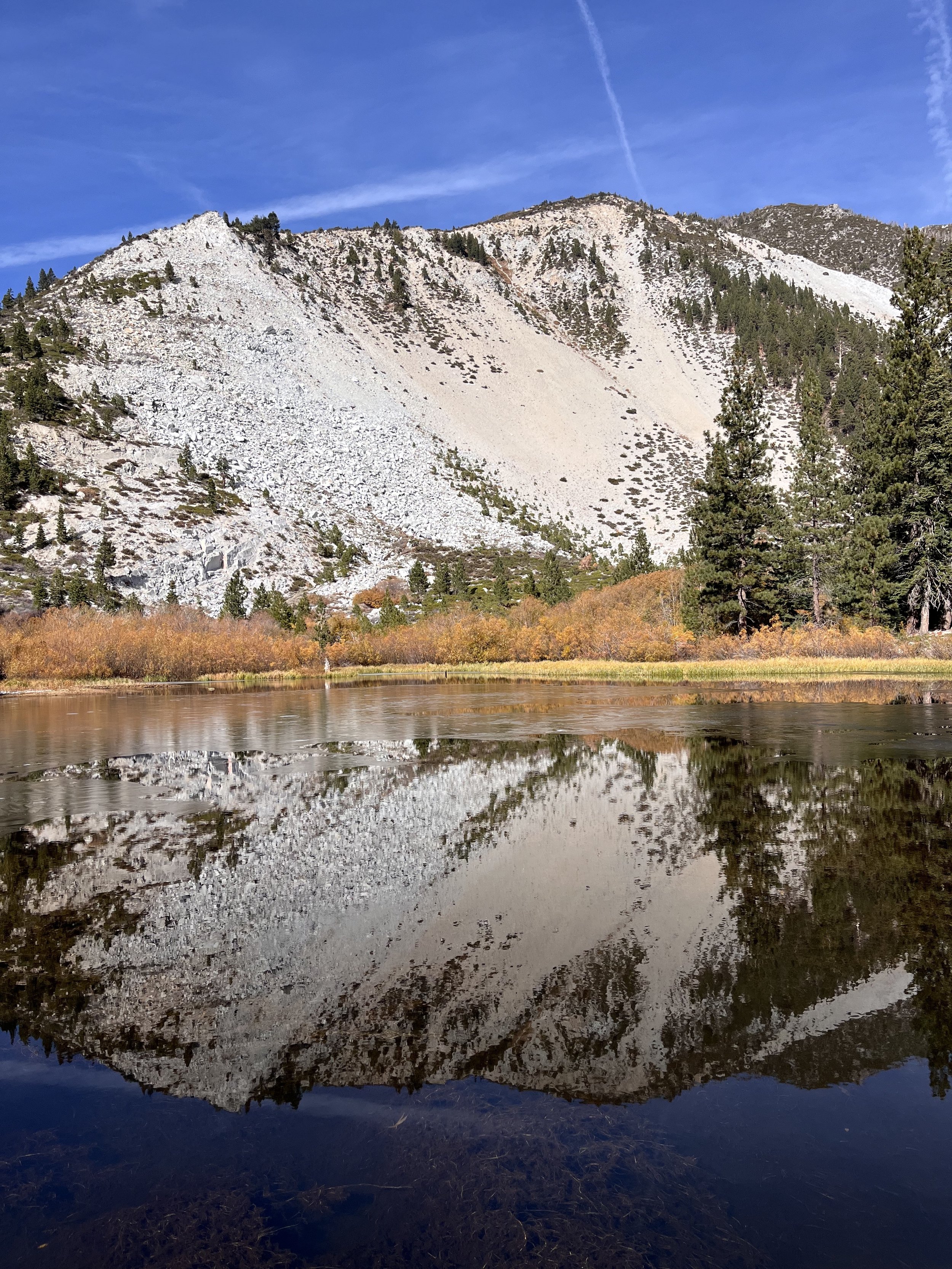
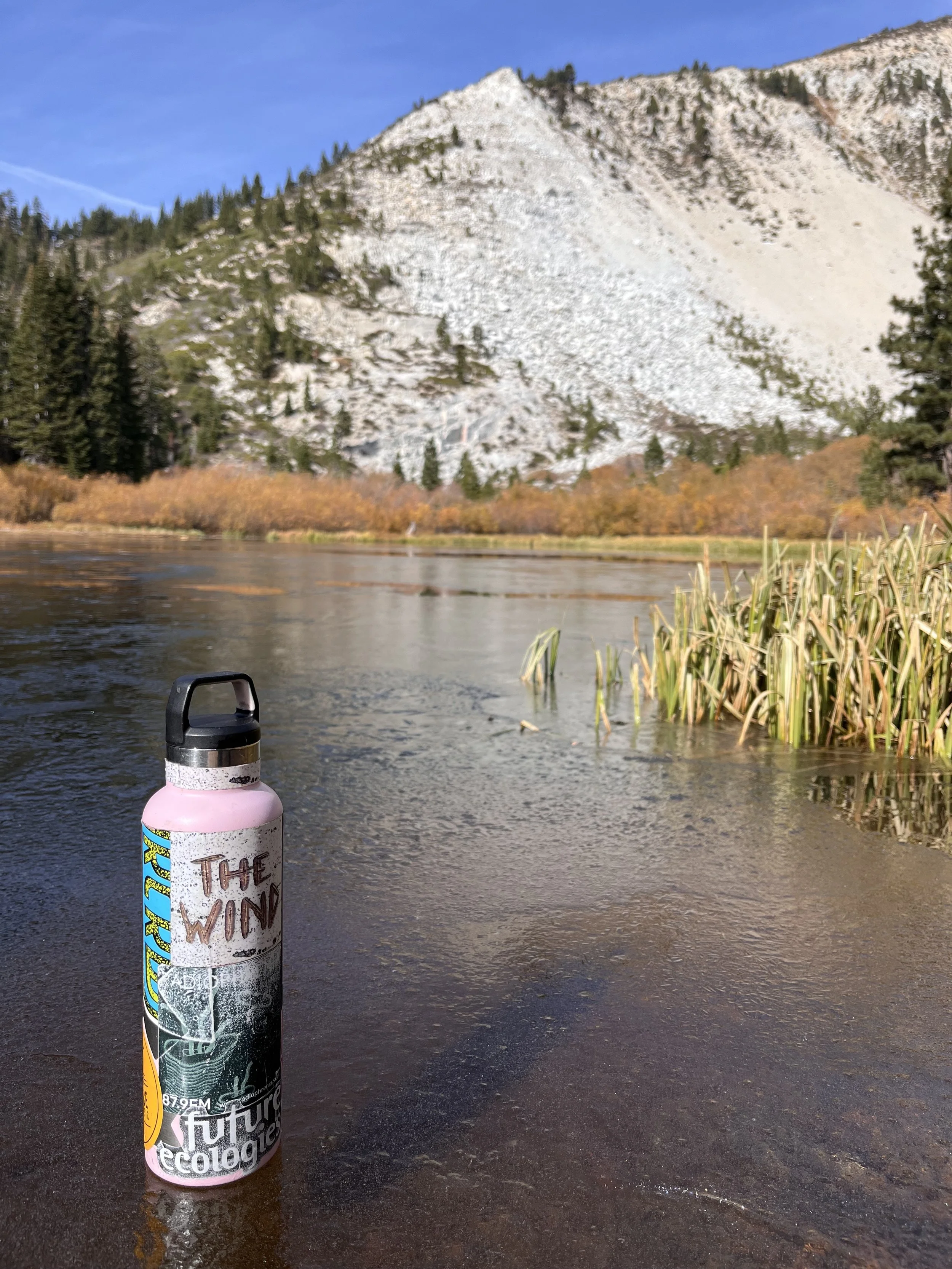
Mark Twain was drawn to Nevada by the mining boom in Virginia city, next range over. That boom is what brought huge waves of European Americans to this part of the world, and as David Besley details in the book Crow’s Range, turned this landscape into something almost unrecognizable from it’s previous state. This place in particular, the whole mountain, was entirely deforested, the logs sent by flume across the valley to build the wooden, underground structures that held up the mines.
The Wasiw lived here for millennia and had a very different way of living with this land. They call this mountain Daw Matlashing Dala’ak.
The new ways of interacting with the world that were supplanted here by settlers were just as unrecognizable as the range without its old growth forests… Like a deforestation of an entire worldview.
WEST
8.3 Miles • 8,906 elev. • “Occupation”
Eventually the mining boom did end, but the other industry wrapped around this place was tourism. Lake Tahoe right down the hill, was carting in tourists since the late 1800s, then narrowly failed to become a National Park alongside Yosemite.. By the 1930s, downhill skiing became the new industry of note.
This rugged terrain that had been logged and picked over, was reborn as a constellation of ski resorts. There was a dirt road that ran up Slide but it was summer-time only, and so in the 1950’s they carved out a highway to get to the ski resorts from both directions. When they built it they called it the road to the sky, and it became a hotspot for celebrities, being halfway between Reno and Lake Tahoe. Slide Mountain, Mt. rose, Sky Tavern.
Down the road there were a few restaurants, bars and inns a casino all gone now, mostly in ruins with no trespassing signs hanging at tilt from temporary chainlink fencing. One was called the Christmas Tree, and they made steaks over Mountain Mahogany fires and they got in trouble for cheating in cards, then again for using weighted dice. Later, the owner kept a couple of lions in a cage out back.
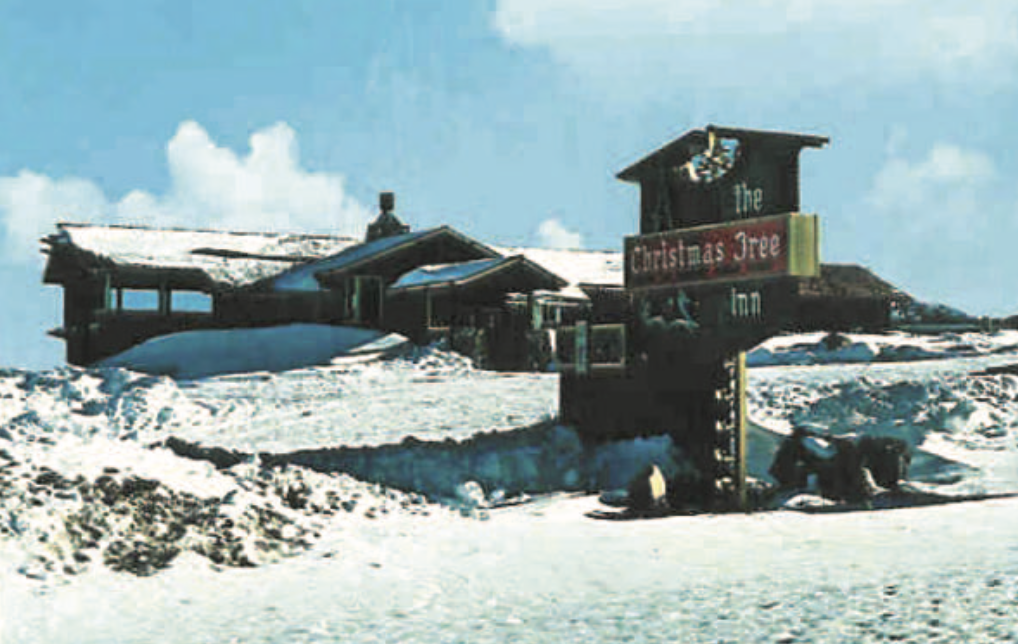
In 1951 Frank Sinatra and Ava Gardner, who were having an affair, got into a fight after dinner at the Christmas Tree when Gardner got drunk and told him that she slept with a bullfighter in Spain. Being blitzed himself, Sinatra called her a whore and Gardner got in her car and drove all the way home to Los Angeles only to find out that Sinatra attempted suicide that night by swallowing a bottle of pills.
A lot of the stories about this place have a sort of cloud over ‘em. My friend Mark Maynard compared it to how Sedona Arizona is apparently some sort of nexus of positive universal energy, but inverted. Lots of deaths and fights, and failed ventures, lives and big ideas shucked off to the valley below.
•••
I know the tax assessors number for that house where the guy invited me in, and all the lots around it. I keep looking at the map, plus the maps of neighboring streets, wondering if one day I’ll get to buy a one of em. The future isn’t clear on that.
The big ski resort just bought another building nearby. They’ve been expanding, still the current industry in favor on the mountain. They bulldoze huge tracts of trees, use massive whirring engines to make snow in the winter, then flatten it all out and charge people to slide around on it. Seems like a profitable venture, as they’ve proposed building a ski bridge over the highway and eating up an aspen grove. I then look at valleys on the tax site further from the pavement, far from the coming lights and lifts and I write down the addresses of the people who own them.
On an episode of this program long ago I remember writing something like, “I don’t care to own it, I just want to live there.”
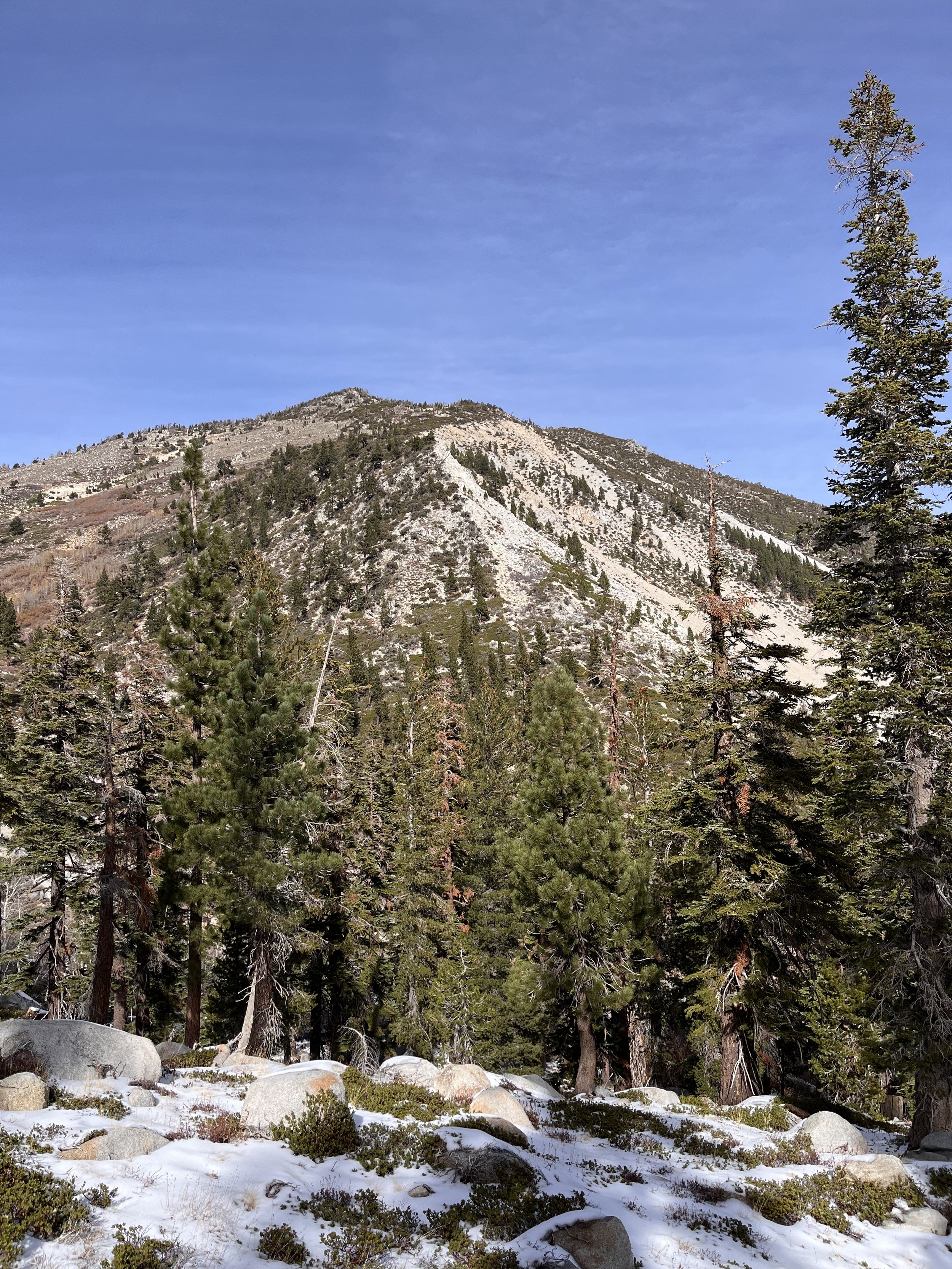
NORTH
13 Miles • 7,547 elev. • Yellow leaves // in the wind
It seems like most everything anyone builds on this mountain eventually slides. The old resorts in ruins, the rigged casino steakhouse, the tree-top winter-time house of prostitution. The golf course and luxury resort and gated community that thankfully got shot down in the 70s.
I think that’s the thing I keep returning to. It all slides off. Like the land itself is at odds with owning it.
Robert MacFarlane wrote about walking terrain as a way to map out ideas, and this whole thing, where to live, owning land, the current occupation and economic uses of the place, what it means to be here it’s all a path of thought I have in a big circle.
And then I touch my toe to the place on the pavement where I started, and I closed the loop on my circumambulation.
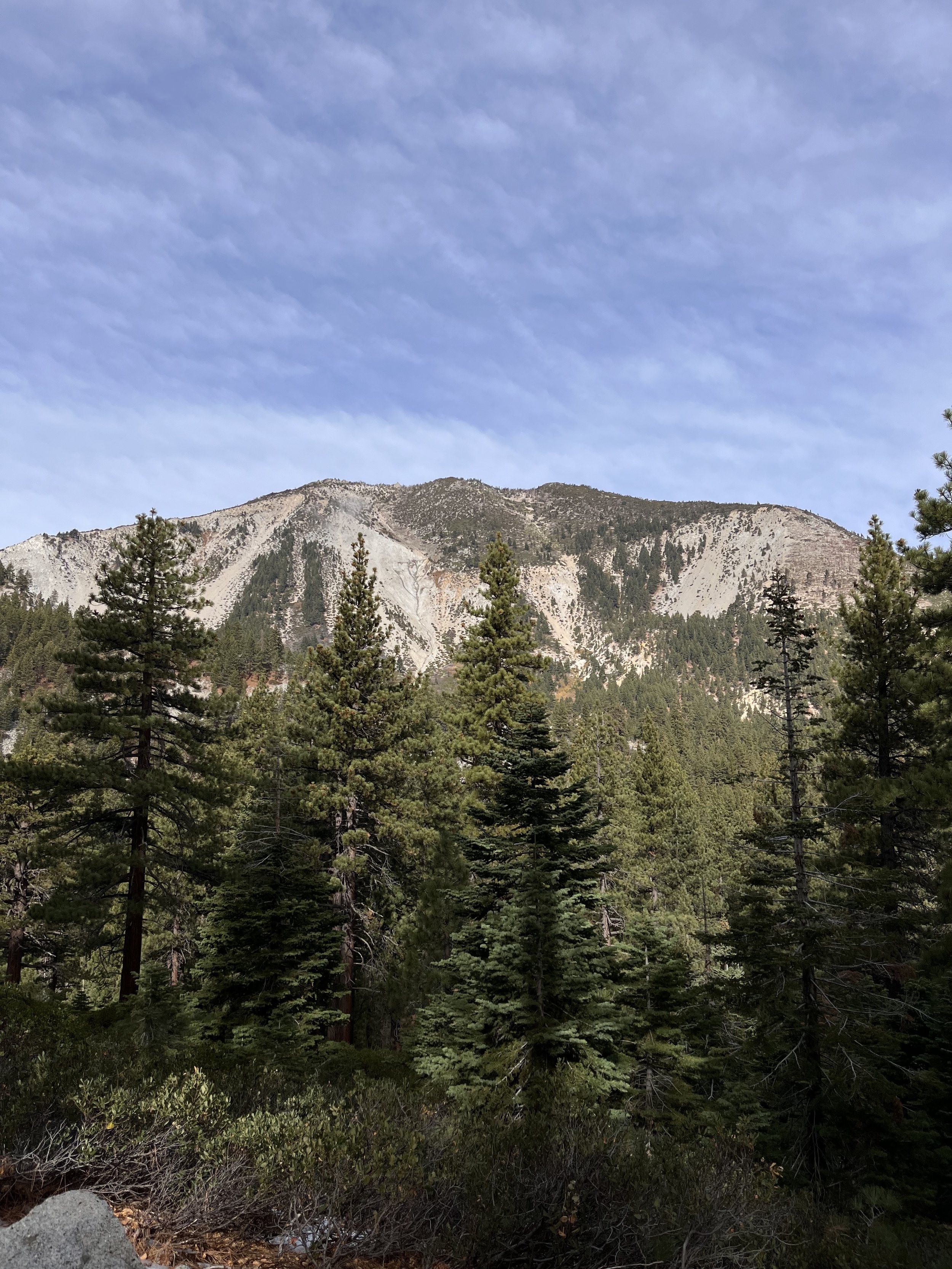
The Circumambulation of Slide Mountain, Nevada
• • •
Credits
Thank you to Michael P. Branch who read the Mark Twain passage (Highly recommend his book How to Cuss in Western) Mark Maynard, Eleanor Qull, and all of the folks who’ve helped support the show this year, there are too many to list.
MUSIC:
Two tracks from Haana Lee’s new album called Textures.
Emily Pratt, who makes music as Howls Road
Friend of the show Yclept Insan
and a few tracks from the Public Domain through Free Music Archive.
Further reading: The Way Around by Nicholas Triolo • The Old Ways by Robert Macfarlane • The Living Mountain by Nan Sheperd
Thank you for being here, and keep listening.
Keywords: circumambulation, slide mountain, slide mountain nevada, slide mountain nevada trail, circumambulation nevada, circumambulation sierra nevada, Mt rose, peavine peak, the christmas tree nevada, tahoe, mark twain, walking in circles, robert macfarlane, circumnavigation hike, wasiw land, Mt rose ski resort, the wind, Fil corbitt