Satanic Panic

Vox writer Aja Romano on the Satanic Panic, and how it is still playing out.


Aja Romano writes about pop culture, media, and ethics for Vox. They’re considered an authority on fandom, the internet, and the culture wars.


The following transcript was machine generated, then edited by me. Apologies for any typos I missed.

Fil Corbitt: Can you introduce yourself and say where you're based?

Aja Romano: Hi my name is Aja Romano. I'm a culture writer for Vox, and I'm in Brooklyn.

Fil Corbitt: How do you define the Satanic panic?

Aja Romano: I view the Satanic panic as two different things that are connected. The Satanic panic refers to a specific era during the 1980s and 1990s …And this led to a number of people being in a number of, of, of institutions being unfairly criminalized and persecuted because they were believed to be spreading satanism basically. So there's that. But then Satanic Panic as a belief system also refers to the ongoing use of the idea of Satanism and hysteria around satanism and satanic ritual abuse to continue to spread moral panics today.

Fil Corbitt: That article you wrote for Vox about the Satanic panic specifically in the eighties into the nineties you wrote that kind of the rise in public interest about satanism and the occult kinda happened just a little bit before that in the seventies. What were kind of some of the roots of this fascination that seemed to take hold?

Aja Romano: So I think you had 2 different trajectories converging. And so you had in the late sixties and early seventies, you had a lot of psychosexual material entering the public consciousness. You had things like the Manson murders really putting the idea of killer ritual cults on the map. You had the rise, obviously, of the counterculture. And there was a moral panic surrounding that. You have these drug crazed hippies ruining everything. And at the same time we saw kind of this counter interest in fundamentalist religion rising.

Aja Romano: And so you had all of this kind of bubbling through the seventies and you had specifically, you had these memoirs. So in 1972, you had this book called this memoir that was entirely false called Satan Seller. That's kind of an example of one of those guys who claimed to have found God after undergoing an incredibly traumatic childhood in which he was forcibly inducted into this Satanic cult where he rose through the ranks to murder children and perform all kinds of unspeakable sexual acts. And then he became the high satanic priest. And... it was completely made up. Completely made up, but it was a bestseller. People ate it up. And it sort of gave rise to a number of other copycat types of writings. And this sort of continued throughout the seventies and into the eighties. …that was sort of the zeitgeist at the time.

Fil Corbitt: One of the flashpoints that you mentioned too is the book "Michelle Remembers", which sort of taps into some of that as well. Can you describe what that was and kind of its impact on this whole movement.

Aja Romano: Yeah, Michelle remembers was published in 1980, so it's sort of like the beginning of the actual Satanic panic, I would say. The difference between Michelle Remembers and everything that came before it, is that it had the stamp of authority because it was co-written by a guy who was at the time an an acclaimed psychologist. He was also faking it. Everything he did was, well, bad -- to put it mildly. Like for one thing, the titular Michelle was his wife who was his former patient. And so the psychologist essentially kind of coaxed her into "recovering repressed childhood memories." There were many psychological methods that have since been discredited. But the memories that she "recovered" were all about her being part of a Satanic cult and undergoing what became known as Satanic ritual abuse.

And then Pazder -- Lawrence Pazder, the psychologist -- helped her publish this memoir called Michelle Remembers. It became a best seller and it really mainstreamed this idea that Satanic cults were real, Satanic cults abusing children were real, and that they were doing so during these like high Satanic rites. It codified essentially a lot of the ingredients, kind of a template for how people would then begin to accuse others of enacting Satanic ritual. When I say it was a template: it actually was used as a textbook for police, for law enforcement agencies during the eighties and early nineties. It was a big deal. Not only law enforcement, but other child psychologists and other authorities, teachers... It was presented to people as "this is a guide for how you can recognize if someone has undergone Satanic ritual abuse." But again, all of this was completely false.

The memoir was completely false. Michelle Smith was never in a satanic cult. But the horse was out of the barn by the time people really realized that.

• • •

Fil Corbitt: How did this phenomenon play out in real life?

Aja Romano: To a degree you can say that it's still playing out. And this is where you make the distinction between the actual period that people think of as the era of Satanic Panic and the pattern that it set in motion. That is, people having their suspicions raised and then going off half-cocked and making accusations against other people and having those accusations land. 

Aja Romano: When I say having those accusations land, I mean having them found credible within the court system. What you had beginning around 1980, the same year that the book was published was that people who read Michelle Remembers started to accuse locals in their area of being parts of these satanic cults. The first example were social workers in Bakersfield, California. Accusing people who were childcare workers of being part of a clandestine occult sex ring. And so you had law enforcement investigating these claims. So you had the Bakersfield accusations that led to a full blown police investigation. And those. Actually resulted in 26 people at least being sent to jail.

Fil Narration: Actually in this case 36 people. Most of their convictions were later overturned due to lack of evidence.

Aja Romano: There were many people who actually spent decades in prison because of this. And most of those sentences were eventually overturned. And most of those people were eventually exonerated, but not all of them were. Some of them died in prison. Some of them were only exonerated after they died. And I think at least one of them was still in prison as of a year ago. So, I mean, it's really hard to quantify the human toll of all this.

• • •

In many of these cases, analysts, police and psychiatrists who were often not trained at all in questioning children, were bought in to interrogate young kids and in doing so, would ask leading questions. So, though children should be of course listened to, especially when raising concerns about the actions of authority figures, it seems quite clear in retrospect that these kids were encouraged to confirm what the interrogators already believed. The children in one case told pretty fantastical tales about rituals and blood. One said that the teacher in question was able to fly. To some, this was proof of supernatural satanic forces — but to others, it seemed to confirm that the kids were being encouraged to tell creative stories.

• • •

Aja Romano: I think another really good example is the San Antonio Four who were a group of lesbian women. And this didn't happen until 1997, which is very, very late in the era of Satanic panic. We saw these women being tied to accusations of child molestation on absolutely no basis, but because they were all gay essentially local prejudice played out against them. And and they were convicted on no evidence. And they spent 15 years in prison. Ultimately they had their convictions overturned. But again, it took 15 years

Fil Corbitt: That's something I did want to talk about as well is how allegations of satanism and of occultism are often tied in a lot of these cases, specifically to queer people.

Aja Romano: Something that queer people know really well, but often gets overlooked if you're a member of a fairly stable majority community...Like, if you're a queer person you kind of learn to embrace villainy as part of your identity because what other choice do you have in a society that is constantly trying to turn you into a villain, right? So if you see yourself as a villain and you know you're gonna be villainized anyway, then you you embrace villainy, you embrace deviance. I mean, look at the meme, "be gay, do crimes", right? You perform exuberant deviance as part of your identity, and, Ironically, it then gives the the people who want to persecute you more fodder to persecute you when the time comes.

Aja Romano: Which is how we get to this idea of like, you know, "oh, gay people, like gay men are always pedophiles or gay men are always linked to sexual predation" and all of these other stereotypes that are emphatically not true, but they're still used today to to demonize and marginalize queer people.

Aja Romano: One of the pieces that I wrote this year was a round table that I did with my colleagues, Alissa Wilkinson and Emily VanDerWerff, who are like me, from rural areas. And we all grew up reading this famed Christian fantasy author Frank Peretti and we did this round table on Frank Peretti novels of the eighties and why they were so influential. He wrote this book called This Present Darkness, which paved the way for this era of Christian fantasies, including the Left Behind series. And this book was kind of a fictional version of what I just talked about. It basically posits that there's this preacher in this town who realizes that he's facing a vast left-wing, liberal conspiracy that is being essentially propped up In the shadows by a bunch of demons. The way that it presents the fight between good and evil is that the heroic Christians in the book will essentially be faced with liberals who are saying really nice things about like, love and kindness, and they want you to do yoga, but behind them -- like literally physically behind them -- there's a giant hulking demon. It's all a ploy to suck you into the grasp of Satan. And this book sold millions of copies. I read it when I was like 12 and it f***ed me up for like a whole year. It just really took hold of me and I saw demons everywhere. That's how you think when you're 12. But this is really how this panic spreads. It's because even the most innocuous, anodyne, well-intentioned thing can become swept up in this idea that it's all part of this more noxious larger agenda.

Aja Romano: And that's sort of the root, that's the core of what Satanic panic is, you know? This idea that everything they do is suspicious.

Fil Corbitt: These conspiracies, like you said, are basically claiming there are like satanist daycare workers. There's like this shadowy cabal of underground Satan worshipers that exists at your daycare, in your everyday life, in your peaceful suburb. But what it seems to be, in this really weird twist is like... it's this bizaro, made-up, reflection world of what was actually happening in a lot of the Evangelical and Catholic churches in these places. Sexual abuse was happening in these places and it wasn't being done by a shadowy cabal of Satanists, you know, it was being done by like prominent community figures.

Aja Romano: Right. And you know, we recently learned that the Southern Baptist Convention actually had a spreadsheet for years that it compiled of sexual predators who were in the church, who were in the Southern Baptist Convention as leaders... and apparently they had that spreadsheet and it was there and nobody did anything.

Aja Romano: To some degree, a lot of this is just systemic, right? Like in any system where power is gained by playing the game and then maintaining the game, you're gonna have people who benefit from that system because other people are incentivized to be silent, and not rock the boat. And that's exactly how you wind up with -- with the example of the Catholic church -- decades of people being able to prey on victims and have no consequences because they just keep getting moved around because that's the system. And I think when you do try and speak out against a system like that, you become the target of slander. So like what's the quickest way to shut down any conversation about pedophilia in the church? It's to make the real problem all the people out there who are trying to bring the church down. It's to deflect. And a really, really good way to deflect is to spread hysteria about whatever enemy you happen to be using as your deflection point on that particular day There's a ready list of groups who get that target at any given moment.

• • •

Fil Corbitt: A lot of the Satanic panic did focus on heavy metal music and punk and they were playing with these really interesting narrative lines around power. And so I'm wondering, how do you see power playing out here?

Aja Romano:  When you think about music in the eighties and where we were in the eighties, you know, you had the rise of suburbia, especially during the era of Reaganomics. Suburbia was the ideal of the American capitalist dream, and it was supposed to represent traditional American values. You're supposed to have your white picket fence and 2.5 kids and it was supposed to be this garden of safety and traditionalism and law-abiding people who knew what the rules were. And so when you think about heavy metal music in the context of that, heavy metal music just kind of blows everything up. And punk rock too.

Aja Romano: Anytime you have a bunch of kids who are coming from these like supposedly stayed middle class backgrounds talking about their disaffectedness and singing about blowing shit up and wanting to take wrecking balls to the power structure, it's gotta be really disturbing to the people who want to preserve that power structure, right? And so heavy metal music itself becomes a really easy target. Especially because punk rock and metal are both subcultures that are about aesthetics as much as they are about the music itself, right? They're about performing your nonconformity essentially.

Aja Romano: Obviously in punk, you have various specific types of hairstyles and dress and codes that show your commitment to the subculture. The same with metal, the same with goth. You have these lifestyles that are about making the music a part of this larger statement of identity and individuality which conflicts directly with the kind of America that we were supposed to have in the eighties, within this very prosperous era of like yuppies moving to the suburbs.

• • •

In the book Teenage Wasteland, author Donna Gaines follows a group of burnouts in suburban New Jersey, watching as their adolescence becomes adulthood, drinking and smoking weed in parking lots and abandoned industrial sites. Called to the town by a highly publicized and tragic suicide pact between 4 young rock fans in 1987, she watches through the following years as relationships and reputations grow and shift in a friend group adjacent to the tragedy. She tries to understand what kids like this were actually going through.

In one passage she writes:

“For kids growing up now…. in a town like mine, the dreams of prior generations are lost. The suburban frontier no longer exists, there is no sure place to move to find a better life. Land is increasingly unavailable, unaffordable, or unuable. Home ownership is becoming unimaginable. (This was published in 1990 by the way) The trend of remaining at home into adulthood drags on, making the dream of independent living seem impossible. You feel stuck in your hometown forever, like it or not.”

“…The world “out there” is shrinking. The possibilities of suburbia are exhausted and your capacity to dream has reached a dead end…”

Aja Romano: To be this upset, something had to have gotten ahold of them, you know? And if it wasn't drugs, then what was it? It must be Satan.

Fil Corbitt: It's so interesting because what got ahold of them is like... the hollowness or the broken promises of the parents themselves or of the society itself.

Aja Romano: If you listen to the lyrics of these songs, that's exactly what they're saying,…  There's a real refusal to be self-reflective and to examine the underlying causes that might be creating whatever disaffectedness you're witnessing. And instead the impulse is to go, "oh, this must be due to some X, Y, Z, larger, almost supernatural force."

• • •

Aja defines the Satanic panic as 2 separate but connected things. First, a specific era in the 80s and 90s where moral hysteria spread and court cases about satanic ritual abuse lead to the very real imprisonment of innocent people. Second, the Santanic Panic is a mode of thought, a moral panic, whose framework continues to exist and sway legislation and public opinion to this day. And one of the eternal battle fields of moral panics like this, is (and always has been) music.

In contemporary culture, we see this playing out with artists like Lil Nas X being lambasted on right wing cable television. His music video for Montero (Call me by Your Name), features him riding a stripper pole to hell and giving a cartoonish representation of the devil a lap dance. It’s a pretty funny and interesting use of imagery, but to hear the talking heads say it, it’s just the newest example in a long line of musicians pedaling satanic sexuality with a nefarious agenda…

Aja Romano: It's probably not a coincidence that the greatest blues musician of all time, Robert Johnson, was also considered to have sold his soul to the devil, right? Because what kind of music is blues? It's all about lamenting your oppression, lamenting poverty, lamenting your disenfranchised state as a black person in the south. When you look at people like little NAS X, who he's been so brilliantly parodying a lot of that mentality, that gives him a certain power. Because obviously being queer, a lot of that queer culture is about reclaiming power and turning symbols and codes that have been used to marginalize you and oppress you and be bigoted towards you -- turning those symbols into reclamations of power and control and joy and exuberance. That's a core part of the queer experience. And what better way to do that than through music?

Featuring: Aja Romano


Tags, Topics and Mentions: the satanic panic, revisiting the satanic panic, heavy metal, mental health, teenage wasteland, bakersfield witchhunt, bakersfield satanic ritual abuse, punk music, frank peretti, this present darkness, lil nas x, robert johnson, satan, the catholic church, southern baptist convention, mass hysteria, wrecking ball to the power structure, reaganomics, suburbia

The Demon Who Eats Demons

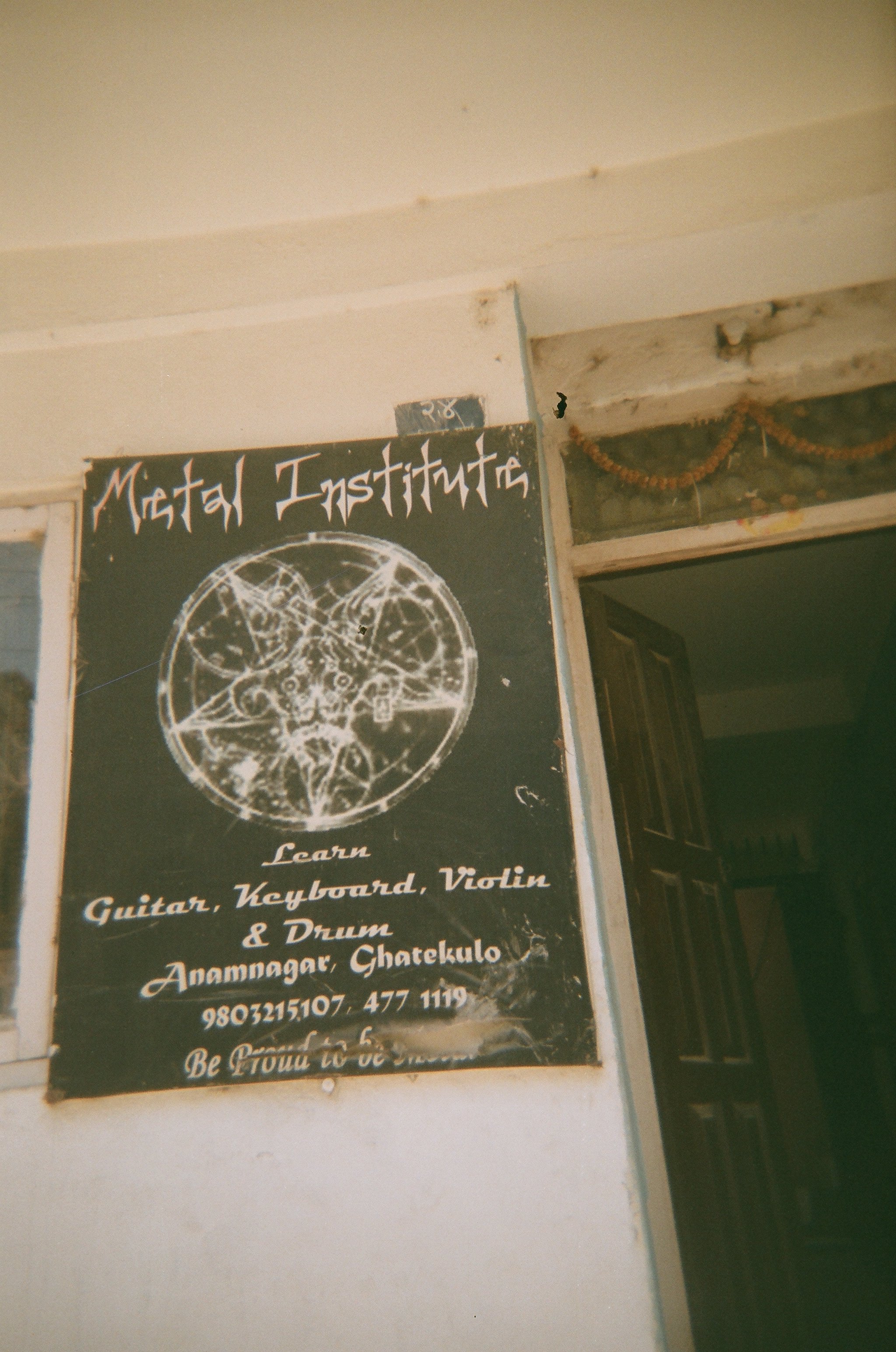
A winding ride through the metal scene in Kathmandu, Nepal


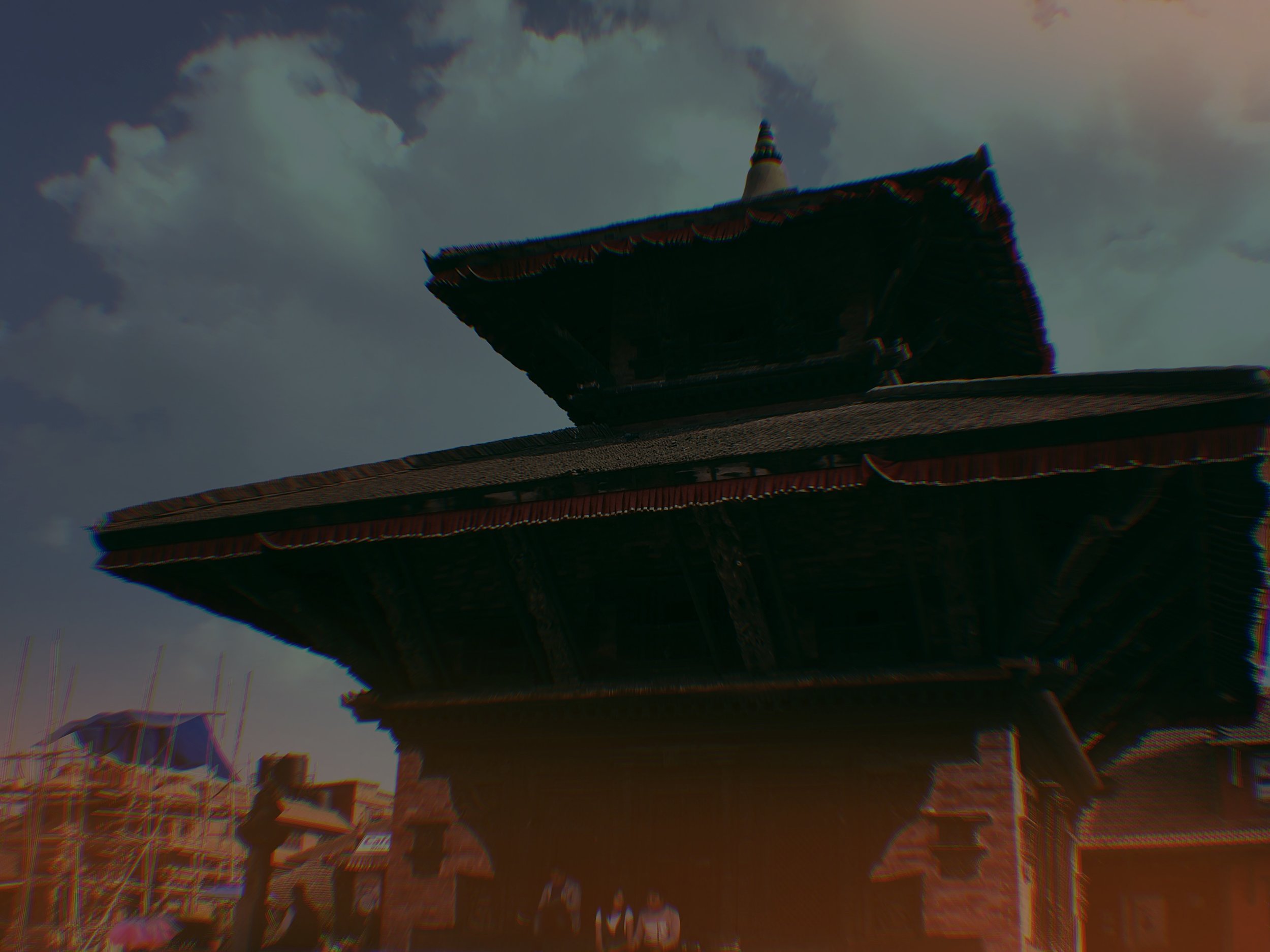
The men stand alert in front of an ancient temple. Kathmandu Nepal, and the late spring sun is hot and red on the horizon: beating down the dirt and smooth stone streets into the plaza. An audience congeals around them, and the men, mostly young, in T-shirts and sneakers, nervously approach the demon.

The demon has the body and bare feet of a human… colorful clothing, a belt made of small metal bells, flesh on dirt and stone. But its face is enormous. Its smile is framed by long fangs and its eyes are like the edge of a wilderness. The face is bright red, except for mane of black hair, long and streaked with grey. The demon’s name is Lakhey and as it begins to dance it throws fire into the sky.

When the men cautiously approach, Lakhey stands still, holding a staff, playing it cool. But in the blink of an eye, he snaps into chase and the men, previously taunting and shouting are now in primal flight, sprinting away through traffic into the dusty sunset. The Lahkey disengages, and the men return, and the game repeats.

“ I used to think: how can I form a new band full of experimentation and how can I show the culture of Nepal, you know? How can I represent Nepal by playing metal music?” -Anil Dhital

Lakhey after band practice


Though the origins of Heavy Metal on a global scale aren’t clear cut and more of a culmination of many influences — I don’t think it’s a coincidence that some of the first bands pioneering heavy sounds were from England’s Black Country. This part of the UK was so industrialized in the 19th century that it earned that colloquial name because of the smoke and soot that covered the land.  Bands like Black Sabbath and Judas Priest took root in the Black Country and nearby Birmingham in the 1970s, and Sabbath especially made an entire image around this blackened post-industrial landscape.

And I also don’t think it’s a coincidence that the rise of Thrash Metal largely came from southern California in the early 1980s. In Los Angeles, Metallica released their first album in a year where smog was so bad that 227 days failed to meet healthy standards on the Air Quality Index. Not to say that metal is the direct result of air pollution, but it seems that heavy and aggressive forms of expression correlate in some way to an all-encompassing, atmospheric frustration, choking and inescapable.

Prateek: It's a lot to do with society and politics and a bit of illogical religious practices that we kind of have to follow sometimes. So those are the Major sources. The weather is fine though.  I went to Finland. We were thinking the same thing, you know: Scandinavia, everything is nice so why are there metal bands there? Then you kind of see their weather and you kind of understand. (laughs) So weather-wise, we're fine. We're probably happy people. But there are a lot of other social frustrations.

Binaash

“These instruments are really sacred // We respect this instrument as a God.”

-Uzan Sahee


Tags, Topics and Mentions: Nepal, Kathmandu, Nepali Metal, Nepal metal music, Death metal, black metal nepal, lakhey, lakhey metal band, lakhey metal music, binaash, ugra karma, death metal nepal, Swayambhunath, prayer flags, kathmandu 666, लाखे नाच, Lakhey dance, Nepal Valley, Music journalism. the wind

The Devil's Postpile

Mailer Daemon, Devil's Trill Sonata, the influence of Indigenous music on rock'n'roll and Anti-Rock preachers. An audio pile of vectors and missives.


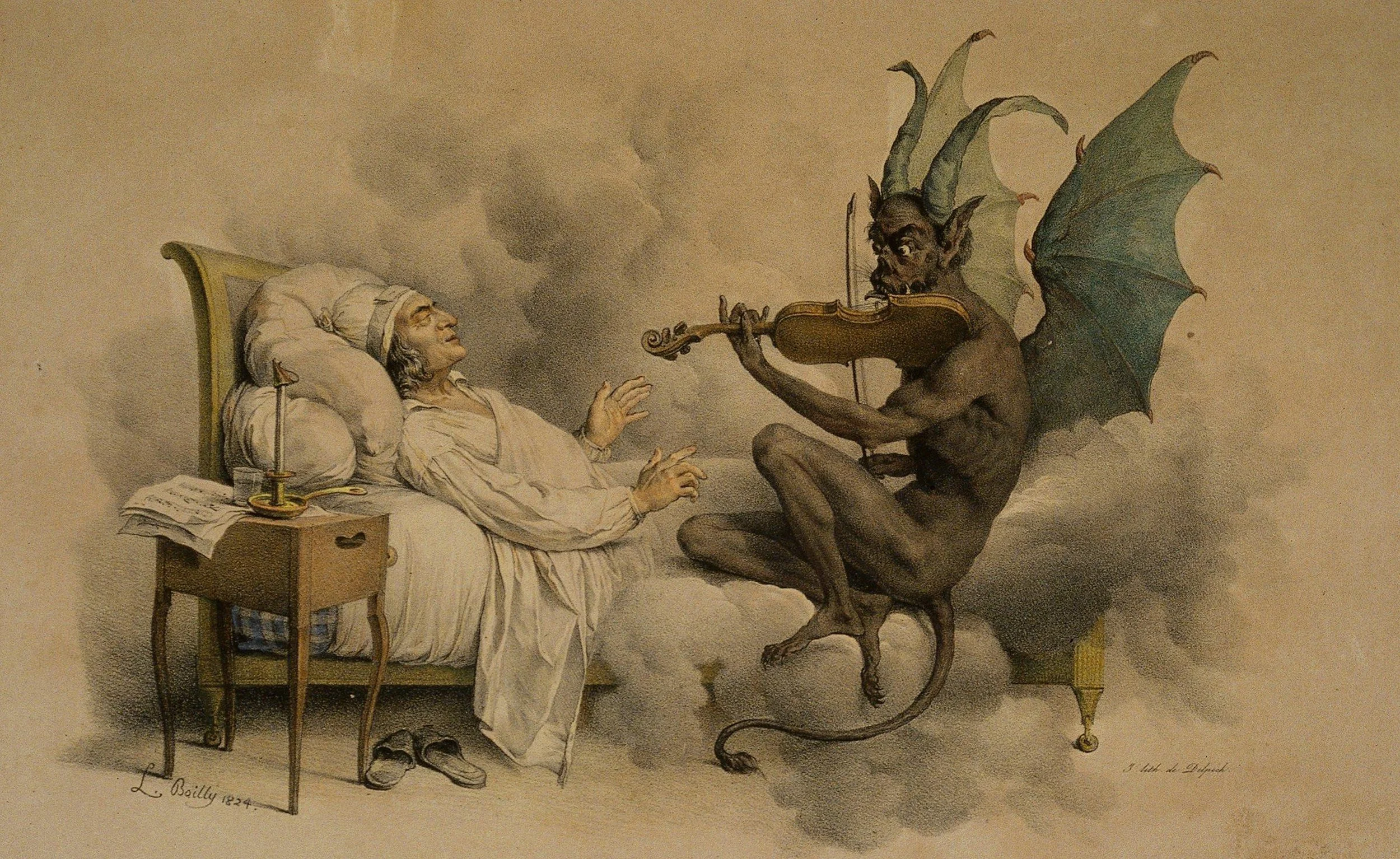
“One night, in the year 1713 I dreamed I had made a pact with the devil. A pact for my soul. Everything went as I wished: my new servant anticipated my every desire. Among other things, I gave him my violin to see if he could play. How great was my astonishment on hearing a sonata so wonderful and so beautiful, played with such great art and intelligence, as I had never even conceived in my boldest flights of fantasy.

I felt enraptured, transported, enchanted: my breath failed me, and I awoke.

I immediately grasped my violin in order to retain, in part at least, the impression of my dream. In vain! The music which I at this time composed is indeed the best that I ever wrote, and I still call it the "Devil's Trill", but the difference between it and that which so moved me during slumber , during visitation, is so great that I could have destroyed my instrument and said farewell to music forever if it had been possible. But I cannot live without the enjoyment it affords me.”

Guiseppe Tartini, quoted in The Voyoge of a Frenchman in Italy, 1766.

John Martin, Pandemonium, 1841

John Martin, Pandemonium, 1841

“In biblical sources, the Hebrew term ‘the Satan’ describes an adversarial role. It is not the name of a particular character. Although Hebrew storytellers as early as the sixth century BCE occasionally introduced a supernatural character whom they called the satan, what they meant was any one of the angels sent by God for the specific purpose of blocking or obstructing human activity. The root STN means “one who opposes, obstructs or acts as adversary.: The Greek term diabolos…literally means, “one who throws something across one’s path.”

The Origin of Satan by Elaine Pagles.

Rumble is a 2017 documentary that traces the influence of indigenous people on the development of rock and roll and modern music. From early blues musicians like Charley Patton, who pioneered the delta blues, laying the foundations for rock music, to Jimi Hendrix, whose grandma was a black, indigenous vaudeville performer.

The film explains that many of Jimi Hendrix’ iconic costumes with fringe and boas were inspired by his grandmother Nora, with whom he was close.

The film takes its name from the song Rumble by Native American guitarist Link Wray, which is one of the early songs credited with popularizing guitar distortion…

It’s also apparently the only instrumental track ever banned from the radio.


Tags, Topics and Mentions: Mailer Daemon, Maxwell’s Daemon, The Devil’s Trill Sonata, Tartini, Paganini, The Voyoge of a Frenchman in Italy, 0-679-73118-0, The Origin of Satan, Elaine Pagels, The Beat, Rumble, Rumble Documentary, Link Wray, Charley Patton, Delta Blues, Marky Ramone, Jimi Hendrix, Sermons, Anti-rock preachers, preaching against music, lil nas x, sam smith, The Devil’s Trill Sonota by Tartini, The 4 seasons Vivaldi, Rumble by Link Wray, I’m goin away to a place unknown and high water everywhere by Charley Patton, Stairway to Heaven by Led Zepplin, Montero Call me by your name by Lil Nas X, wedding of the winds, Communion Prayer Pope Benedict, Blood shoes, Satanic Panic, The Devil, Devil Music

The Devil's Duel

Paradise Lost, The Devil Went Down to Georgia, re-litigating pop culture’s most famous fiddle duel.

CAST YOUR VOTE

Text (901) 609-5347

666 for The Devil

777 for Johnny


Now it may not be wise to glean religious insight from youtube comments, but… Below the video of The Devil Went to Georgia by the Charlie Daniels Band, I ran across a reply that I found particularly interesting: a sort of fan theory. It claimed that in this duel between Johnny and the Devil, despite his conciliatory actions at the end, the Devil did actually win. Many people seem to think his solo is stronger or more interesting, but that is beside the point in this fan theory… because simply in succeeding to lure Johnny into a fiddle duel, he deceived the young fiddler into a sin: pride, a sin the devil knew well. (not to mention cursing)

Now this youtube theory sparked some debate. If it matters, the author of the song, Charlie Daniels does not buy it. He has publicly claimed that Johnny’s solo in his opinion is better because it’s less noisy. “You can’t hum the devil’s solo”, he said. Secondly, he released a sequel, in which the devil returns to Georgia to try again, which of course would not happen if he already succeeded in luring Johnny into the trap of pride.

So in the Charlie Daniels cannon, this fan theory is dubious. But the devil is a master of deceit — could not it be possible that Charlie Daniels himself was fooled into singing the tale of a successful satanic escapade: earning a living on its royalties all the while, believing the moral of the story to be the opposite?

The argument I found most fascinating against this fan theory, was that, sure, the devil is a deceitful figure who is trying to collect and damn souls, but in stories of this ilk, especially in the deep south, the devil is good for his word. If he strikes a deal, for some inexplicable reason he must keep up his side. He is deceitful, sure, but defeated by a sharp mind. It’s an odd positioning. Fully evil, except bound to his own honesty.

The Devil is a fascinating figure, and I think for that reason he shows up a lot. In poems and literature, in film and of course, in music. Long after Milton’s devil in Paradise lost convinces Eve to eat the forbidden apple, a democratized version of this character still roams the earth, corrupting souls, often arising in moments of hypnosis, by saying the right thing at the right time, through the stomping feet in a barn, a driving downbeat in a juke joint, through the hellish crackle of an electrified guitar… In these stories, Satan almost always enters through the ear.

So, with that in mind, we are going to litigate pop culture’s most famous fiddle duel. Listen to the episode and vote. Thanks for listening, and choose wisely…


tags, topics and mentions: The Devil Went Down to Georgia, The Devil and the fiddle, garden of eden, apple of knowledge, fiddle duel, american idol, violin contest, the devil vs johnny, paradise lost, john milton, charlie daniels band, violin, fiddle, the devil, devil music, bluegrass and the devil

Judas Priest on Trial


Warning: this episode includes graphic descriptions of suicide.


In 1990 the Heavy Metal band Judas Priest went to court in Reno, Nevada for allegedly using subliminal messages in their music.

The following text post is an abridged version of the podcast episodes “Judas Priest on Trial” (parts 1 + 2). For the full story, audio examples and examination of the alleged subliminal messages, subscribe & listen above.


Two days before Christmas, 1985 Ray Belknap and James Vance climbed out of Ray’s bedroom window in Sparks, Nevada. The 1978 Judas Priest album “Stained Class” spun on the turntable behind them as they made their way to a playground at the Church of God. Ray carried a 12-gauge shotgun.

Both Ray and James had dropped out of high school, and for the previous couple of years had been working then quitting menial jobs. They drank, smoked weed, and spent a lot of their time listening to Heavy Metal. James’ mom Phyllis Vance was convinced that James’ depression and his disaffected worldview stemmed from that music, and especially his all-time favorite band, Judas Priest. “He could quote the lyrics like scripture,” she said.

Phyllis had convinced James of this on a few occasions. At one point, he sold all of his metal albums to Recycled Records in Reno. But the prohibition never lasted. His closest friend Ray was a metalhead too, and for James’ 20th birthday, Ray bought him a copy of “Stained Class,” the record that spun on the stereo as they dropped into the church playground. The two sat on a metal human-propelled marry-go-round, and Ray lifted the shotgun to his own throat, pointing up. He told James “I sure f***ed my life up,” then pulled the trigger. Ray died instantly. James, terrified, pulled the gun from a puddle of his best friend’s blood, and he too shot himself in the head.

But somehow, James survived.


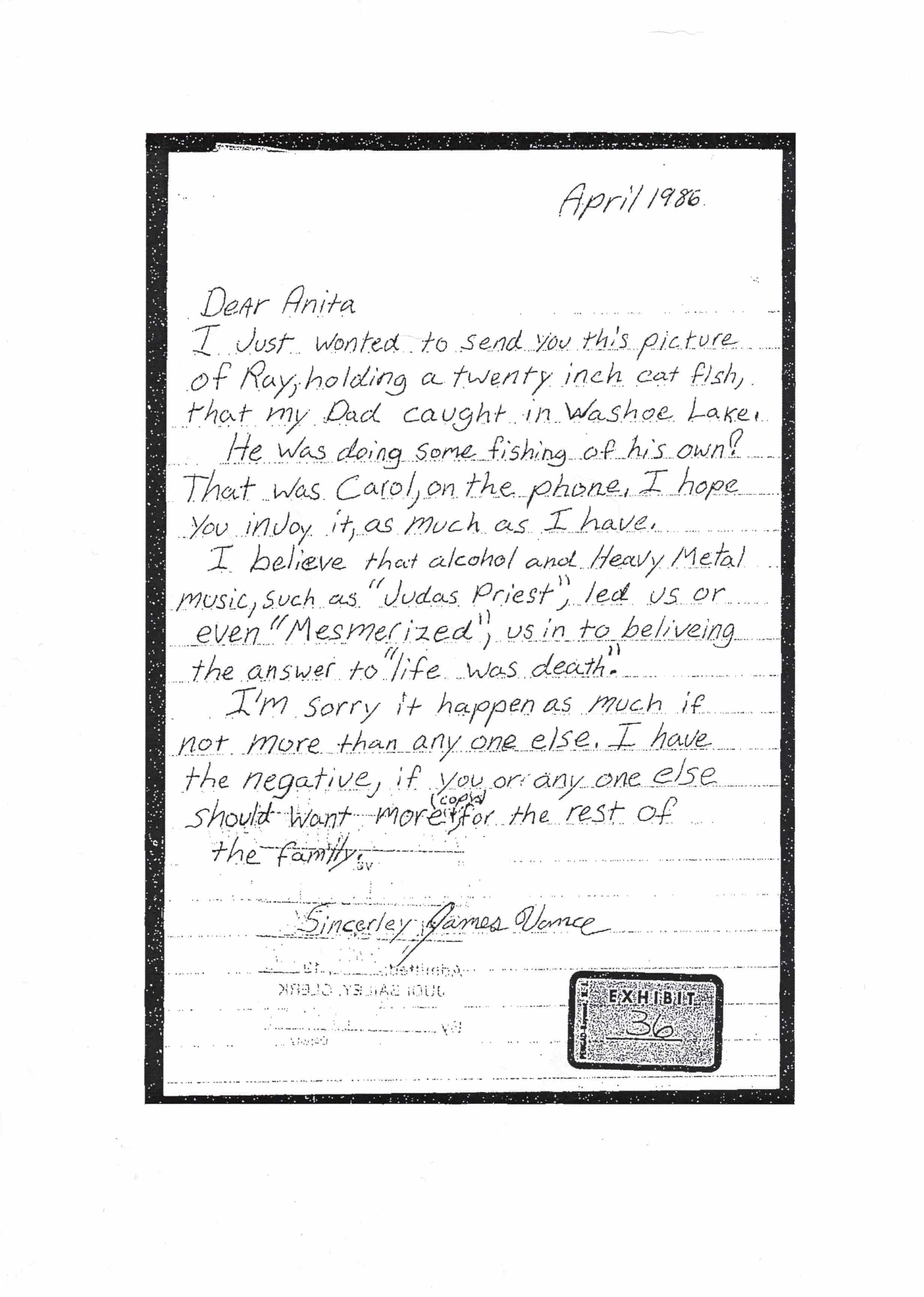
Exhibit 36 Case no. 86-5844 // James' letter to Ray’s mom Aunetta (spelled wrong in document)

“I believe that alcohol and Heavy Metal music, such as ‘Judas Priest’ led us or even ‘mesmerized’ us into believing that the answer to ‘life was death’” - James Vance


In the attempt, James had severely damaged his lower face under his eyes. He underwent extensive rhinoplasty at Stanford, and would be in and out of serious surgery for the next 3 years. Despite the injury, he was cogent.

In early 1986, Phyllis and James Vance went searching for an attorney. Through a friend at church, they found a Reno lawyer named Timothy Post.

In Tim’s words: “They said, are you a Christian attorney? I said, well, I am a Christian… I'm a Christian who happens to be an attorney.”

32 years later, I interview Post in his Reno office — a small commercial building in Midtown, dotted with Abraham Lincoln memorabilia.

“And… I turned them down. I said, no, you got a thing called the First Amendment. Free speech.”


Amendment I. Congress shall make no law respecting an establishment of religion, or prohibiting the free exercise thereof; or abridging the freedom of speech, or of the press; or the right of the people peaceably to assemble, and to petition the Government for a redress of grievances.”

The first amendment, introduced as “Article the Third” in the Bill of Rights. September 25, 1789

Since the ratification of the Bill of Rights there have been many cases in the US supreme court that have built on this amendment, and changed it in key ways. The main exception that most people know is that it’s illegal to falsely yell “Fire” in a crowded theater. This phrase comes from a non-binding dictum by Oliver Wendel Holmes in a 1919 supreme court decision —Schenck v United States. Summarizing here, Holmes claimed that if speech creates a “clear and present danger” it is not protected.

Another landmark case in first amendment rights was in 1969 — Brandenburg v. Ohio — a complicated and hairy case involving the KKK. In short it ruled speech that incites unlawful action is not protected by the First Amendment. The Brandenburg Test is still used today, deciding if the speech is “directed to incite or produce imminent lawless action,” and is “likely to incite or produce such action.”

Courts have found time and again that the speech of artists, no matter how violent or subversive or political, is almost always covered by the first amendment.


While the Vance family was hiring Timothy Post, the family of Ray Belknap had hired Reno attorney Ken Mckenna. Speaking to Mckenna over the phone, he said “the purpose in filing the case initially was to just make a point, uh, to create, um, public awareness that these type of lyrics were existing, that there did seem to be a causal connection and that. Morally, ethically, the industry should be, you know, held to task, uh, for what they were doing…”

The cases would later merge, and though they didn’t expect the cases to be successful, McKenna and Post originally filed a civil complaint solely based on the lyrics. As Post put it, “ the case started out as lyrics that incited violence…”

In the original civil complaint, Post cited the lyrics to “Hero’s End”, the final song on the album.

Around this time, another lawsuit was filed for the suicide death of a teenager. In Riverside California, John Daniel McCollum had killed himself after allegedly listening to Ozzy Osbourne’s song “Suicide Solution.” Though on the surface that might sound like a smoking gun, the lyrics seem to refer to alcohol as a suicide solution: a liquid that kills the drinker.

“Wine is Fine but whisky’s quicker // Suicide is slow with Liquor”

Osbourne says the song was a response to the death of the AC/DC front man, who died a tragic alcohol-related death at a young age.

Ruling in favor of Ozzy Osbourne, the judge dismissed the case and the precedent was a clear judicial speed bump in the burgeoning movement to regulate the lyrics of heavy metal, punk and hip hop. And also, it seemed to highlight the underlying weaknesses of that movement. What seems like a suicidal anthem to some, is an unlikely anti-drinking ballad to others.


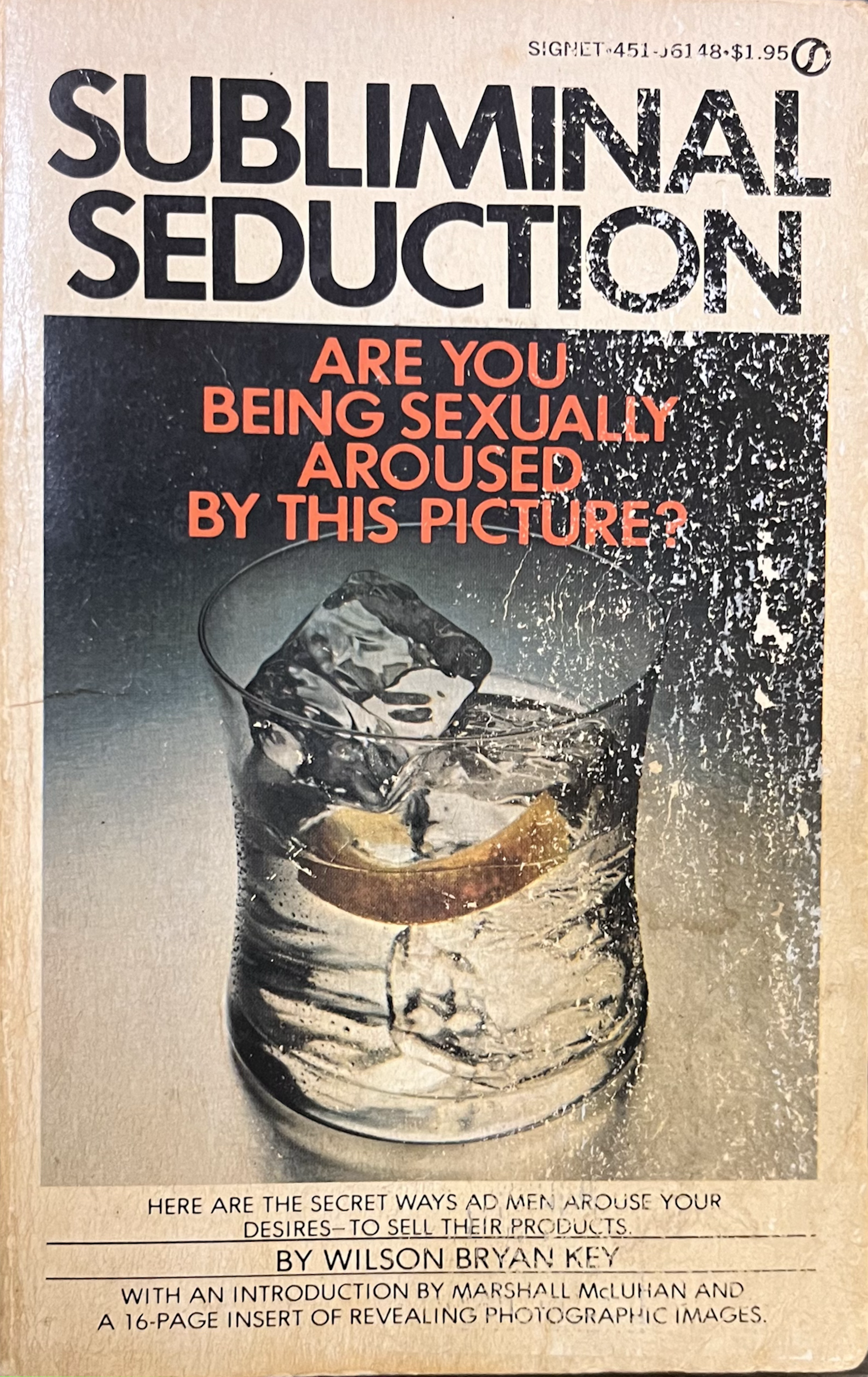
Subliminal Seduction by Wilson Bryan Key ISBN-13 978-0135730065

The case appeared to be headed for dismissal, but then, things took an unexpected turn. As a shot in the dark, Ken McKenna sent the album to Bill Nickloff, a biologist who moonlighted as an independent producer of subliminal self-help cassettes. According to McKenna, Nickloff created tapes out of his studio in Sacramento that aimed to help listeners lose weight or quit smoking.

Nickloff listened through the record and claimed that it was jam packed with subliminal messages.

Post remembers it not quite as a shot in the dark, but an encounter between McKenna and an ex-client, “My co-counsel did a divorce for Wilson Bryan Key, the subliminal expert. He got to talking to him… and he said, ‘Hey, are they're subliminals? You better find out.’”

Wilson Bryan Key was a professor and author of several popular books that dealt with subliminal messaging including Media Sexploitation and Subliminal Seduction.

When McKenna presented the possibility of subliminal messages to the judge, Jerry Carr Whitehead of the second judicial court of the state of Nevada chose not to dismiss. In short, he argued that subliminal messages would not fall under the purview of the first amendment, and were therefore actionable.

Key gave a lengthy (200+ page) deposition in the case, and appeared on news reports to play backwards recordings of Judas Priest songs. Key and Nickloff would be two of the plaintiff’s expert witnesses in the case.

Though Nickloff created cursory tapes illustrating the alleged subliminal messages, the record company responsible for Judas Priest ,CBS Records, was ordered to produce the 24-track master tapes. They dragged their feet for a long time, claiming the masters were lost before eventually producing the 24-track tapes. This angered the judge, though he would ultimately concur that these were to original tapes and not tampered with.


In 1988, James Vance died in the hospital. He had been on a litany of medication, and under extreme emotional duress after the accident. His family, along with the family of Ray Belknap, continued to trial after his death.


1990. It was a hot July day when Rob Halford, Ian Hill, Glenn Tipton and KK Downing, all members of Judas Priest, walked up the courthouse steps in downtown Reno. They were welcomed by a throng of metalheads — kids in leather and band t-shirts lined the sidewalk with handwritten signs. Images of this moment were captured by filmmaker David Van Taylor, who was shooting a documentary. The film, Dream Deceivers, is an excellent in-depth look at the case released in 1992. I caught up with David Van Taylor over video chat.

“The atmosphere in the courtroom was…mixed. I mean…some of it was quite absurd, and it was a media circus, as the expression goes.”

David filmed in the courtroom as the trial unfolded, and though the plaintiffs’ case was initially built on the work of Wilson Bryan Key, he didn’t play much of a role in the actual trial. Instead, the attorneys leaned on Dr. Howard Shevrin, an academic psychologist with strong accolades.

The Defense meanwhile hired their own expert on subliminal stimuli, a professor and prolific writer on the subject, Timothy Moore. Moore was partially there to challenge the work of Key, from a scientific standpoint.

“ I mean…he himself was not a scientist. He had no background in science. His books were popular, but they were, uh…. let me put it this way…. He was an outlier in terms of scientific credibility or standing.”

In his book Subliminal Seduction, Key offers several examples of his findings of subliminal messages. In one magazine ad for Gin, he shows a tall glass of clear liquid with a lime, overflowing with ice. He points your eye to 3 of the four ice cubes, where he has found the letters S E X. To him, this is clear evidence of tampering.

He then draws the readers eye to several faces he sees in the ice cubes. One, he claims is a reference to the WW2 graffiti character Kilroy, then to what he claims is the face of a woman in the ice.

Though I can vaguely see the S caused by the silhouette of the lime, and 3 horizontal lines that could be seen as an E, I do not see the X, or the Kilroy or the woman, and I especially do not see in the reflection of the bottle cap what Key sees: “a man’s legs and partially erect genitals.”

Key saw genitals in everything, he claimed the word SEX was everywhere, and that people were being secretly exposed to latent homosexuality, and as he laments in one college lecture, inter-racial cunnilingus.

Key often seemed to sense his readers’ skepticism and periodically backed up these claims with what he referred to as evidence. He said for instance that 90% of the test subjects agreed with his assessment in another example, finding gendered symbolism in ice-cubes. But something he never does in the book is explain who the test subjects were, what the experiment was or who conducted it. Through context clues, it seems that his experiments were conducted by him in his university classes by vote, though he never offers documentation.


The trial came down to a handful of examples of alleged subliminal messages. To hear examples and decide for yourself, listen to the podcast episodes above.

Nickloff presented his findings in court through a digital audio workstation, and a fairly imposing stereo set up. Though I was unable to get my hands on Nickloff’s original tapes, I did my best to recreate his findings based on his written testimony and transcripts of the trial.

Exhibit 101 • Notated waveforms (Case no. 88-5844 James Vance vs. Judas Priest)

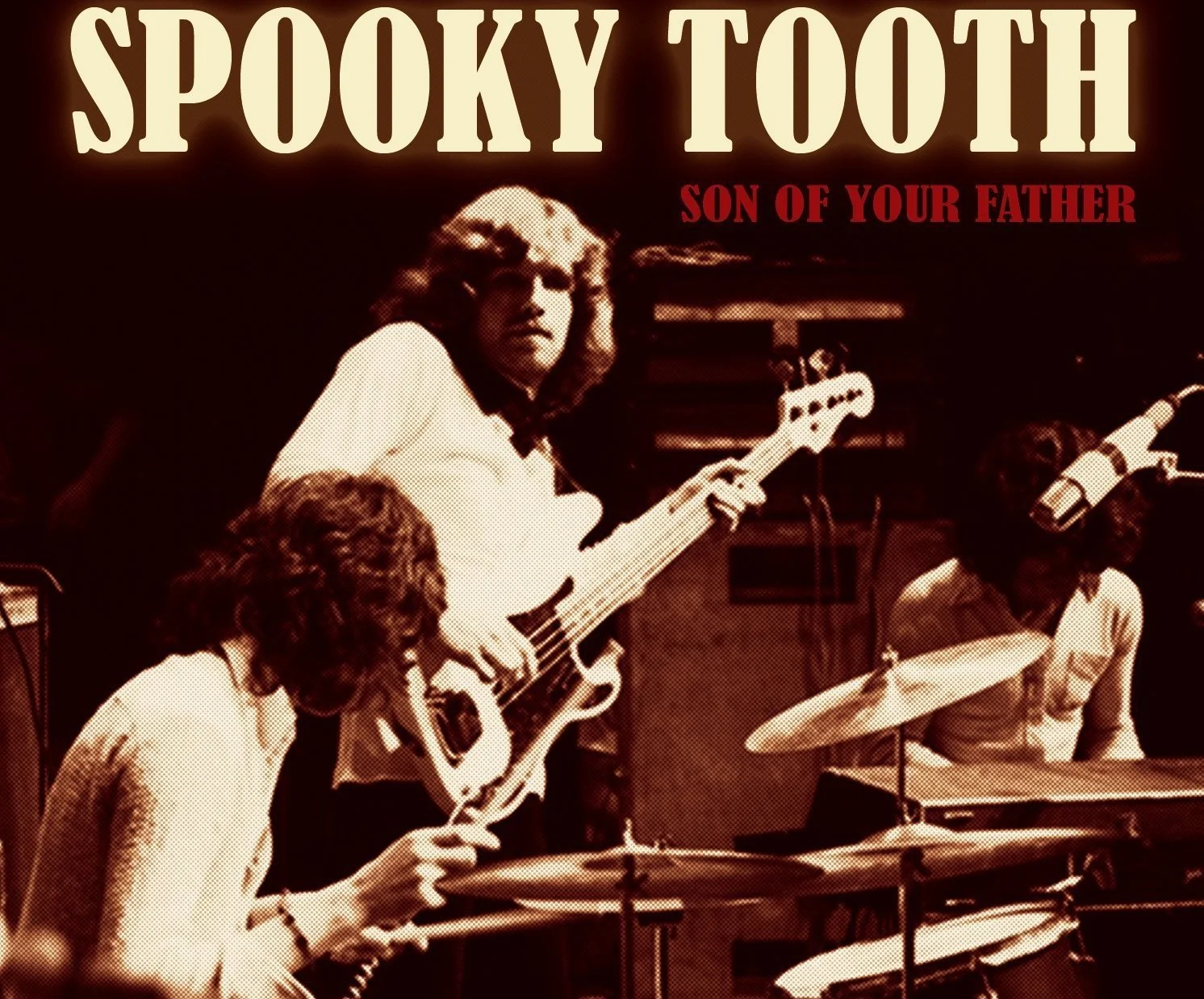
“Better by You, Better than Me” original version by Spooky Tooth.

“Better by You, Better than Me” cover by Judas Priest.

It was unlikely that Judas Priest would ever end up in this courtroom. But what seemed like a fairly long-shot case to many, was being very seriously considered. So the band hatched a plan.

David Van Taylor: “They hit upon this idea that they would go into a studio in their off time. Play the music in question backwards and look for what they could hear. Which is a very smart and very theatrical idea, so that they could demonstrate to the judge that if there was anything backwards, that it was random essentially. And yet they were walking a thin line, right? Because if they seemed to be too theatrical or glib or presentational …then it might have backfired.”

In an extraordinary moment of the trial, Rob Halford carried a boombox up to the Judge. He stood just above Judge Whitehead, and cued up a tape from the album in reverse. It seemed like a risky move.

ROB HALFORD ( COURT TRANSCRIPT): The backward interpretation is ‘I asked for a peppermint, I asked for her to get one’ and forward, ‘standby for exciter. Salvation is his task.’ So what we'll hear first is I asked for a peppermint, I asked for her to get one. “

Halford cued up a segment from the album’s first track, Exciter, and brings the court’s attention to the reverse lyrics, which when prompted, can clearly be heard as “I asked for a peppermint, I asked for her to get one.”

It’s really difficult to read his expression, the judge is stern. He looks down at his notes, hands folded, and then shifts his eyes up to the courtroom, looking far into the distance.

Rob Halford (Transcript Dream Decievers Documentary): “To be close to him like that was, was a real, real experience. I got the distinct feeling that the judge was thinking, oh dear… These guys are right…”

It seems that this theatrical risk has paid off. And so, after weeks of testimony, the court adjourns…


ORDER

• • •

James Vance vs. Judas Priest


Full Judgement / ORDER of James Vance vs. Judas Priest (Case No. 86-5844)


It costs 50 cents/page to print at the courthouse. The final judgement runs me about 40 bucks. First, Judge Whitehead lays out a lengthy foundation. He is fully aware that this is an early judicial test of subliminal messaging, and seems to be putting his stamp on the caselaw. He cites Thomas Payne, Fergerstrom v. Hawaiian Ocean View Estates, the Magna Carta. Then sets up a legal argument for the exemption of Subliminal material from First Amendment protection.

Eventually he gets to the findings. First, the master 24-track tapes provided by CBS records are in fact the originals.

This had been a point of contention. CBS took forever to hand them over, and the plaintiffs saw that as evidence of possible tampering. The Judge did not agree, but fined CBS $40k for their foot-dragging.

Then, the important stuff. Does the “Stained Class” Record Contain Forward Subliminal Messages?

Page 17 line 21

Finding of Fact Number 2:

“The words “Do it” are present several times on the song “Better by you Better than me.”

During the various demonstrations on special audio equipment when the sound was identified, isolated, amplified and the Court’s attention drawn to it, the Court could hear the words “Do it.”

Page 18 Line 7: Finding of Fact Number 3: “The DO ITS ON THE RECORD ARE SUBLIMINAL.”

Page 18 line 15: Finding of Fact Number 4: The Words Do it are the result of a chance combination of sounds: The words were not intentionally formed.

Despite finding subliminal “Do Its”, the judge found Judas Priest not liable for the suicide pact of Ray Belknap and James Vance.


The judgement goes on to say that the scientific research presented does not establish that subliminal stimuli can cause conduct of this magnitude.

Then, in what will likely stand as judicial precedent possibly in textbooks and public consciousness, the Judge writes that Ray Belknap and James Vance had behavioral problems in school, that they had a history of aggressive behavior, run ins with the law, drug and alcohol problems, a record of unstable employment, and violent fantasies. All of that on the official record.

Page 48 Line 7: “Conclusion: Since the defendants have prevailed on the ultimate issues in the case, there are those who may for that reason believe that this has been a one sided trial and that the plaintiffs have presented no credible evidence. Such a belief would be erroneous. After listening to all of the evidence presented during the four weeks of trial, the Court believes that the position taken by the plaintiffs in this action was an arguable one.”

Though causation was not proven, it is unknown what future information, research and technology will bring to this field.

Dated this 24th day of August, 1990

Jerry Carr Whitehead


Timothy Post: “Now that I've had a life to live since this case, I thought so then I think so even more now… I think we should have pounded the morals more. Show me where violent lyrics has done anything good, where it helps the human organism show me where talking about death and suicide and shooting and satanism is good. Tell me something good about the whole Satanic mindset. “

David Van Taylor: these parents and their legal quest was misguided. But I also think that it's very clear that they went into this situation powerless and unarmed, and they ended it, powerless, unarmed, and beaten up and publicly humiliated. You know? Not having gained any measure of justice or insight or recompense or power from, from this process.


Interviews:

Timothy Post + Ken McKenna

David Van Taylor • Dream Deceivers

Timothy MooreScientific Consensus and Expert Testimony

| • • |

Additional thanks to: Thomas, Edith Caufield, Robert Olson, Ben Birkinbine, JT Green and Emily Pratt. The music in these episodes was largely reference clips of Judas Priest, plus tracks from the public domain and friend of the show, Yclept Insan.

Topics, Tags, Keywords: heavy metal, subliminal messages, subliminal messaging trial, judas priest, subliminal messaging, heavy metal stories, judas priest trial, james vance, dream deceivers, metal subliminal message, devil music, the wind, reno podcast, james vance vs judas priest, judas priest subliminal, metal podcast, reno nevada, heavy metal trial, Case #86-5844

TRANSCRIPT