
The Format
A hazy cloud of questions about our shared digital space sends me up the mountain to ask the radio towers.
Ascending questions ::
1. If our modern world has eradicated noise; then, what is that silence hiding? And why are things so loud?
2. How did we get here? And is the problem structural or cultural?
3. What’s your name and where are you right now?
1. Can audio be held inside a container?
2. How did this medium become more hostile to experimentation than the risk-averse public radio system that drove its rise?
3. Is it more hostile to experimentation?
4. Is money the root of all evil?
1. What am I talking about?
1. If the medium shapes the format, and the industry is increasingly ugly; increasingly lining the pockets of people who hate free and open communication, who hate expensive and impractical art; is it possible to create something beautiful in its shadow?
2. Who pays for beauty, and should they?
3. Is this cassette tape still a clue?
1. Is the only way to disempower the men who own the algorithms, to change the way we consume their output?
1. Is the medium the artform?
2. Can I learn from the radio, which flows one way and doesn’t keep a play count?
3. What do we want from this artform? What should we ask for?
The Wind is produced by me, Fil Corbitt. This is an independent podcast made possible by listener support. If you'd like to join the community, visit patreon.com/thewind This episode included a bunch of interviews with people whose art I deeply admire, During the off season I will post some of these long form interviews over on the patreon, where for $5/month you can get access to the bonus wind podcast feed.
Featuring:
Alex Sujong Laughlin • Defector | Try Hard
Amber Devereux • Tin Can Audio | The Tower | Twitch
Dennis Funk • Written in Air | Bandcamp | Substack
Janus Rose • Writing | Subvert | Soundcloud
Seva • intertapes.net
Music :
Strike Effect - (new EP) DIODE
Haana Lee - Like a River
Yclept Insan - Deville
The Voice in the old village choir from the public domain
It also featured audio from Open Source, Julia Barton and the invisible clock of audio stories on Phonograph, and from the real life radio waves.
Some more mentions and resources:This is TV Now from Good Tape MagazineWhy Sound Matters - Damon KrukowskiThe New Analog - Damon KrukowskiDada Drummer's Almanac - Email newsletter from Damon KrukowskiContinuous Wave - Email newsletter from Julia BartonMood Machine - Liz PelleyFigures in Air - Micah SilverPlan for the Artist-Owned Internet - Subvert Manifesto Resonate Podcast FestivalIs it Ironic?
Talking irony, platforms, and evil comedy with comedian Benny Feldman
Benny Feldman, the internet: Hey, what's up? Basically, I think there's a bunch of comedians who are doing evil comedy and pretending they are not. These comedians pretend that jokes have no meaning, or they'll pretend that they're just doing irony, or that all irony is somehow inherently good. They make fun of anybody in society who has less power than them for the big reactionary conservative audience that that brings. A bigger audience means more ticket sales, more sponsorships, more tour dates, more deals, more money, more power. You'll often hear them say, "It's just a joke, dude. I'm just being ironic. You can't do irony anymore these days." Uh, I disagree. So I'm gonna talk about how irony works and why you should give a shit...
Fil Corbitt: All right, so can you just introduce yourself and say where you are right now?
Benny Feldman: Hey, I'm Benny Feldman. I'm a one-liner comedian with Tourette's syndrome. Uh, I'm currently in New York City in Brooklyn.
Benny Feldman, the internet: Tourette's is sort of the, uh, abstract art of disabilities. A lot of people are like, "I can do that."
Fil Corbitt: Did you see a comic when you were younger and think like, "Oh, I should get into this"?
Benny Feldman: Oh yeah, definitely. I mean, Mitch Hedberg is, like, kinda the touchstone for the last little while of one-liner comedians. Spec- very specifically, I actually saw a Sarah Silverman joke. It's a very dirty joke, um, but it was, like, one line in her show, and I was like, "Oh, I like, I like just jokes." And it was like, even though she's not a one-liner comic, I still just am like, "Oh, th- I like what that does to my brain. I like how... I like when there's just, like, a funny idea."
Fil Corbitt: How would you explain, like, what it does to your brain?
Benny Feldman: Well, comedy makes me, like, literally feel good. There's, like, a, a physical pleasure sensation that you get from comedy. There's the external part. There's, like, laughter. You know what I mean? But you can... That's not always, um, pleasurable 'cause you can laugh without finding something funny. Like, um, you know, if somebody at work tells a joke or something , your internal and your external sensations are not necessarily intertwined.But I'm, I'm a big internal sensation head. I love the feeling y- of pleasure you get from comedy.
Fil Corbitt: What's your internal monologue like?
Benny Feldman: (nervous Iaughing) I don't know. That's who, uh, uh, uh...have no idea how to answer that.
Fil Corbitt: All right. (lauging)
Benny Feldman, the internet: I'd like to offer you my current framework for how to understand irony. This will hopefully help you see right past that bullshit, and also hopefully appreciate the good stuff better.
Benny's principal example of evil comedy hiding behind the guise of irony is Tony Hinchcliffe, who hosts a well-known podcast where comics of a similar ilk do short sets and banter. It acts as a hub for alt-right and manosphere-aligned comedy. Hinchcliffe was dropped from his management company in 2021 for making extremely racist comments about a fellow comedian in Texas on stage, then he famously disparaged Puerto Rico while opening for a political rally Benny also mentions Dave Chappelle's transphobic Netflix special, which I think better identifies the problem, as would podcasters like Joe Rogan. These ideas can be smuggled into comedy specials and podcasts, or downstream into real life arguments and conversations, then downplayed or excused as just a joke, implying that the person objecting is at fault for taking them seriously.
Benny Feldman, the internet: All jokes have meaning and an underlying message, and what we choose to say in this world matters, dude.
Fil Corbitt: You did a long form breakdown of how irony works in comedy. And I found it first of all, super fascinating. It was something I really enjoyed watching, but it also kinda explained a lot of these things that I, I think I, I understood, but I didn't know why.
Benny Feldman, the internet: Just for clarity, this is about irony in the online sense or, like, being ironic, also known more formally as verbal irony. Sometimes people use online irony too much and it becomes hard to tell what their actual opinions are, and those people are sometimes called irony poisoned. This use of the word irony is not to be confused with the two other uses of the word, dramatic irony and situational irony. Just real quick, dramatic irony is when we know something that a character in a piece of media does not. Basically, when a character has imperfect information, like in Romeo and Juliet when Juliet fakes her death, but Romeo thinks she kills herself for real. Situational irony is when your intent or your actions contradict with the outcome. I have a joke where I go, "Lately I've been squishing all the caterpillars that have been eating my garden, 'cause I want it to look nice for when the butterflies arrive." My character in that joke ends up ruining the exact outcome that I want through my actions. Okay, with that shit out of the way, what is irony?What does it mean to be ironic? Irony is when you say or do something that you do not mean, but with some clear contradiction to show that doing or saying that thing is flawed. We're supposed to get that you don't actually mean the thing you say or do, but we are supposed to get that you're trying to say that that thing is flawed.
Fil Corbitt: How did you kinda come up with that theory and learn how to break down these systems of joke telling?
Benny Feldman: So I was doing improv for a couple years, like from 2013 to like 2017. But I started doing stand-up like 2015, and I just was like, "All right, how do I write a joke?" I literally went on like Wikipedia. I was like, "Well, what is comedy?" There were a couple key moments there. The first one was that I saw like a set from Kumail Nanjiani, where I was like, "Oh, those... I recognize that there's clear structure here." Like, I could figure out how to, like, construct a joke like that if I, if I figure, if I look into it. And then I, um, I went on Wikipedia, and I was looking at, like, different types of comedy. It's extremely poorly structured, the information. It'll be like hyperbole or dark comedy or blue comedy. Before I go further with that, my third element is that I come from a computer science background in college, and so I was thinking a lot about information graphs and information nodes and, um, how, like, idea structures and, like, idea trees and stuff like that.
And so I was looking at, like, the Wikipedia for comedy. I was like, hyperbole and dirty jokes are not even remotely comparable category concepts. One of those is a, um, information, uh, heightening structure idea, and one of those is a topic-based thing of like, uh, penises and balls and vaginas and stuff. Heh. And, um, the initial impetus of this was I just started to take all this stuff that was public information and just start to reorganize it appropriately 'cause it was pissing me off that stuff like hyperbole was considered anywhere remotely a near similar category to dirty jokes. I was like, that doesn't make any sense. Irony is more in line conceptually, structurally to something like hyperbole. Through looking at that, those systems, I end up going, "Oh, this thing's like hyperbole or metaphor or irony or futility or whatever," and I, I expand that out and I go, "Okay, then what is irony?" And that's how I ended up going down that pathway.
And so I had already been studying, I'd already been studying, like, what is irony for years prior to all these guys using it, like, fascistically, and then I was able to just be like, whoa, whoa, whoa, whoa, whoa. Because I just, you know, being a weird little nerd trying to organize this information, I went, "Oh, holy shit, I, I'm, I now have something here that a lot of these people don't, and I, and I'm able to see right past, like…their lies."
Benny Feldman, the internet: Let's look at how we tell irony apart from earnestly saying or doing stuff. Clear contradictions. You need to deliberately and clearly contradict yourself so we know you don't mean it. You can do this by including some obvious failure in logic, going against your reputation, going against the context, and it can also help to play some sort of character. You can also do any sort of combination of these. An obvious failure in logic is when you say or do some stupid shit. It's being stupid. It's b- it's stupid stuff. You're being, it's when you're a fool. You make yourself clearly deliberately wrong about something with the goal of pointing out that that thing is flawed or incorrect, and so are the people who say or do that same thing
Benny Feldman: And for the record, some stuff, um, uh, the idea of saying just a joke is actually a useful idea when you say something that like, where it's like it's meant to be clear and you have like a positive underlying, uh, goal or whatever. So like I've got a joke where I'm like I'm, I'm at the aquarium petting zone just absolutely grabbing. Somebody commented, uh, "You're not supposed to grab at the aquarium?" And I'm like, "No, I'm... No, obviously." That is, that is- That's the whole point. Yeah. So I'm like, no, so saying it's just a joke in that context, that doesn't mean it doesn't have meaning. But it lets them know that I'm like, "No, the meaning is that I know you're not supposed to do that, obviously." I'm reinforcing that. A lot of people will say something like, "Oh, it's just a joke. You know, jokes don't have any meaning. Like, comedy is comedy. Don't take it seriously." And I think that is very blatantly obviously a false idea that is being used to let people do jokes that have very negative ideas behind them.
A clear example of something is if I say, "That guy looks like a whale," I'm calling them fat. And there's other elements involved of, like, context and reputation and stuff like that that can, like, change the meaning. But the idea that if I were to say "You look like a whale," the idea that I don't mean anything at all whatsoever by that because it's just a joke is…nonsense.
Unless you're saying it, ironically or sarcastically or something, but that doesn't remove meaning entirely, it just changes the meaning. So if you say something sarcastically, you mean the opposite. One of the things with irony is — to tell whether or not somebody is being sarcastic or ironic to tell what direction they mean the meaning in… if somebody does an anti-trans joke; if it's a trans woman, they're very likely doing an ironic character making fun of people who have that opinion. When you do the "You look like a whale" joke or whatever, that's not irony, that's just visual metaphor. You are saying visually you have some similarity to a whale.Whales are known to be large. I'm calling you large. To tell if somebody's being ironic is what are their other opinions and what actions do they take and do? So when they say all that stuff and they say, "Oh, we're just kidding, we're just being ironic," and it's like, no, we know that you materially support those actual policies involved. So when you're doing this anti-immigrant material, you mean it. Uh, it's not-- we're not able to see it from a, uh, ironic lens. We're only able to see that from a, no, you directly support, uh, anti-trans legislation, anti-anti-immigrant, yeah, deportations, et cetera.
Fil Corbitt: I mean, I've just been thinking a lot about how, you know, the, the corporate surveillance capitalism world that we're increasingly living under, it like thrives specifically on media illiteracy and people not kind of understanding what they're seeing and what it means. I mean, do you, do you agree with that?
Benny Feldman: A hundred percent. If these ideas were common knowledge and people knew that jokes could be used in this way, I think that we wouldn't have seen anywhere near as far of a rise of a lot of these guys. Media literacy is pretty low for a lot of stuff, but I would say it's specifically, gutter for jokes.
Benny Feldman, the internet: Going against the context. Without doing some stupid shit or by going against your reputation, you can also go against the wider or immediate situation. To show how this is different from reputation, let's keep the person the same. Your coworker says to you, "I've actually never driven a car before." In the first context, you're getting lunch with them. In the second context, you just got into their car and they're about to drive you home. Only one of those is a contradiction against the situation. In the first situation, it'd be totally reasonable that a coworker had never driven before, and they're just telling you, like, a fun fact about themselves.In the second situation, it goes against the fact that they have somehow procured a car and are behind the wheel and are about to drive you home.
Benny Feldman, standup: Yo, Eve ate that apple and it gave her all that knowledge and stuff. Dude, when she ate a second apple, she must've been like, "This one, this one's just a apple?"
Fil Corbitt: It seems like you're kind of actively trying to change that by doing these, like, long form videos about it.
Benny Feldman: Yes It felt so pressing and I was like, "Oh, people don't know, and this matters right now and is really relevant." And so, like, for instance, like, it seems to have, uh, heavily informed your perspective. You seem to now get it. You get that these guys are using the guise of irony to propagate fascist ideas. I've had different people come up and say that they like the video. That is the exact intended effect, is to be a idea manufacturer in the culture war.
One of the core, um, sticky ideas of rhetoric going the wrong direction is literally, "It's just a joke. Comedy is comedy." And it's like, the idea of, oh, it's just a joke? Or like, don't take comedy seriously. It's like, those are very sticky ideas, 'cause they make sense. What I'm trying very specifically to do, um...Well, I did the long form video, but I know I'm not, I know, I know 99.9% of people are not going to watch a 30-minute video essay on irony. And so what I try to do for a broader audience is carve sticky rhetoric ideas the other way that undercut the things like, "It's just a joke."
I've done a whole series of it's just a joke ideas and those have gotten much broader reach, I think, than the irony video. It'll be like, "Oh, it's just a joke, dude. It's just a form of speech. Speech doesn't communicate ideas." And it's like flipping the just a joke on its head, and so that people have that in their mind as like a cure to the original idea.
Benny Feldman, standup: Steampunk asks the question, “what if technology was only hot water and clocks?”
And some people answered, "We'd dress up all horny about it."
•
Benny Feldman, standup: If Pokemon were real, we would have used them in the Iraq War
Benny Feldman: I know that there's a lot of people who have a brother or a coworker or, uh, a friend's partner or whoever in their life who have these dog shit bad opinions, but they, and they have a hard time arti- articulating these people why they're wrong. And so the other person ends up winning these arguments, 'cause it's like people don't have these idea structures that are such, uh, sticky things. And so I'm handing them the tools to win that argument or convince that person or whatever, and so... Or hold their own or not get pushed back. You know what I mean? The goal is to change the public's opinion, but by giving them the tools to do it.
Fil Corbitt: It's interesting you brought up, like, the social media videos.. The TikTok algorithm correctly put me directly in your, you know, in your target audience a while ago. And I'm wondering, what you make kind of fits the format so perfectly. I'm wondering what's your relationship like with these social media platforms?
Benny Feldman: It's an interesting thing where you're working for the platform. Like, I know people who, like, their whole income is, like, Instagram or TikTok or whatever. It's like, well, fundamentally, you work for Instagram. You know what I mean? But at the, but at the same time, you're also still sort of the capitalist owner of ideas. If I have a video of me telling jokes, the way that this architecture of the system works is, you become the capitalist owner of...you own these ideas, these trademarked sort of ideas. And so then I am sort of in joint capital ownership of this video with those platforms. Instagram doesn't pay any money at all for the Reels, and so that's actually a weird one where you're literally just working for them for free.
Fil Corbitt: Yeah. And I mean, are you thinking about these, like, you know, platforms as you're creating the art? Like, do you think that that, that kinda output is changing what you make? —-
Benny Feldman: No ...
Fil Corbitt: No.
Benny Feldman: Yeah. Okay, but I do know people are. So yeah, coming back to part of why I'm getting so into the weeds on the capital side of it— the money side of it is, the different mechanisms for how to get money in comedy, or how to have a career literally are what shape what people create.And so you see people... back in the, I don't know, '90s or '80s or whatever, the only mechanism was a five-minute set on Carson or whatever. And so not only did it have to be five minutes of, like, s- stand-up, but it had to be, uh, stand-up that Johnny Carson would approve of, and that network TV would approve of. You know what I mean? Yeah. So there is a, there is a beauty... One of the pros is, like, the decentralized nature of it, where it's like anybody can just do it now,
Fil Corbitt: Do you imagine, like, a version of this that is better? Like, can you solve all of these problems real quick?
Benny Feldman: Ha! It is all interconnected, 'cause, like, the, the thing with all these fascist ideas, all these guys who are truly doing evil harm to the country, part of it is … they're really doing amazing in the clip economy. They're going viral. They're got whole teams that are cranking out clip after clip after clip. It's like this success and money machine. This thing of, like, complaining about this capitalist side of it, it's all interconnected to the fact that what does well within the capitalist framework of these clip economies are these big capitalist machine guys and shows... Like Netflix, a lot of the specials that they've gotten in the last little while, they've had all, all the Dave Chappelle trans stuff controversy was on Netflix. And that was some of their early forays that they were doing of letting stuff go further to the right. Then they've got their full media machine that they can put behind cranking out quote, unquote, "viral clips" or whatever. Like, they've got a whole system.
Fil Corbitt: Obviously structurally having a lot of money behind these things they push these ideas further just because they have the marketing budget to do so.But do you think these ideas, do they just work better in these algorithms? Do you think that that is part of it in, in some way that isn't just having money behind it?
Benny Feldman: I don't necessarily think so. I do earnestly think that it's—I don't know. It's resonating with dif- different people in the country is part of it. I don't know. I think that's simply to do with, uh, that public opinion is already so skewed previously in favor of fascism. Or just at least in comedy spaces, the idea of it's just a joke is an old idea. I can't believe that we haven't dispr- Like, like, why am I the, why am I the guy disproving that? You know what I mean? I keep looking around going like, "What are we talking about? Why do I have to make the video essay on irony? Why don't people know this?" You know what I mean?
Benny Feldman, the internet: All jokes are political. Comedy is political. Since people are persuaded by jokes and learn things from humor, it's actually very dangerous for the public to not think jokes have meaning. As you've seen, all jokes have an underlying meaning. People then think about that underlying meaning. Social rhetoric influences people's beliefs. Those ideas persuade people. That has consequences at both an individual and a wider social level. First, because individuals' beliefs determine their actions in this world. Second, because the wider public's beliefs as a collective determine public policy or literal politics. Comedy and comedy podcasts are a major part of people's media diet.
Fil Corbitt: Going back to the first thing you said about comedy triggering an internal experience of joy in some way, how does that mechanism work for you? How much of it is internal and external? And how much are you playing with those mechanisms?
Benny Feldman: We have ideas in our mind, dog, jazz, whatever, you know what I mean? You, you can play with ideas in different ways. You can like make a dog bigger. You can make a giraffe's neck shorter or whatever. And there's different like resolutions where you've got like contradictions and you've got like, um, sort of pseudo equivalents and like misdirect type stuff.
Benny Feldman: Basically, like the idea of false, the idea of something like being not true is only in the human mind.
Benny Feldman: The idea of false doesn't exist in nature Everything in reality is true, like a waterfall is just true, it's just real. And so I think that like the idea of what is aligned with reality and what is not aligned with reality or the basis- the idea of true and false fundamentally form the, like, building block, like, basics of comedy in, like, a certain problem-solving sense.And so that pleasure sensation comes from the joy of solving the puzzle. The jokes are essentially like little idea puzzles, and when you are able to appropriately figure out what is true, what is not, that is good. That's good problem-solving behavior that evolution has rewarded. You- i- it's good to be able to figure out what is true and what is not. This is all speculation. The internal pleasure sensation is meant to reward you for being good at figuring out what is true in reality, and the external part, the laughter, is to demonstrate to other people socially that you figured out the problem and how you felt about it or whatever.
Benny Feldman: The internal part is to reward us for being good at problem-solving. The external part is to let people know that we solved the problem, that we're good at problem solving— so that they have sex with us, so that they keep us in the tribe to build community bonds where it's like, "Oh, you're, oh, you also solved that problem? I also..." You know what I mean? From an evolutionary perspective, it has to do with figuring out what is true and not and developing social bonds.
Fil Corbitt: Yeah, and I… I'm just looking at the list of questions that I have written down, and a lot of it kinda comes down to that and this moment on the internet of people having a really hard time figuring out what is true and what isn't, you know? And that bleeding into our everyday lives as well. There's some weird resonance there that is fascinating to me that I think I will dig into.
Benny Feldman: No, absolutely. People always say like comedy's rooted in truth, and it's like, well, yes, but it's also like truth is fundamentally subjective. And so you got a lot of these guys doing these jokes where it's like the foundational, quote-unquote, "truth" of their joke is that like “all immigrants are rapists” or whatever.
Benny Feldman, the internet: It's just a joke, dude. It's just a metaphor about how your ethnicity is similar to rats and bugs.
Benny Feldman: And they're like, "Oh, I'm just a... It's just a joke," or whatever. But they're reinforcing these underlying ideas where it's like “this ethnic group is undesirable”… Not everybody agrees what's true.
Benny Feldman, the internet: I hope you will agree, uh, fascism is bad from most possible definitions of the idea of bad. These stupid motherfuckers are destroying America for personal gain. Hope this framework helps you see what they're doing, and I hope this helps us stop them.
Field Recordings of Fast Food Restaurants in Western North America
The first full-length album of field recordings from The Wind.
The first full length album from radio show and audio artist The Wind, "Field Recordings of Fast Food Restaurants in Western North America" is a catalogue of new western sound, recorded from the hearpoint of a hard plastic seat.
Set in a variety of public facing corporate grey spaces (for purchasing and eating food in), this album takes a moment to listen to the sound of the places directly in between--far from the the lush, wild recordings of Gordon Hempton or Bernie Krauss, and on the heavily paved, fraying edge of the lively and cacophonous city soundscapes that John Cage loved and wrote about. Recorded over 7 years, and spanning from Radium Hot Springs, British Columbia, Canada to Oaxaca de Juarez, Oaxaca, Mexico, and California, Nevada, Montana, Utah and more, the 11 tracks paint a painfully realistic picture of the current built world that occupies the sweeping landscapes of the North American west.
Picon Punch
a winding path into the brush: the story of Nevada’s State Drink.
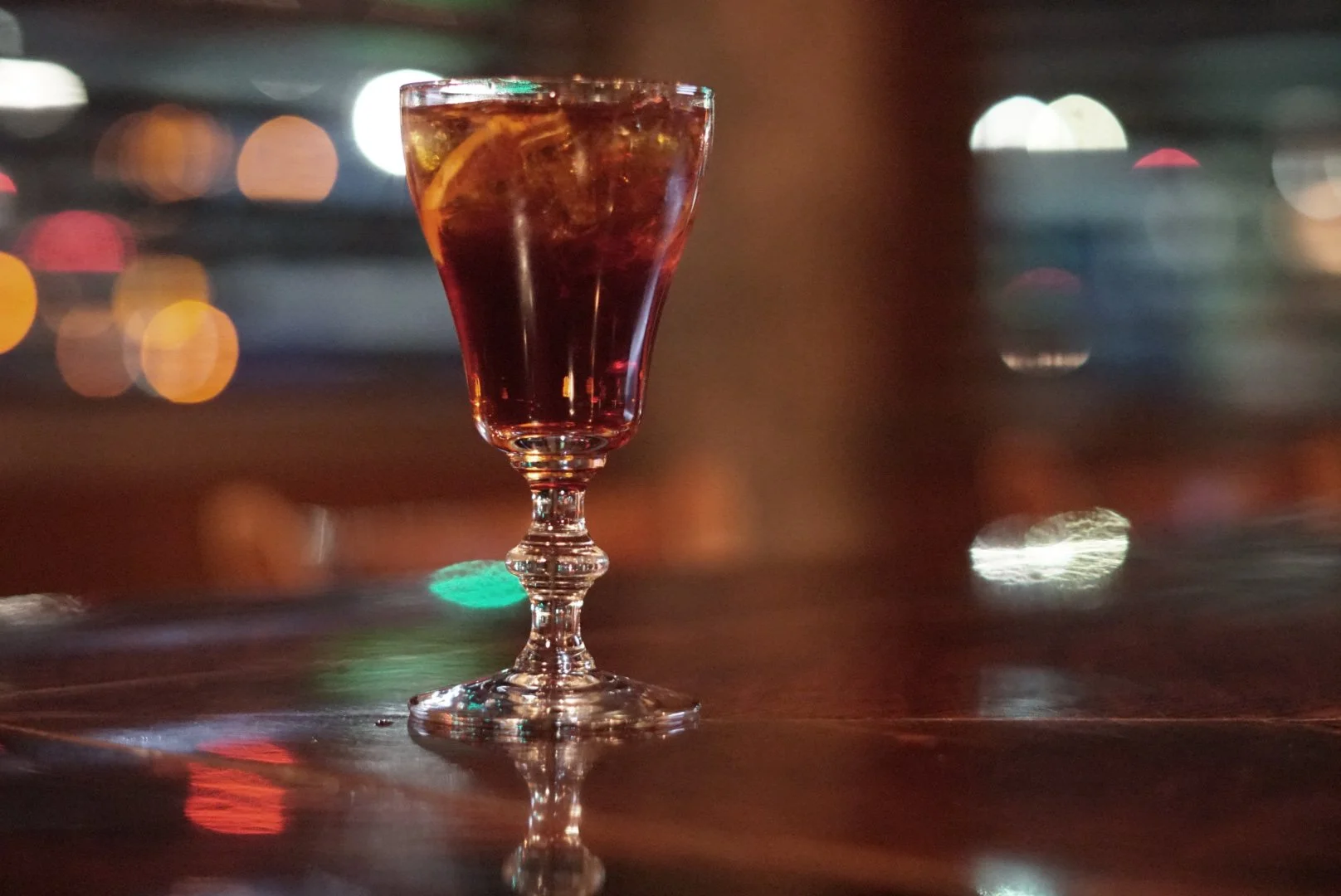
Photo by Luka Starmer 2017 Louie’s Basque Corner • Reno, Nevada
When storms blow in from the coast, the tall, jagged Sierra Nevada act as a sharp fence, ripping open the bellies of the clouds and extracting the water from inside. Much of that rain lands on the western slopes, and joins creeks and rivers to run back through California and into the Pacific. But this side, the eastern side, is in the rain shadow.
The mountains above Gardnerville, Nevada are big, and the high desert flows from the East to butt up against them.
Sage, Rabbit, Bitterbrush.
Some of the rain that falls on the mountains, and especially the snow that drapes the range all winter, some of that lands on the Eastern side of the ridge, over the divide, and instead of flowing back to the sea—it flows inland. This is the Great Basin and all water flows in, not out.
Here, wet places are rare and coveted and often appear as a vein of green quaking leaves in the crease of the hills where a creek has formed. These creeks eventually run into the sagebrush and dissipate in a desert sink or a terminal lake but first they feed the aspen groves and the meadows and the grass.
From the main street of Gardnerville, I can see those green creases of aspen on the Sierra, and then… I duck into the JT.
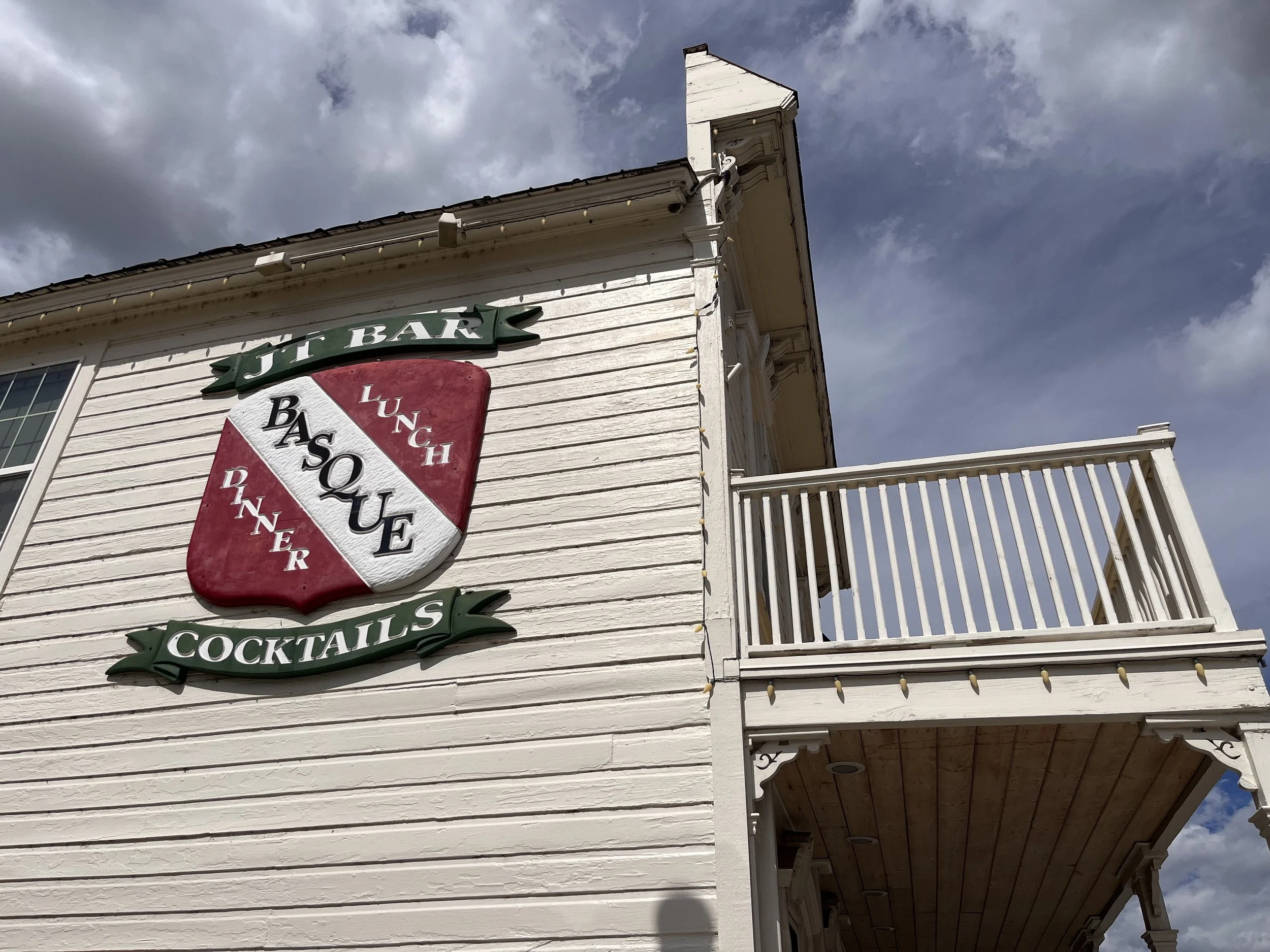
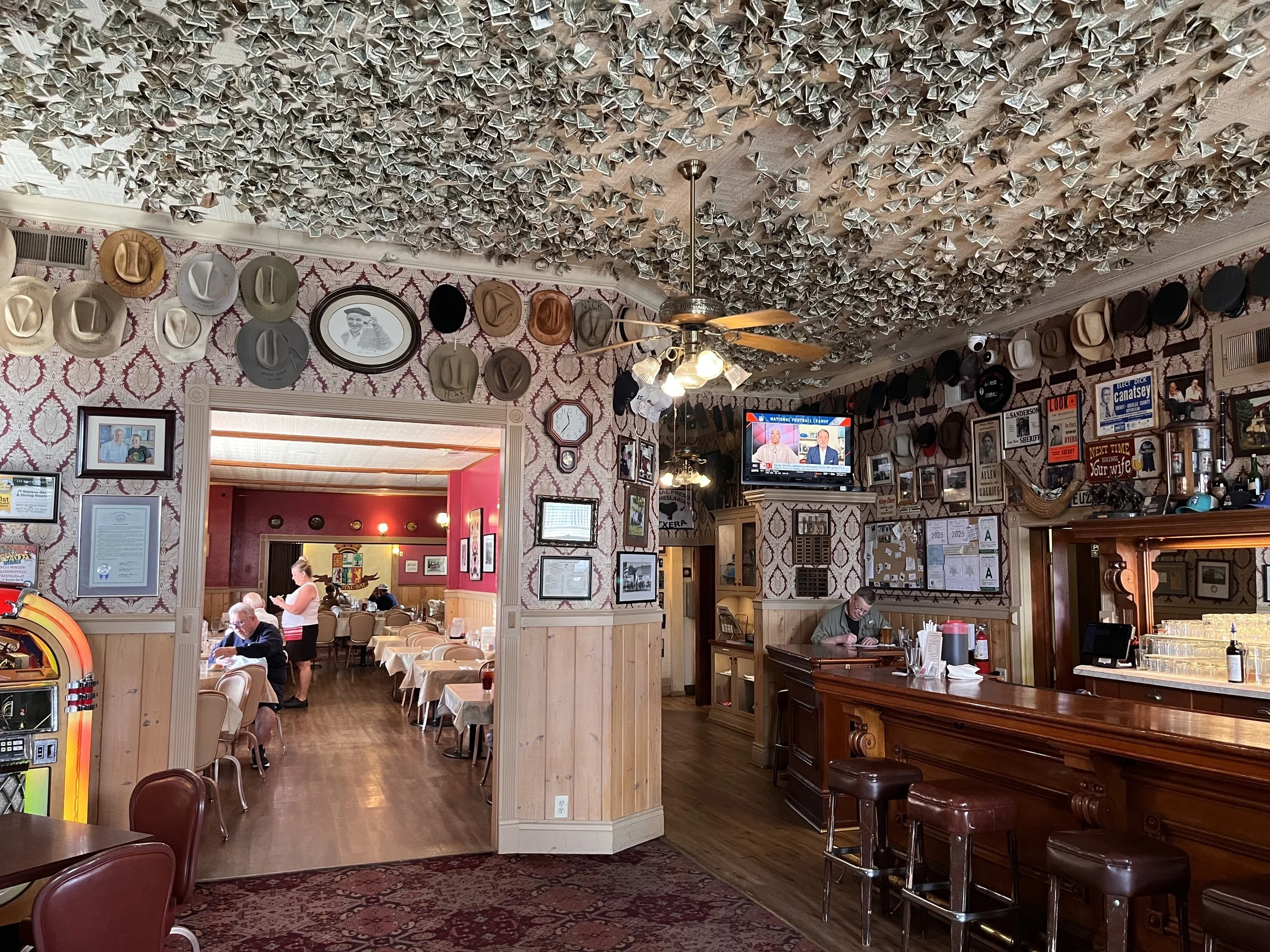
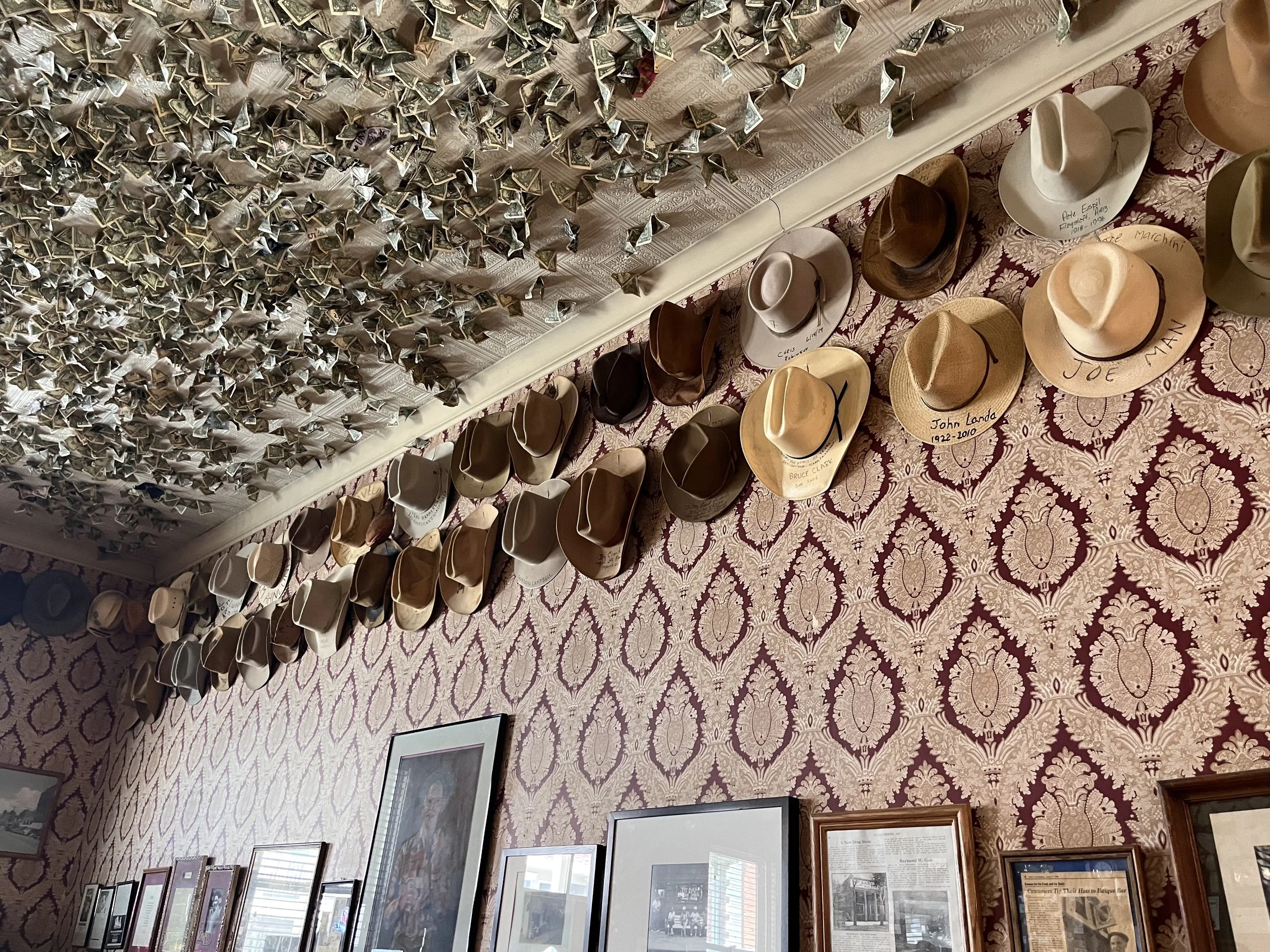
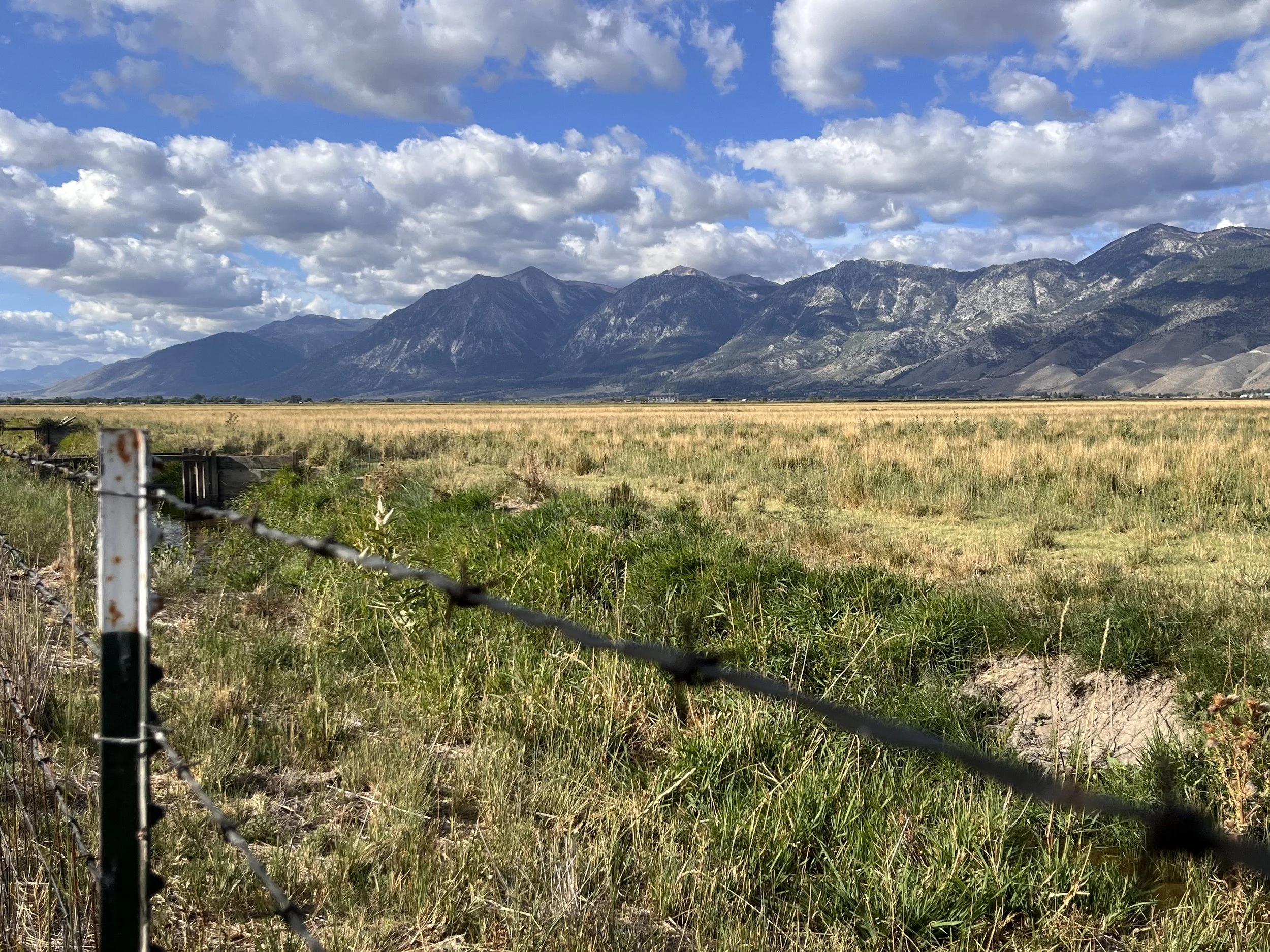
The Picon is a cocktail that you can only define by describing what’s around it.
••
Inside the JT Basque Bar and Dining Room in Gardnerville, Nevada , cowboy hats, berets, and baseball caps hang over the wallpaper; dollar bills obscure the ceiling.
Marie Louise Lekumberry: The JT, as with other basque houses sprinkled across the American west, all started out as boarding houses. We were places where newly arrived immigrants could come make contact with an innkeeper who spoke their language. A place that had food that they were familiar with. A place where they could make connections to get jobs. A kind of home away from home for immigrant basques who were mostly coming over to herd sheep.
Marie Louise Lekumberry co-owns the place with her brother JB. Their dad bought it in 1960. At the time the JT was just one of many Basque hotels scattered across the West. There are fewer now, but still a handful. A lot of Basques, from the mountainous region between France and Spain settled here at the foot of tall mountains in Nevada.
Ettienne Lekumberry:: It's this very ancient people with this very ancient language and these very ancient, well-maintained traditions and customs set against the backdrop of the Sierra Nevada. Set against the backdrop of the sea of sagebrush.
Etienne Lekumberry, Marie’s nephew, has been tending bar here since he was 21, and he’s taken on a bigger role lately in running it.
Ettienne Lekumberry: And, you know, as we all know, being Nevadans, the landscape we inhabit makes as much of an effect on us as we do upon it, you know?
The bar and restaurant is a rare place that feels like it’s carved out a sort of refuge from current trends in aesthetics, and profit-first (or profit-only) business practices. It has one TV, and it’s fairly small and old and it’s up in a spot where you kind of have to crane your neck to see it. People check the score of whatever big game is happening, but it’s not blasting commercials in your face, and no one’s sitting there watching on autopilot.
There’s also carpet in the bar, which taken with the old hats on the wall act as an incredible acoustic damper; so everyone’s talking to everyone else and it’s lively but you can hear everything clearly. There’s no fake-wood printed vinyl, it’s not trying to be anything, it just is, and you walk in and see your high school history teacher and a guy you used to work construction for and you pull a stool up to the bar and you order a Picon Punch.
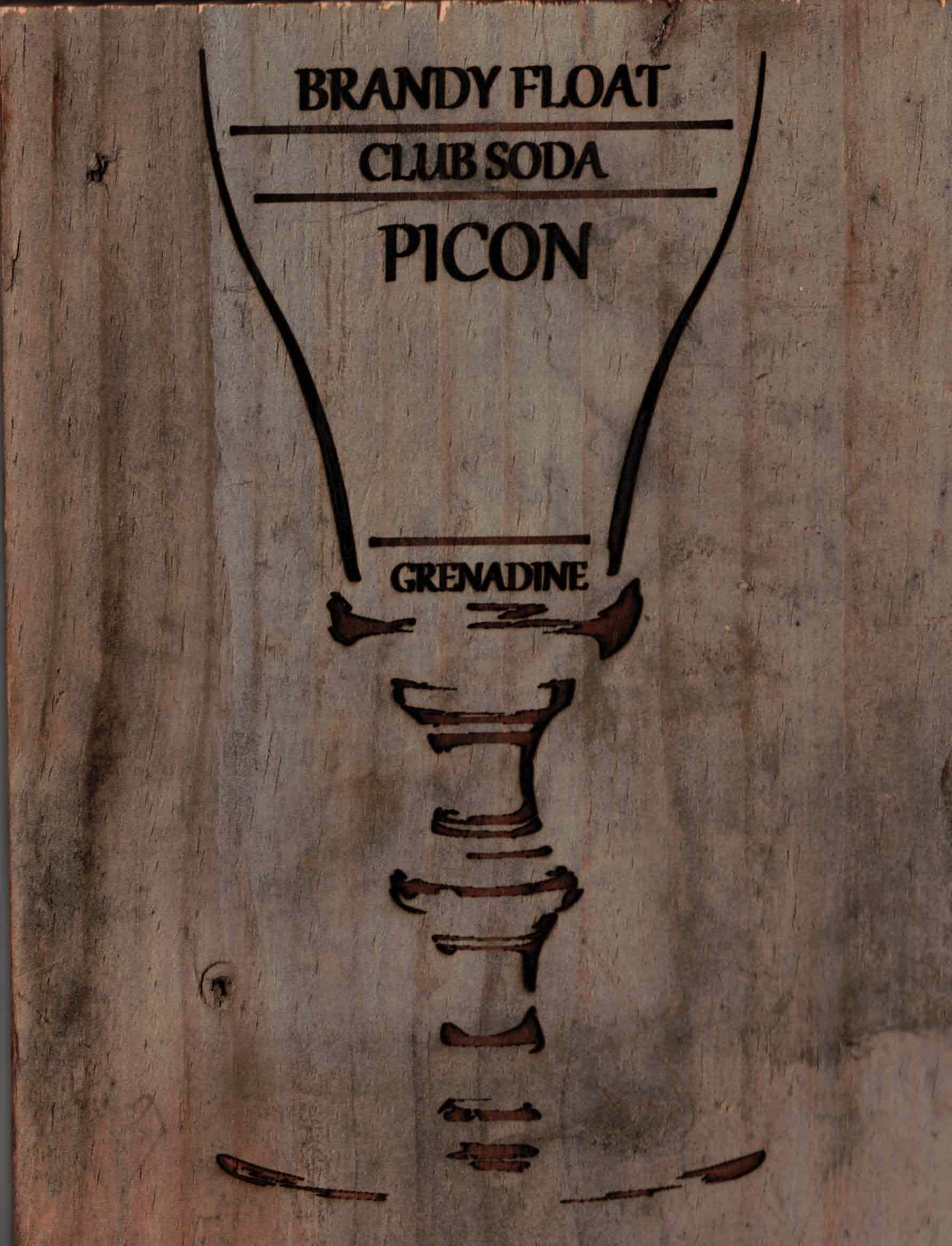
From Picon Drinkers of the American West
Marie Louise Lekumberry: In today's parlance, I would say… it's very spirit forward. (laughing) Back in the day we would say, “Careful, it packs a punch!”
Etienne Lekumberry: It's called a Picon, P-I-C-O-N. And it has nothing to do with A-P-E-C-A-N, the nut, right? It's a dash of Grenadine, a shot of a Amer Picon, which is an orange rind liqueur, a splash of club soda with a float of brandy and a lemon twist.
Most of the cocktail is one ingredient: Amer Picon. That’s where the name comes from and also where all the drama is. It’s a French liqueur named for it’s inventor Gaétan Picon who concocted it in Algeria in 1837 from Orange Rind, Gentian Root and Chinchona bark among other secret ingredients. Amer is the french word for bitter, similar to its Italian counterpart amaro. In the late 19th century into the early 20th it was a popular aperitif in France.
Marie Louise Lekumberry: I imagine that, you know, a lot of the Basques coming from the French side of the Basque country, um, in the Basque hotels, that that was, uh, a liqeur that was imported because they were there.[00:09:41] And some, somebody came up with the cocktail
The earliest mention I could find was from Visalia, California in 1895. Nobody knows exactly where it was invented.
Marie Louise Lekumberry: Probably in some Basque house probably in California.
From there, it spread inland.

The earliest mention I could find of the Picon Punch cocktail - Visalia, Calif. May 17 1895 (pg. 4)
Marie Louise Lekumberry: And because there's this network of Basque hotels sprinkled across the west where there were sheep herdng, um, the cocktail spread to all of the other Basque houses.
For a long time, the Picon Punch was made by default with Amer Picon. But there were a few other options starting in the mid 20th century, including Amer Segalas and Torani Amer both made in California. The latter was made by the company Torani which you might recognize from their coffee syrup flavoring.
Marie Louise Lekumberry: Our bar, like a lot of Basque bars — in the well we served Torani Amer. If you wanted the call drink, if you wanted a “call” Picon, we had the imported Amer Picon back behind the shelf, and you could order that and pay a little more for that. Here in Gardnerville, most everybody was satisfied with the, what we call the domestic Amer, and we proudly served it.
At the bar, I’ve always heard that the original Amer Picon was banned in the 70s due to a psychoactive ingredient, and story goes that’s how Torani became the Amer of choice. You’ll see this repeated all over the internet, and confidently stated in the AI overviews. But I dug deep into this claim, and it’s much more complicated, and in my reading, unlikely.
I spoke with the US Department of Health and Human Services who said quote “Amer Picon is effectively banned in the U.S. because it contains Calamus root, which is prohibited by the FDA” however I believe they just googled it too. They could not provide documentation that Calumus was ever in Amer Picon, that the recipe changed, nor could I independently verify that.
Calumus was banned in 1968, for being apparently carcinogenic, not pyschoactive… but I could find no evidence of interruption in Amer Picon sales in the US in the 60s or 70s. If there was Calamus in the recipe, they would have removed it without anybody noticing, as they continued distributing in the US into the early 2000s. That deflates the claim that Torani took over when the original was banned. It seemed to be a slower and less clear-cut process.
That said, there was a different change to the aperitif in the 1980s: Amer Picon simply began making weaker liqueur. The original recipe, and Torani’s recipe, was a full 39% ABV. In the early 80’s Amer Picon lowered their recipe to 32%, and then again by 1984 down to just 21%; closer to a vermouth. Torani meanwhile stayed the same ABV, and probably tasted closer to the original than the lower proof versions of the name brand. All of this, PLUS Torani was already available in many of the Basque Houses across the west anyway. So that’s my theory.
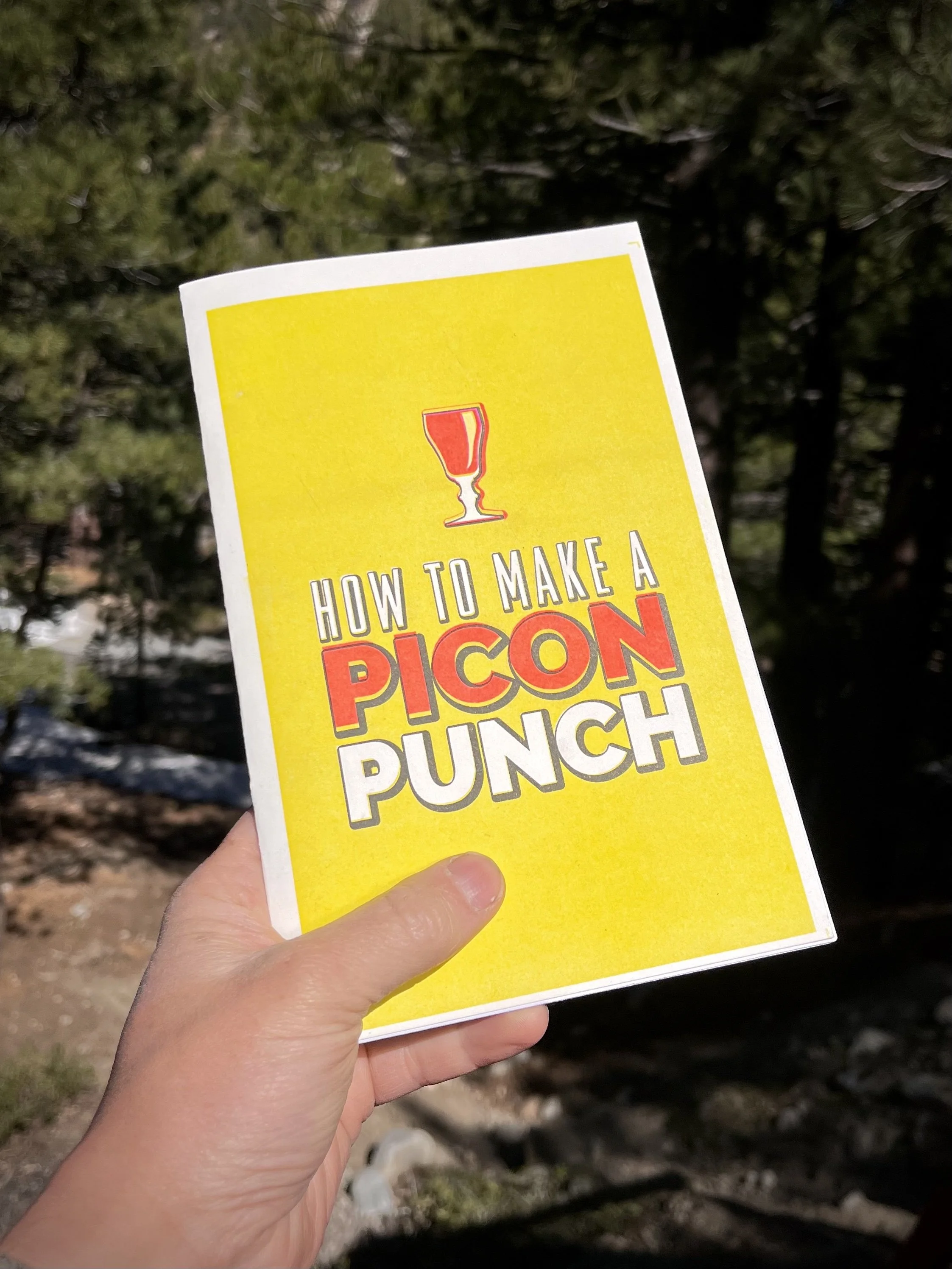
ZINE: "How to make a Picon Punch"
$9.00
This is a Zine companion to the Wind episode Picon Punch. The cover may vary slightly, depending on printing capabilities, and I’ll be printing and assembling them next week. I’ll ship them as soon as they’re finished!
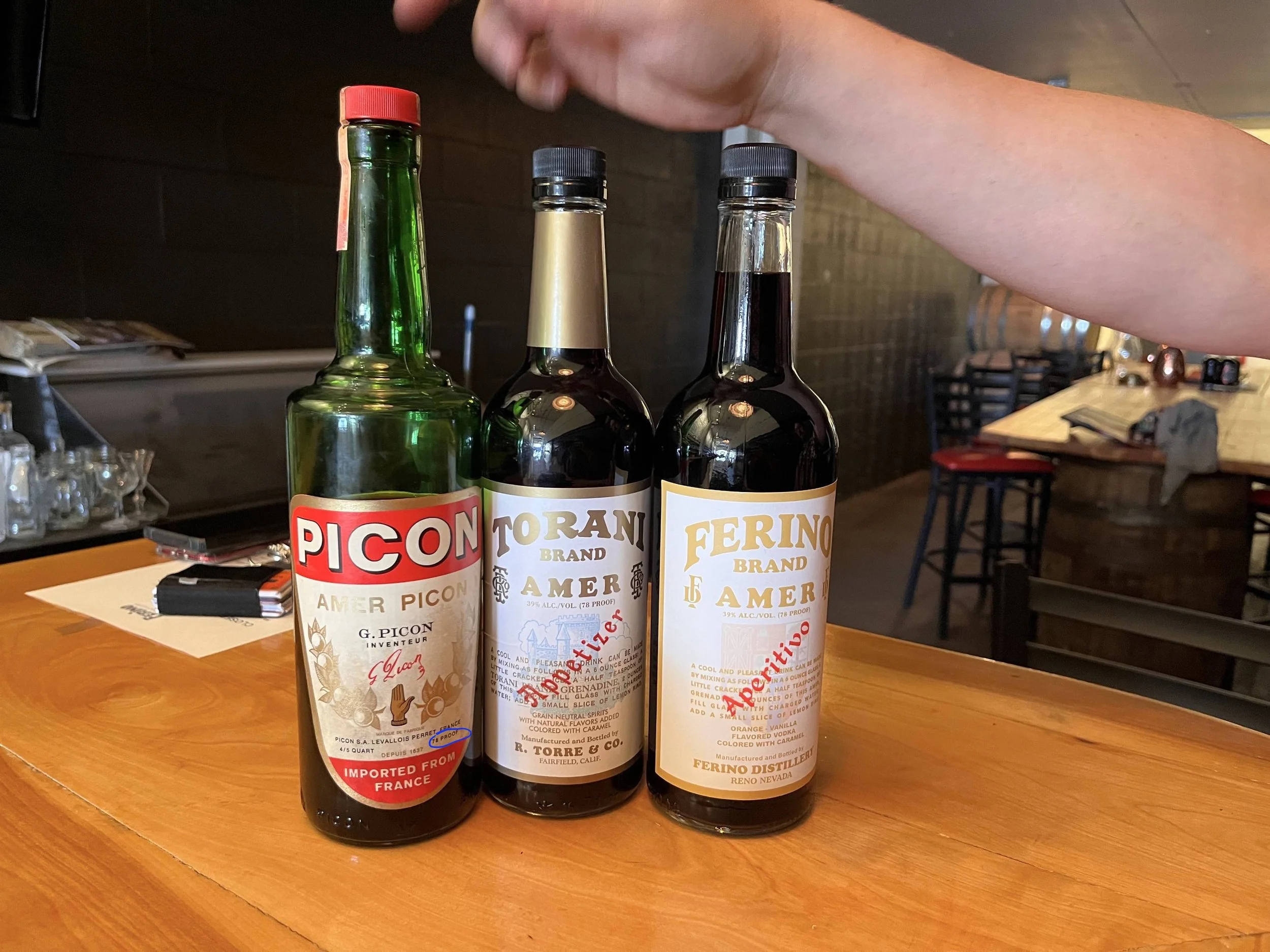
Original Amer Picon, then Torani Amer and the new Ferino Amer.
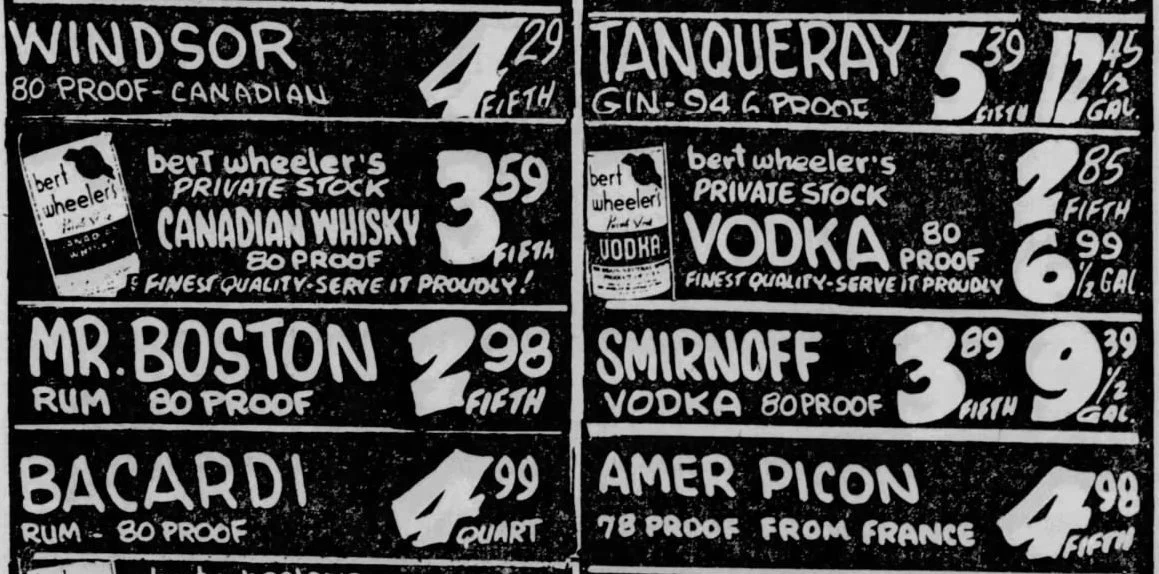
A newspaper ad for Amer Picon at its origina 78l Proof (39% ABV). It changed between 1981 and 1984 to 42 proof (21%)
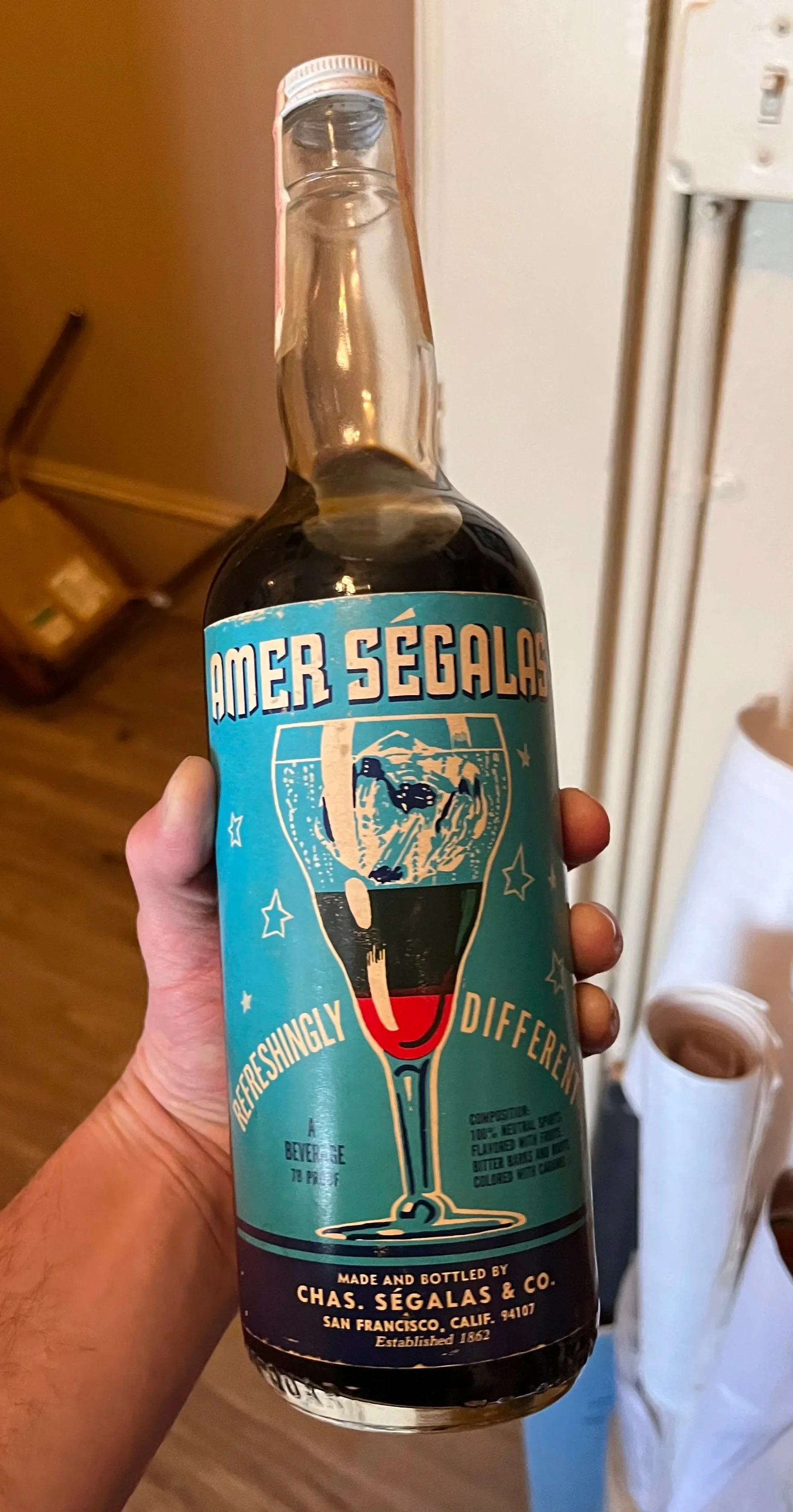
A photo of Amer Ségalas, manufactured in San Francisco. A competitor to Torani Amer but it stopped productions I believe in the 1970s.
Torani Amer made by the coffee syrup company in San Francisco, eventually became the sole acceptable main ingredient in Basque houses across the west. And so it would be for many years to come.
Until the summer of 2024.
Chris Barkley: One day we just didn't get Torani
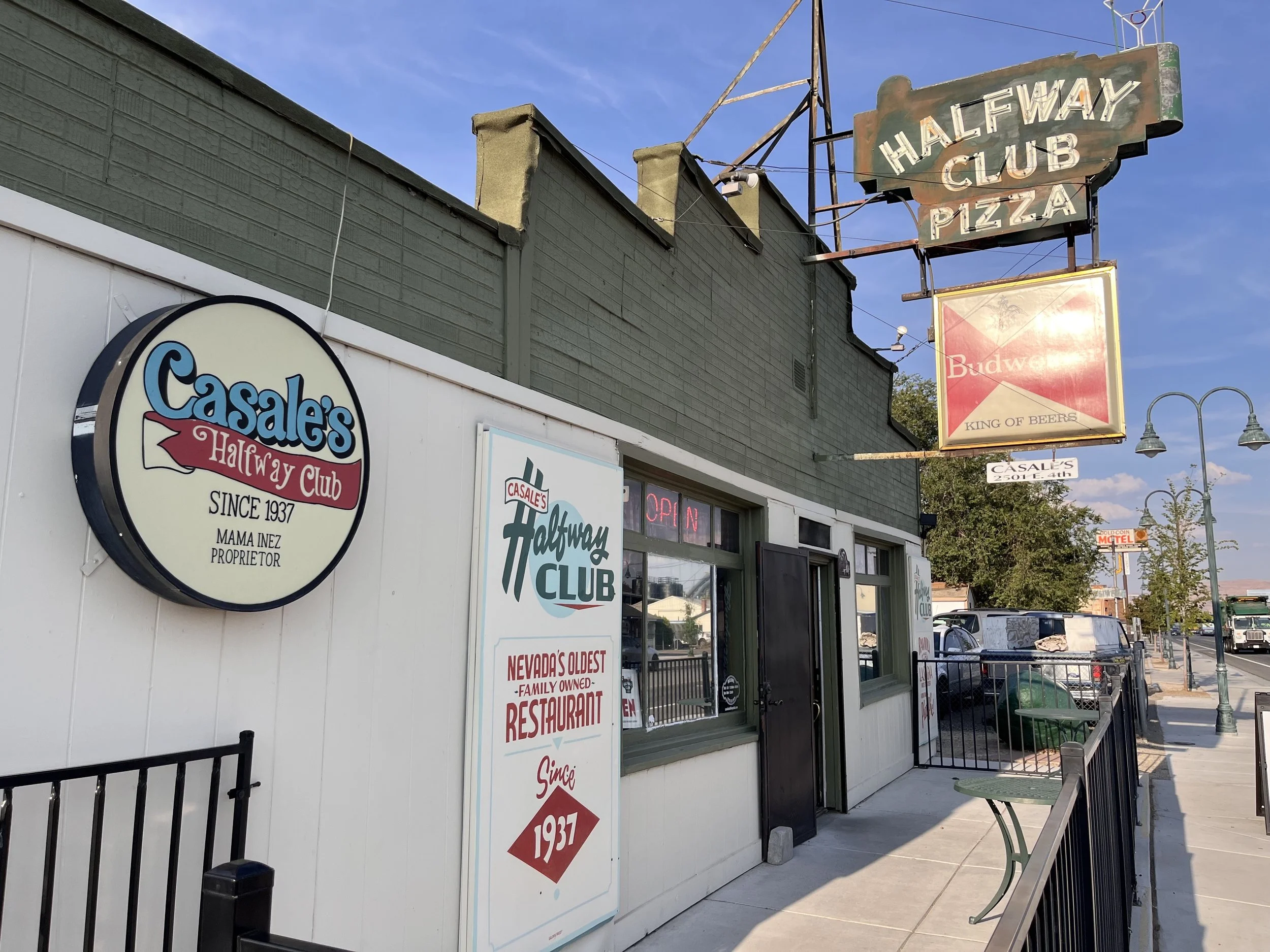
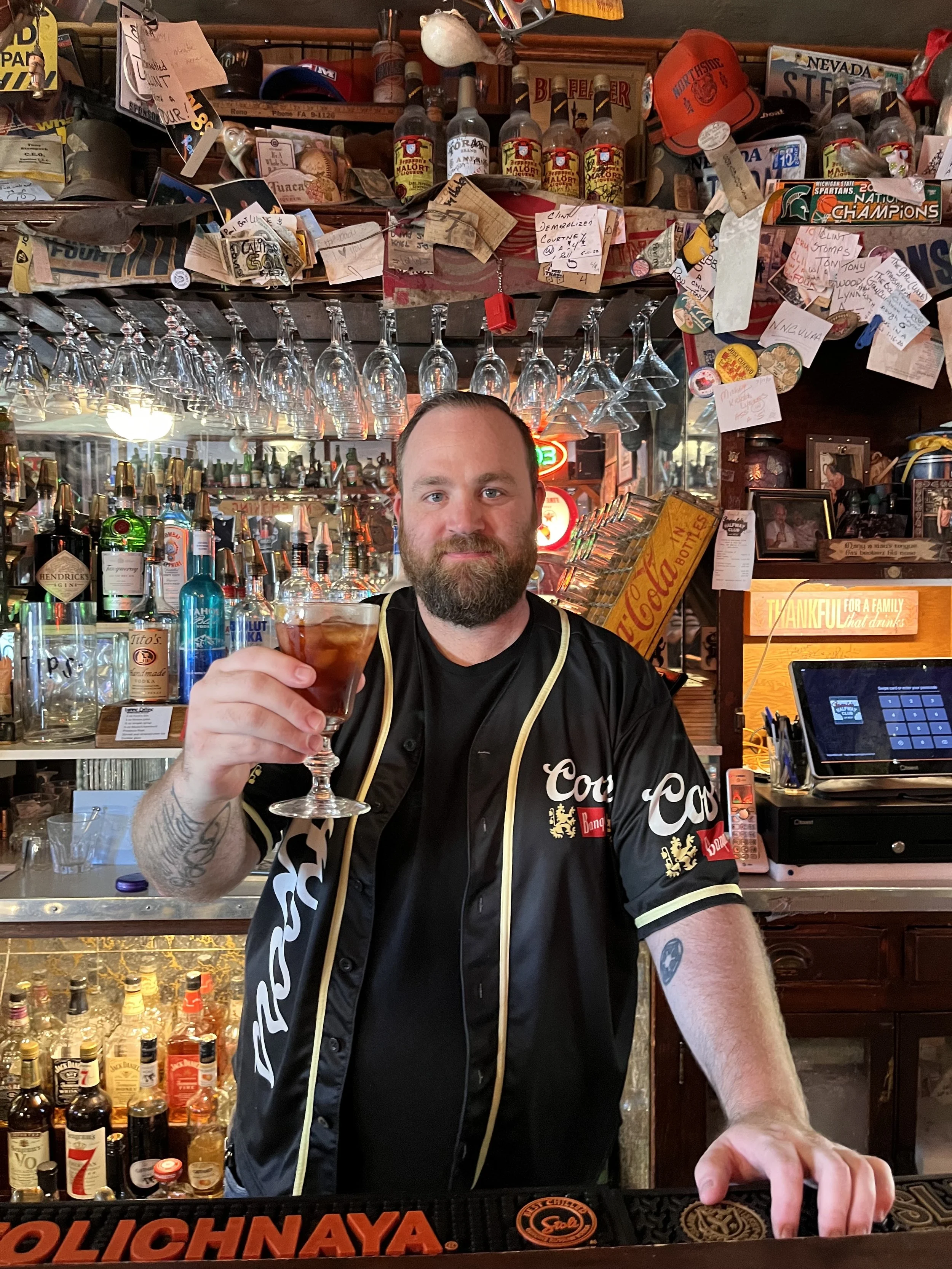
Chris Barkley tends bar at Casale’s Halfway Club in Reno. It’s an old school Italian joint with checkered table cloths and red leather booths and signatures all over the walls.
Chris Barkley: You see a brown cocktail sitting in front of you on a wood bar and it just kind of works. You know, aesthetically, I would say it does work.
The restaurant is an old 2 bedroom house; the front windows look across the old Lincoln Highway to the railroad tracks, and it’s been family run since the 1930s. A portrait of the late Inez Casale and her son Tony is displayed behind the bar on top of an old cash register, outlined by concentric rings of artifacts from memorable nights: The written scores of dice games from decades ago, photos, license plates, empty bottles of Torani and Malort, fading photos of baseball players, and and here too there is just one small TV tucked into the corner.
Though not a Basque house, Casale’s is a place people specifically go for a Picon. It was the first place that I ran into the shortage.
Chris Barkley: Nobody really knew for a couple weeks what was going on until I eventually heard through a rumor mill that there was something in the ingredient with the Torani Amaro (sic) that they couldn't ship over state lines from California. So it was difficult to find anywhere here in town unless you found a place that had a stockpile of it and you could maybe go barter and buy some off of them or something like that…It was really find anything, damn near impossible. And when you try to find the substitute for it, it just wasn't working.
Fil Corbitt: what were you feeling as a bartender who serves a lot of these things?
Chris Barkley: I mean, it's obviously a big disappointment for me at least. 'cause I, I like to make sure my customers get the drink they want. And especially when we are known for our Picons here — when you tell 'em our signature cocktail I can't make for you because I don't have the ingredients for it, it's obviously a very difficult discussion to have with people coming in. During that time it was just a lot of anger by a lot of people.
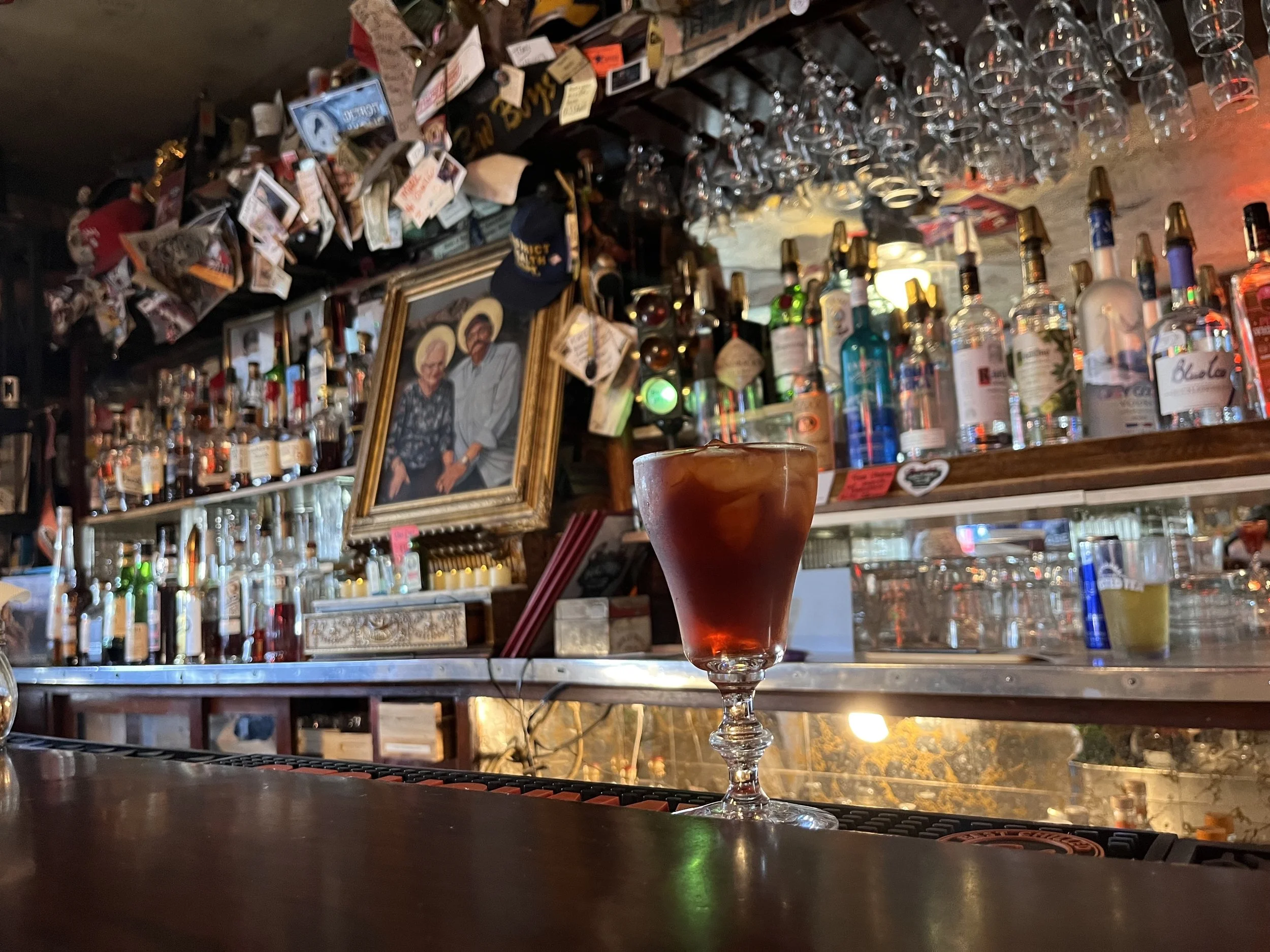
The Picon Punch has a poetic resonance with Northern Nevada. It’s quite brown, often maligned and almost always explained as an “acquired taste”…but once you learn to find the subtlety, it is really quite lovely. It is an unmeasured drink, the recipe is passed down orally, so it tastes different wherever you order it, and depending on who’s there. The main variant is Elko Style without club soda. But it’s the small changes between places that really flavors the thing.
The cocktail is a symbol of something intangible here. It doesn’t work well in a shiny new bar with vinyl floors and LED lights and big TVs, but it doesn’t work in every old bar either. It’s all about context, and also I think, it doesn’t work with other Amers. During the drought, people began to sub in others but they were all too sweet, and pleasant, and to my palette didn’t reflect the landscape at all. Lush french oil painting instead of scratches on your legs from running through the brush.
Those Amers made a drink a tourist would like on the first sip: which I don’t say as an affront to travelers, but as a crucial part of the process of this place: the unfolding path into the sage.
After a couple months of the shortage, Torani was able to regain certification and they started shipping again. But rumors swept across the Great Basin that the whole ordeal shook Torani’s dedication to the Amer. Now a coffee syrup company, it was the last alcoholic beverage they produced. And if they sold it, or just shut down production, who knows what would happen.
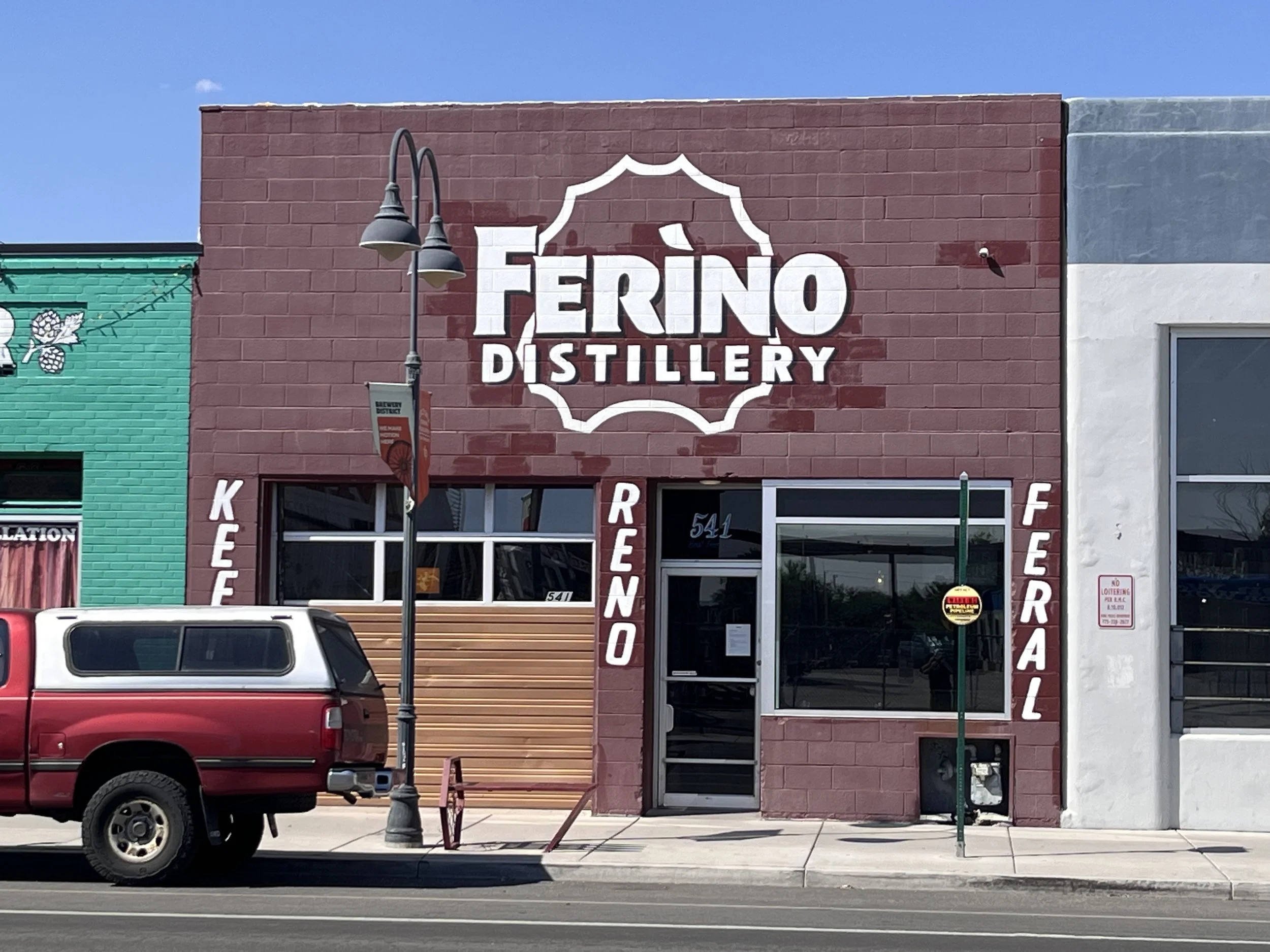
Fil Corbitt: The story I've heard goes that Torani wanted to get rid of the recipe. And that they sent basically like secret scouts to go to a bunch of distilleries and kind of feel 'em out and see where it might be most at home. And that eventually somebody came here and chose here. Is that the actual story is that tall tale?
Joe Canella: That sounds, that's, that's pretty accurate…. Torani did their homework and then eventually just very innocently reached out on our website. Like on the “contact us” form.
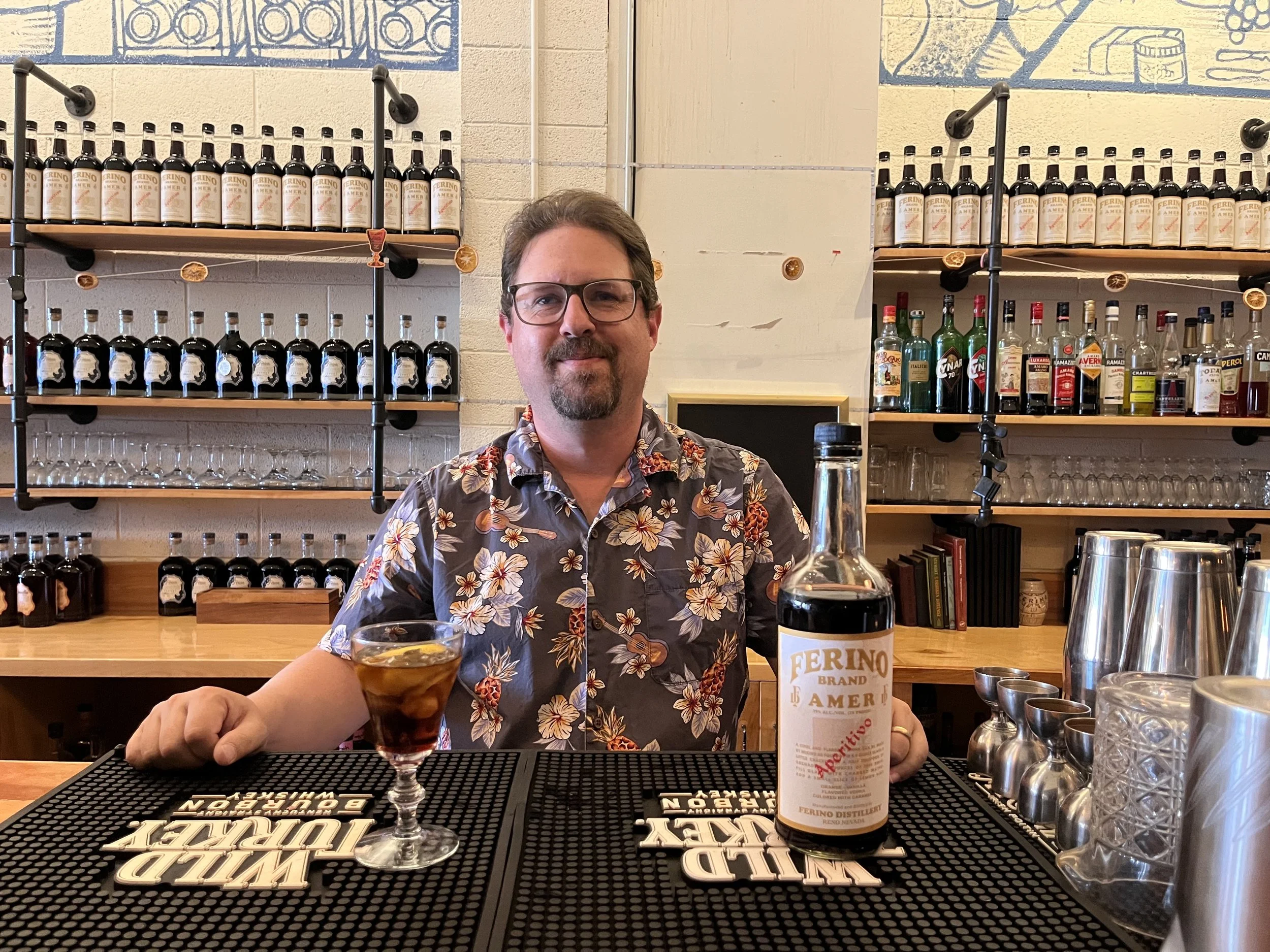
Joe Canella owns Ferino Distellery in Reno, Nevada, just down the street from Casale’s Halfway Club. It’s a small distillery that specializes in Amaros and Fernets.
Joe Canella: when I got that email, strangely, I just had this really funny feeling deep down that it was going to be something big. I almost got like, really emotional. I mean, I, I got an email through my web form and I kind of got a little emotional.
The rumor mill was right: Torani did want to ditch the Amer. The email was from the company’s international head of operations.
Joe Canella: We started chatting. We signed an NDA and they told me that they were looking for someone to take it on, and the had us in mind, but we wanted to, you know, spend some time feeling it out. In a couple of months we drew up some paperwork and they signed over the recipe.
It’s hard to imagine, at this point in our country’s history, a big company giving away a valuable piece of property of any sort. But they did, free of charge.
The folks I spoke to at the time were cautious with their optimism, but worried that a new distiller might change it or might not get the spirit of the thing.
Fil Corbitt: I got a call from J.B. (Lekumberry) saying, you know, hey, so Torani just got rid of this thing, and it's a guy in Reno and we're having him down to the JT. And the way he described it really quickly over the phone sounded kind of like a meeting of the families. Like it was like all these Basque restaurant owners. What was that dinner like? Do you remember that?
Joe Canella: Yeah. It was wonderful. I mean, it was definitely a little bit of like… we have an now have this important component of this thing—this very important Nevada thing, and obviously Nevada Basque thing.— And here we are… like you said, a seat at the table, so to speak. In my mind I was like, this is very important. We're here mostly to kind of get to know each other. So I, I wasn't trying to talk like too much shop in that first meeting. We literally was just like, “Hey, hi.” You know, I know what's going on and you know what the Torani Amer means, and I understand how important it is. So we all kind of understood the importance of this thing for each other and for the state.
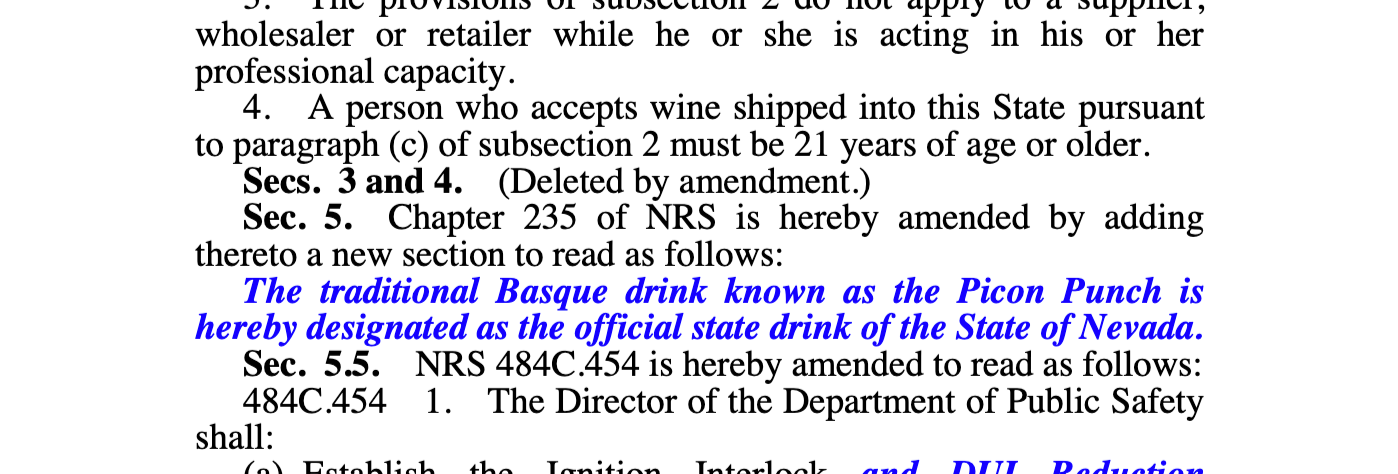
The recipe changed hands and became Ferino Amer. In a strange stroke of cosmic luck or coincidence or something, there was other big news in the world of the Picon. A new push had begun in the state congress to make it the official drink of Nevada.
Similar efforts had failed, several times. There’s a hilarious transcript from 2013 where a state lawmaker asks why on earth they would want to honor a drink that tastes like aviation fuel. But this time, it seemed to have legs. That was mainly because in a legislative juke, it got tacked on to a different bill which would allow bars to sell cocktails to-go, the way they did during Covid. In June 2025, at the very end of the session, it passed.
The Picon Punch is now the official state drink of Nevada.
• • •
After the shortage many places stocked up on Torani, just in case. But almost a year after the switch, that stock has run out and Ferino Amer has now replaced Torani almost every place I’ve been to. It tastes just slightly different—a little brighter—which makes sense changing facilities and landcape, but to my palette it easily passes. And most importantly, it has the right spirit to it.
Marie Louise Lekumberry: It's about paying attention to what's happening around you. You become acclimated. And people coming to Nevada for the first time, they look out and they say there's nothing here. And it doesn't take them very long to feel what that ocean of Sagebrush just did to you. And I would say that's very similar with the Picon punch. You start to get into it and suddenly…you’re there.
The Picon is a drink you can only define by describing what’s around it.
Back at the JT, the summer storm hanging over the Sierra stays where it is, raining into the mountain but not a drop over here in the sagebrush. The evening is warm, the air clear and people begin to stream in for early dinner and 9 out 10 have a Picon in hand.
Etienne Lekumberry: it's almost religious or, at the very least spiritual…. the Picon punch deserves nothing but the utmost respect. You can go too, too far with them, you know? And generally there's a saying, one's not enough and three's too many. Right? It's like…you don't overdo it on the wine at church. You know? You're allowed your sacrament…and it is in no small way a sacrament of the Basque restaurant and boarding house. And it demands and it requires respect.… and two really is the magic number, right? We're giving you one more, one more than the church gives ya!

The Wind is produced by me, Fil Corbitt. This independent podcast is made with listener support, if you’d like to help make this show possible head to https://patreon.com/thewind and set up a monthly donation. You can also sign up for free to get updates.
The reporting for this episode was originally for NPR’s All Things Considered.
Thanks to Marie Louise, Etienne, J.B. and Anna Lekumberry along with Ryan Lamb and the whole staff at the JT for keepin it real. Thanks to Chris Barkley at Casale’s Halfway Club and Joe Canella at Ferino Distillery.
There is a new documentary called PiconLand by friend of the show Mark Maynard and Richard Bednarski. Mark helped out with some of the research and I highly recommend the film which talks to folks all over the region. Thanks to Gage Smith (Picon Drinkers of the American West) and Mike Higdon (The origin of the Picon Punch, Reno Gazette Journal) who spoke with me for the 2017 version, Ravenna Koenig, Sydney Martinez (with more Picon information in her book Finding Nevada Wild), Luka Starmer, Sierra Jickling, Mark Nesbitt and everybody who’s ever picked up a round.
Thank you for being here,
Cheers!